

Blog
Last updated:
August 7, 2026
15
min read
.png)
“The organisations achieving the strongest engagement outcomes are not running better surveys or offering more perks. They are creating environments built on trust, psychological safety and meaningful recognition, and that’s an ongoing process.”
That’s what Personnel Today discussed in their latest article ‘What do high trust cultures do differently?’ and the key elements companies should be focusing on when it actually comes to improving employee engagement in 2026 is:
- Psychological safety
- Listening to people
- Using data to inform decisions
- Showing appreciation and recognition to employees
- Turning culture into performance
We wholeheartedly agree, and we would add a couple of things to that from a technology perspective… Things like smooth onboarding to make employees feel welcome from day one, making information easily accessible to employees regardless of job role or location, and providing them with content they actually want through personalised targeting. In 2026, employee engagement challenges are increasingly shaped by communication overload, disconnected frontline employees, burnout, poor leadership visibility and fragmented workplace technology.
But when engaged employees are productive and happy, they’re also more likely to stay with you and recommend your company as a palace to work. And who doesn’t want that?
Organisations that improve employee engagement successfully typically focus on:
- clearer communication
- employee recognition
- employee wellbeing
- career development
- manager visibility and leadership trust
- employee feedback and listening
- flexible working
- stronger onboarding experiences
- connected digital workplace experiences
- easier access to information and tools
This blog will give you 10 practical ways to improve employee engagement across both desk based and frontline workforces, including communication strategies, recognition initiatives, wellbeing support and modern employee experience improvements.

What is employee engagement?
Employee engagement is the emotional, psychological and professional connection employees feel toward their work, colleagues, leadership and organisation.
Engaged employees are more likely to feel motivated, productive, recognised and connected to company goals. Disengaged employees are more likely to experience burnout, low morale, reduced productivity and higher turnover risk.
Employee engagement impacts nearly every area of a business including retention, productivity, communication, customer experience and organisational performance.
Modern employee engagement increasingly focuses on improving communication, recognition, wellbeing, employee voice and workplace experience across both desk based and frontline teams.
Why is employee engagement important?
Employee engagement is important for a number of reasons, but the one that's probably most important one to tell your superiors is about the financial impact: Gallup found that highly engaged teams deliver 23% higher profitability.
Sounds great, right?
That's because it's vital to any business, regardless of size or financial standing.
Whilst many companies may view their products as their biggest asset, they're failing to notice that their people are what make their cogs turn.
Companies that value their employees will reap the rewards of a dedicated, passionate and skilled workforce.

Employee engagement = Retention
Employee engagement directly influences retention. When people feel connected to their work, supported by their team and recognised for their effort, they are far less likely to look elsewhere whilst teams with low engagement endure up to 43% higher turnover rates.
Engaged teams are more likely to:
- feel motivated and committed
- go the extra mile for colleagues and customers
- build longer-term careers in the company
- recommend the workplace to others
Disengaged teams are more likely to:
- disconnect from their manager
- lose interest in their work
- feel unnoticed or undervalued
- become open to new job offers
Because of this, even small improvements in daily communication, recognition or clarity can significantly strengthen retention.

Modern engagement challenges
Employee engagement challenges have changed significantly over the last few years.
Many organisations now struggle with communication overload, fragmented workplace technology, frontline communication gaps, burnout and reduced visibility between leadership and employees.
These challenges make it harder for employees to feel informed, connected and engaged in their work.
1. AI adoption and workplace change
AI is changing how people work, but the challenge isn't AI. It's communicating how to use it and the trust you create around AI. Successful adoption depends on trust, communication and leadership, rather than technology alone.
In our 'AI, trust and the future of work' webinar with Dave Ferguson, Chief Product and Technology Officer at Oak Engage and Jennifer Sproul, CEO at The Institute of Internal Communication some shocking stats surfaced:
- Only 36% of employees say leaders have clearly explained how AI will be used in their organisation
- 25% of employees wouldn't trust AI to make any workplace decisions at all
- Employees are 9x more likely to experience genuine AI transformation if their direct manager champions it
Want to learn how you can create an environment of trust and learning? Check out our webinar with Dave & Jen.
2. Information overload and digital fragmentation
Employees now receive information through email, chat, meetings, intranets, project management platforms and mobile apps. When communication is fragmented, employees struggle to find trusted information and important updates are easily missed.
Poor communication remains one of the strongest drivers of disengagement. Gallup's research continues to show that employees who clearly understand what is expected of them are significantly more engaged than those who do not.
3. Frontline communication gaps
Deskless and frontline employees often have limited access to company news, leadership updates and workplace resources. This frontline divide makes it harder to build alignment and organisational culture.
The challenge is becoming even more pronounced with AI adoption. Gallup reports that while AI use continues to grow rapidly among knowledge workers, adoption among frontline employees has remained largely unchanged, highlighting the need for more inclusive communication and support.
4. Employee wellbeing and sustainable performance
Burnout continues to undermine engagement, retention and productivity.
Gallup's latest global research found that employee stress remains above pre-pandemic levels in many countries, while declining engagement is closely linked with lower wellbeing and higher turnover risk. Organisations that invest in psychological safety, manageable workloads and supportive managers consistently achieve stronger engagement outcomes.
5. Generational shifts and evolving employee expectations (Gen Z Expectations)
Younger employees increasingly expect flexibility, meaningful work, career development, recognition and authentic leadership alongside competitive pay.
Gallup found that younger employees have experienced some of the largest declines in engagement since 2020. In particular, they report feeling less cared for at work and having fewer opportunities to learn and grow—two factors that strongly influence long-term engagement and retention.
6. Trust, transparency and organisational change
Economic uncertainty, restructuring and rapid technological change have increased employee anxiety. During periods of change, employees expect frequent, honest and transparent communication from leadership.
Research consistently shows that employees are more engaged when leaders communicate openly about organisational priorities, business performance and future direction, particularly during periods of transformation.
Common causes of low engagement
Low employee engagement is commonly caused by:
- poor internal communication
- lack of employee recognition
- burnout and workload pressure
- disconnected frontline employees
- unclear company goals
- weak manager communication
- lack of employee feedback opportunities
- poor onboarding experiences
- limited career development
- inefficient workplace systems and processes
Many organisations also struggle with communication overload caused by disconnected tools, too many channels and inconsistent access to information across desk based and frontline workforces.
When employees feel overwhelmed, unsupported or disconnected from leadership, engagement levels decline quickly.
3 key business areas impacted by employee engagement
Why employee engagement is harder in 2026
Improving employee engagement has become more difficult as organisations manage increasingly distributed and digital workforces.
Many employees now experience:
- communication overload from too many workplace channels
- disconnected frontline experiences
- notification fatigue
- difficulty finding information quickly
- reduced visibility from leadership
- fragmented workplace systems
- burnout caused by constant digital communication
As a result, organisations increasingly focus on creating simpler, more connected employee experiences that reduce friction and improve communication clarity across both desk based and frontline teams.

How to improve employee engagement: 10 practical steps
These steps show how organisations can improve employee engagement through everyday communication, recognition and employee experience improvements.
1. Improve efficiency in the workplace
Employees are more engaged when they can focus on meaningful work rather than navigating inefficient systems or repetitive administrative tasks. Outdated technology, disconnected processes and information silos can create unnecessary frustration and reduce productivity.
By simplifying workflows, improving access to information and using automation or AI to remove routine tasks where appropriate, organisations can create a smoother employee experience that allows people to spend more time on high-value work.
2. Improve communication
Communication remains one of the strongest foundations of employee engagement. Employees need timely, transparent information and opportunities to ask questions, share ideas and contribute to conversations.
This is particularly important for organisations with hybrid, remote or frontline workers, where employees may not all have the same access to information. Providing multiple communication channels and encouraging two-way conversation helps build trust, reduce misunderstandings and create a more connected, happy workforce.
Take a look at our top internal communication tools to facilitate better communication.
3. Recognise and celebrate achievements
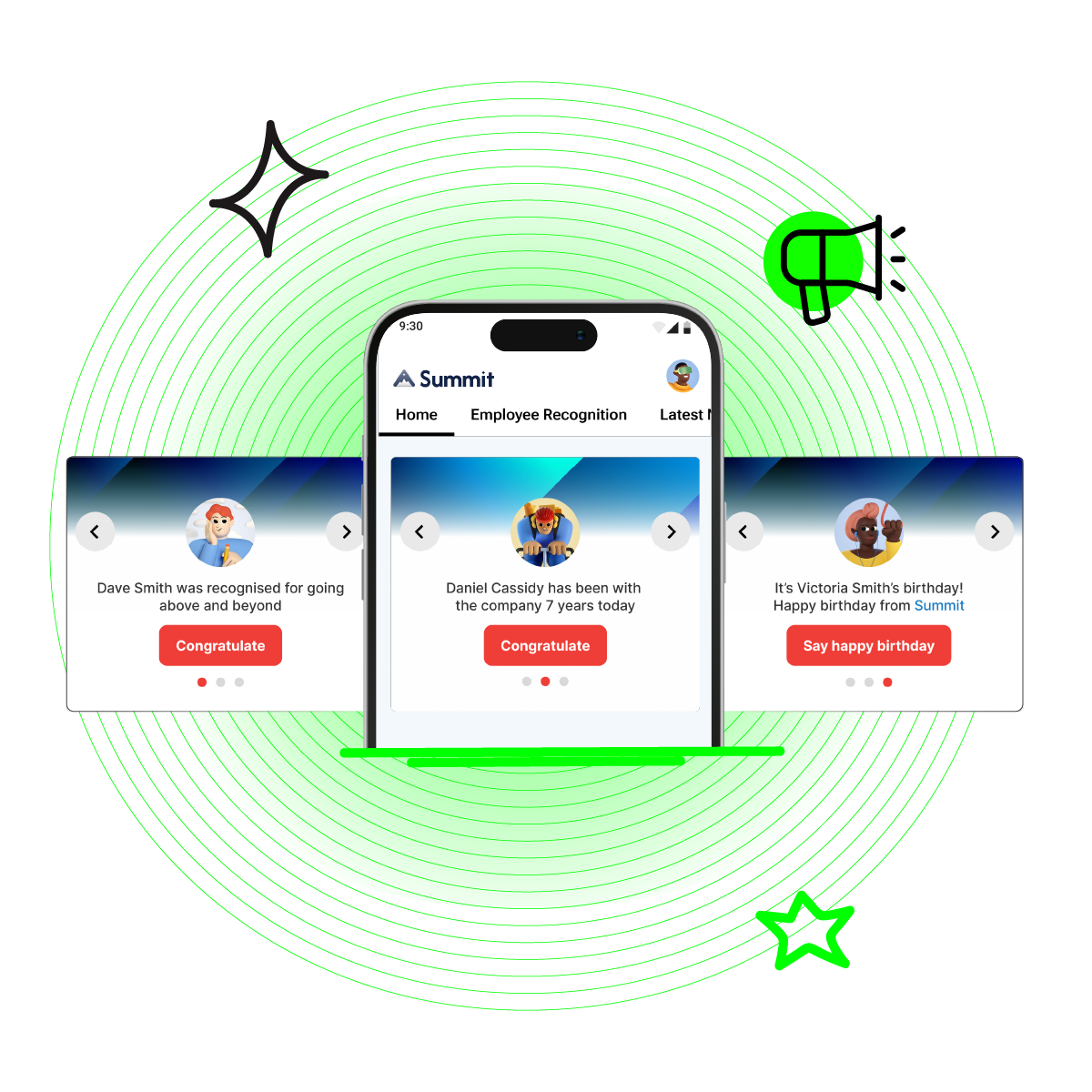
It feels nice when we're celebrated for our hard work, right? Feeling appreciated is a key driver of employee engagement. Recognition doesn't always need to be financial—simple acknowledgements from managers or peers can have a lasting impact on motivation and morale.
Regularly celebrating achievements, milestones and behaviours that reflect organisational values helps employees feel valued while reinforcing a positive workplace culture. According to Gallup, only 29% of U.S. employees report receiving recognition or praise for doing good work in the previous seven days, highlighting a significant opportunity for many organisations to improve engagement through more consistent recognition.
4. Build meaningful workplace connections
What's work without your work bestie? Strong relationships at work contribute to higher engagement, better collaboration and improved wellbeing. Creating opportunities for employees to connect across teams, departments and locations helps build trust and encourages knowledge sharing.
Whether through employee resource groups, mentoring schemes, social communities or cross-functional projects, fostering meaningful workplace relationships can strengthen organisational culture and help employees feel a greater sense of belonging.
5. Invest in learning and career development
Employees are more likely to stay engaged when they can see opportunities to develop and progress. Investing in learning, professional development and career pathways demonstrates a long-term commitment to employee success while helping organisations build the skills they need for the future.
As AI and digital technologies continue to transform workplaces, providing opportunities to develop new skills has become an increasingly important part of improving employee engagement.
6. Prioritise employee wellbeing
Employee wellbeing and engagement are closely linked. When employees feel supported physically and mentally, they are more likely to remain motivated, productive and committed to their work. Organisations can support wellbeing by promoting healthy workloads, encouraging work-life balance, providing access to wellbeing resources and equipping managers to recognise signs of stress or burnout.
Like we mentioned earlier, employee stress remains above pre-pandemic levels globally, making wellbeing a critical part of any engagement approach.
7. Listen to employees and act on feedback
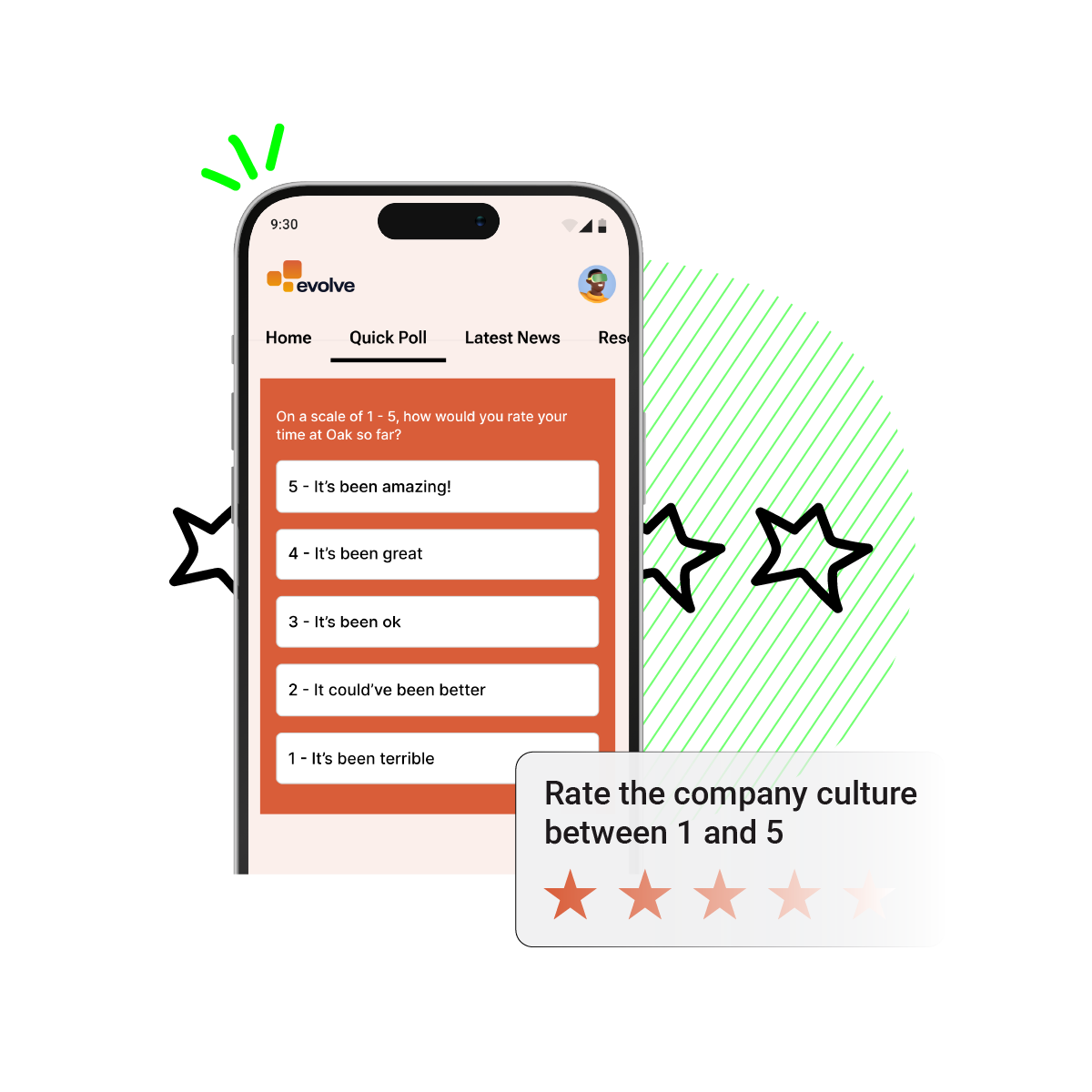
Employees are more engaged when they believe their opinions matter and that feedback leads to meaningful change. Regular one-to-one conversations, pulse surveys and anonymous feedback channels help organisations understand employee needs and identify issues before they affect engagement or retention.
More importantly, organisations should communicate the actions they take in response to feedback, demonstrating that employee voices genuinely influence decision-making. There's no point listening to employees if you're not going to make meaningful change with their feedback.
8. Strengthen company culture and purpose
A strong organisational culture helps employees understand what the organisation stands for and how their work contributes to its success. Clearly communicating values, recognising behaviours that align with those values and creating an inclusive environment where employees feel respected all contribute to higher engagement.
When employees share a common purpose and understand the impact of their work, they are more likely to feel connected to both their colleagues and the organisation.
9. Create an engaging onboarding experience
Employee engagement begins before a new hire's first day. A well-planned onboarding process helps employees understand their role, build relationships and become productive more quickly.
Effective onboarding should combine practical training with cultural integration and continue beyond the first few weeks to support long-term success.
Research from Brandon Hall Group has found that organisations with a strong onboarding process can improve new hire retention by up to 82% and productivity by more than 70%.
Burger King UK transformed their onboarding and pre-boarding processes with their employee app, BK Hub, which contributed to a 40% reduction in new starter dropout in just 6 months - and a 32% reduction in turnover of hourly paid crew in new sites within 3 months of launch!
10. Offer flexibility and empower employees
Flexible working has evolved beyond simply offering remote or hybrid arrangements. In 2026, employees want freedom, trust and the ability to balance their work with personal commitments where possible. People aren't living to work, they're working to live.
Providing flexibility through adaptable schedules, outcome-based performance measures and greater control over how work is organised can improve engagement while supporting employee wellbeing. Organisations that empower employees while maintaining clear expectations are often better positioned to attract, retain and motivate talent.
Learn more about employee engagement in our ultimate guide for engaging deskless workforces.
How to measure employee engagement
So, you’ve launched initiatives to improve engagement but how do you know if they’re actually working?
Measuring employee engagement isn’t just about sending out an annual survey. It’s about understanding how your people feel, tracking how that changes over time, and turning those insights into meaningful action.
1. Use Pulse Surveys regularly
Short, focused Pulse Surveys allow you to take the temperature of your teams more frequently.
- Keep them quick (5–10 questions).
- Repeat them quarterly or even monthly.
- Focus on specific themes — communication, recognition, wellbeing, or leadership visibility.
2. Track key engagement metrics
Numbers tell a story, here are a few that matter most:
Having good, robust, real time intranet analytics is essential to tracking, reporting and proving the ROI of your comms and HR initiatives.
3. Combine quantitative and qualitative feedback
Engagement data is only half the picture. Use open comments, listening sessions, and town halls to dig deeper into why people feel a certain way.
Your company intranet is a great space to gather insights — from polls on the homepage to feedback forms on wellbeing or culture hubs.
- Ask: What helps you do your best work?
- Ask: What could make communication clearer or more meaningful?
- Capture stories and examples, they bring your metrics to life.
4. Turn insights into action
Data is only valuable if it drives change.
- Share results openly with employees through your news feed or internal comms hub.
- Create an engagement action plan with clear owners and timelines.
- Re-measure after three to six months to track improvement.
5. Keep it continuous
Employee engagement isn’t a once-a-year exercise — it’s an ongoing conversation.
By using tools like Pulse Surveys and intelligent analytics and reporting together, you can build a rhythm of listening, acting, and communicating that strengthens engagement over time.

Employee engagement FAQs
What causes low employee engagement?
Low employee engagement is commonly caused by poor communication, lack of employee recognition, burnout, weak leadership visibility, limited career development opportunities, disconnected workplace systems and lack of employee feedback opportunities.
Why is communication important for employee engagement?
Clear communication helps employees feel informed, connected and aligned with company goals. Poor communication often leads to confusion, disengagement and reduced trust in leadership.
How do you measure employee engagement?
Employee engagement is commonly measured through Pulse Surveys, employee feedback, retention rates, absenteeism, employee Net Promoter Scores (eNPS), participation rates and workplace analytics.
What improves employee engagement the most?
Employee engagement improves most when organisations communicate clearly, recognise employee contributions, support wellbeing, encourage feedback and create opportunities for career growth and development.
How does employee recognition improve engagement?
Employee recognition helps employees feel valued and appreciated for their contributions. Regular recognition improves morale, motivation, employee satisfaction and long term retention.
What tools help improve employee engagement?
Employee engagement platforms help organisations improve communication, recognition, employee feedback, onboarding, collaboration and workplace experience through a centralised digital platform.
Why is employee engagement important for retention?
Employees who feel engaged are more likely to stay with their organisation, feel connected to their work and recommend their workplace to others. Low engagement is strongly linked to higher turnover and burnout.
