

Blog
Last updated:
August 14, 2026
15
min read
.png)
The best digital workplace platforms in 2026 include Oak Engage, Staffbase, Workvivo, Simpplr, LumApps, Unily, Microsoft Viva, Interact, Firstup and Blink.
Each platform takes a different approach to the digital workplace. Some are built primarily around the employee intranet, while others focus more heavily on internal communication, employee experience, AI-powered knowledge discovery, collaboration or frontline communication.
For organisations looking to create a connected digital workplace for both frontline and desk-based employees, Oak Engage is particularly relevant. Oak combines intranet functionality, employee communications, mobile access, AI-powered personalisation, workplace search, integrations and engagement tools within one platform.
Other platforms may be better suited to organisations that are deeply embedded in Microsoft 365, need highly complex global enterprise experiences, prioritise social interaction or primarily want to orchestrate communications across multiple channels.
The right digital workplace platform therefore depends on how your employees work, what technology you already use and which workplace problems you are trying to solve.
Best digital workplace platforms at a glance
What is a digital workplace platform?
A digital workplace platform creates a central digital environment through which employees can access the communication, information, resources, people and workplace tools they need.
It is broader than a traditional intranet.
A traditional intranet has historically focused on areas such as company news, documents, policies and internal pages. Modern digital workplace platforms increasingly connect these capabilities with communication, search, collaboration, mobile access, employee engagement, workflow automation and third-party business systems.
The aim is not necessarily to replace every application an organisation already uses. Instead, the platform can provide a more coherent employee experience by connecting tools through digital workplace integrations and giving employees a simpler way to navigate the systems they need.
Common digital workplace capabilities include:
- Employee intranet
- Company news and internal communications
- Mobile employee access
- Personalised content
- AI-powered workplace search
- Employee directories
- Communities and social features
- Employee recognition
- Surveys and feedback
- Workflow automation
- Knowledge management
- Analytics
- Employee apps
- Microsoft 365 and Google Workspace integrations
- HR system integrations
- Single sign-on
- Digital signage
- AI assistants and content creation
The exact combination varies significantly between platforms.
How we compared digital workplace platforms
The platforms in this guide were assessed around the requirements most relevant to organisations creating a modern digital workplace:
- Internal communications
- Intranet capabilities
- Employee engagement
- Personalisation
- AI capabilities
- Knowledge and search
- Mobile accessibility
- Frontline employee support
- Analytics and measurement
- Integrations
- Workflow and employee self-service
- Enterprise scalability
- Multichannel communication
- User experience
- Support for distributed workforces
Particular consideration was given to whether platforms help organisations reduce fragmentation rather than simply introduce another workplace tool.
A strong digital workplace should make employee communication and access to information simpler, while connecting employees with the systems and resources they already use.
The platforms are therefore not ranked purely according to the number of features available. Different products suit different workplace strategies.
.png)
1. Oak Engage
Best for: A unified digital workplace for frontline and desk-based employees
Oak Engage combines an employee intranet, communications, engagement, mobile access, AI capabilities, integrations and workplace tools within one connected platform.
Its focus is on helping organisations give employees one central place to find relevant information, understand what is happening across the organisation and access the resources they need to work effectively.
Rather than treating the intranet as a static repository of pages and documents, Oak provides a social intranet platform through which organisations can communicate, share knowledge and connect employees across locations and roles.
Key Oak Engage digital workplace capabilities
- Personalised employee intranet
- AI-powered content targeting
- Employee news and communications
- Social feeds and communities
- Employee recognition
- Surveys and employee voice
- Automated newsletters
- Employee app
- Digital signage
- Analytics and reporting
- AI translation
- Search
- Forms and workflows
- Microsoft 365 integration
- Third-party workplace integrations
Oak is particularly relevant for organisations with a mixture of office, frontline, operational, remote and distributed employees.
Its mobile intranet app allows employees to access communication and workplace information without depending entirely on a corporate desktop environment.
AI also plays an increasingly important role within the platform. Oak can personalise content delivery while AI-powered intranet search helps employees find relevant content, policies, documents and tools using natural-language queries.
Organisations can then use workforce insights to understand engagement and communication performance.
Choose Oak Engage if:
- You need to connect desk-based and frontline employees
- You want an intranet to act as a central digital workplace
- Personalised communication is important
- Employees struggle to find information across multiple systems
- You want mobile and desktop experiences within the same platform
- You need internal communications and employee engagement in one environment
- You want to connect existing workplace applications rather than create another isolated system
- AI-powered communication and search are priorities
Key consideration
Organisations looking primarily for project management, document collaboration or productivity software may still require dedicated applications for those functions.
Oak is most relevant when the digital workplace needs to bring communication, information, employee experience and existing business tools into a more unified environment.
2. Staffbase
Best for: Large enterprise internal communications
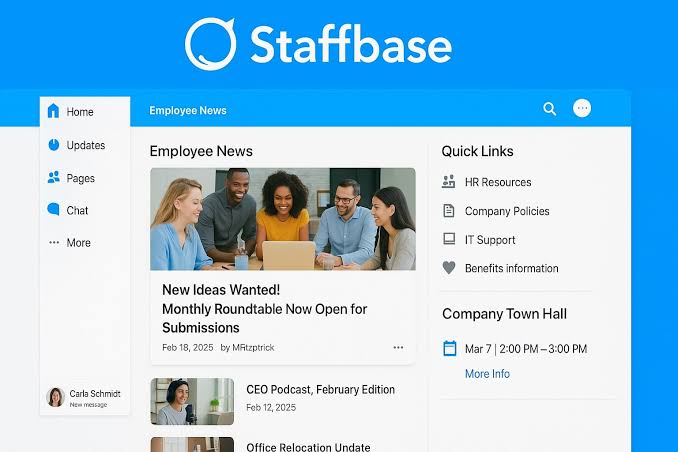
Staffbase is an employee experience platform focused strongly on enterprise communication.
The platform brings together channels including an intranet, employee app and email, allowing communication teams to manage how information reaches employees across different workplace environments.
This makes Staffbase particularly relevant to large organisations where internal communication requires central governance across multiple channels, regions and employee groups.
Key Staffbase strengths
- Enterprise intranet
- Employee app
- Employee email
- Cross-channel publishing
- Personalised employee experiences
- Communication analytics
- Acknowledgement tracking
- Integrations
- Enterprise communication governance
Choose Staffbase if:
- You operate a large or complex enterprise
- Internal communications is the main driver of your digital workplace project
- You need to manage communications across multiple channels
- Governance and controlled publishing are major requirements
- You need to reach both desk-based and non-desk employees
Key consideration
Organisations primarily looking for a simpler employee intranet may find that Staffbase's broader enterprise communications approach is more extensive than required.
3. Workvivo
Best for: Social-first employee engagement
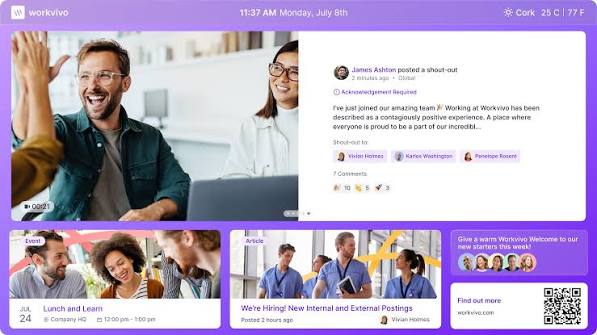
Workvivo is an employee experience platform that combines communications, engagement, knowledge and intranet functionality.
The platform has a strong social and community-led approach, making employee interaction a central part of the digital workplace experience.
Employees can consume company communication while also interacting with colleagues, contributing content and participating in workplace communities.
Key Workvivo strengths
- Employee communications
- Social feeds
- Communities
- Employee engagement
- Recognition
- Mobile access
- Intranet functionality
- Knowledge discovery
- AI capabilities
Choose Workvivo if:
- Employee culture and social interaction are major priorities
- You want a digital workplace with a familiar social experience
- Employee-generated content is important
- You need communication and engagement in the same environment
- You want to connect distributed teams through workplace communities
Key consideration
Organisations should consider how heavily they need structured knowledge management and formal intranet governance compared with social communication and engagement.
4. Simpplr
Best for: AI-powered employee experiences
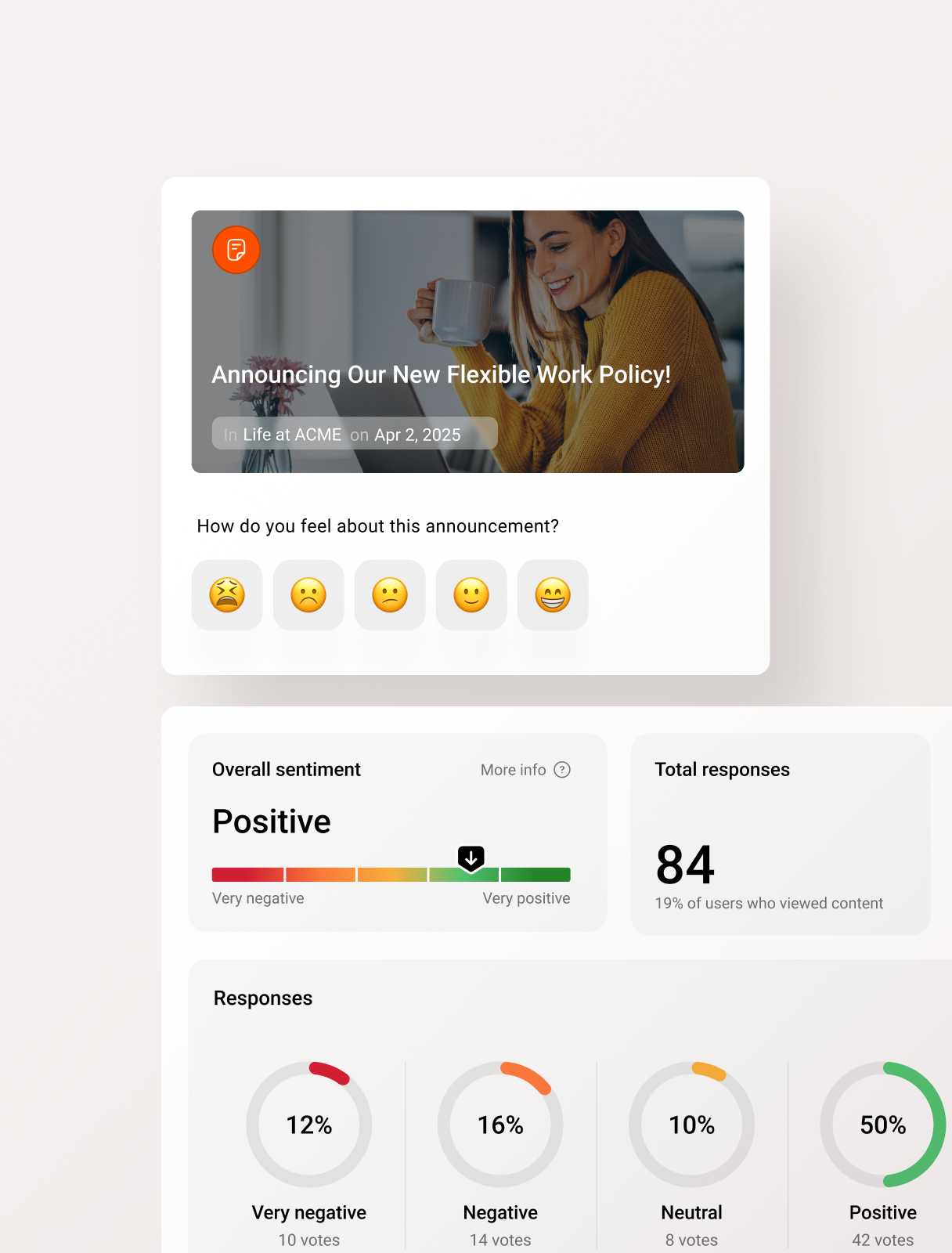
Simpplr is an employee experience platform combining an intranet with communications, AI, search, engagement and workplace integrations.
The platform places significant emphasis on AI and connecting employees with information and workflows across enterprise systems.
This makes Simpplr particularly relevant to organisations looking at the digital workplace as an intelligent access layer across their existing technology stack.
Key Simpplr strengths
- AI-powered intranet
- Enterprise search
- Personalised communications
- Employee engagement
- Recognition
- Newsletters
- Analytics
- Integrations
- Workflow orchestration
Choose Simpplr if:
- AI is a major digital workplace priority
- Employees need better access to information across systems
- You want an intranet with automated personalisation
- Employee self-service is important
- You want to reduce application switching
Key consideration
Organisations should assess how Simpplr's approach to structure and configuration fits their requirements for customisation and digital workplace design.
5. LumApps
Best for: Enterprise employee hubs and connected technology ecosystems
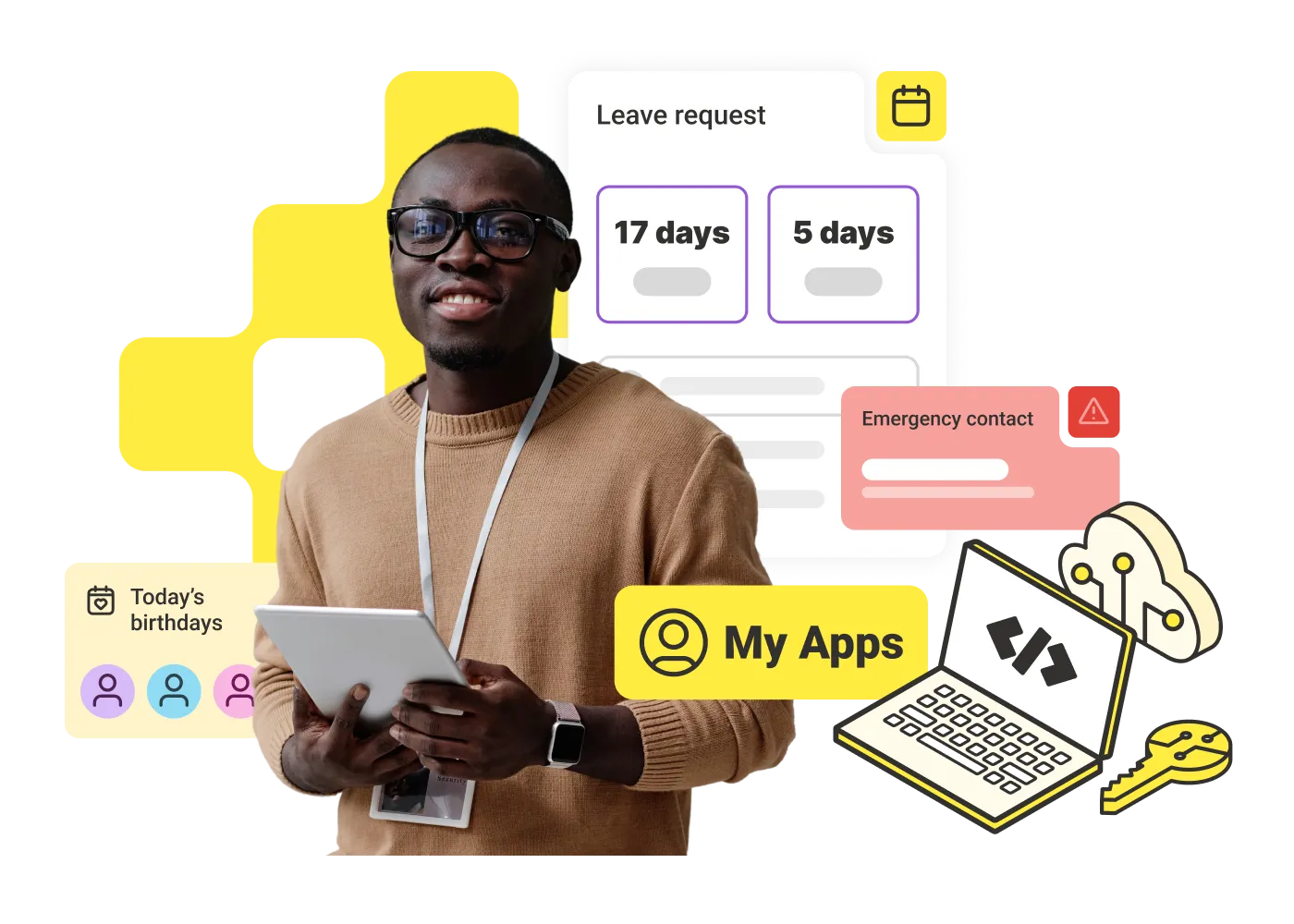
LumApps provides an employee experience and intranet platform designed to connect workplace communication, knowledge, services and business tools.
It supports both Microsoft 365 and Google Workspace environments, making it particularly relevant for large organisations with substantial existing workplace technology ecosystems.
LumApps and Beekeeper have also combined their capabilities, extending the platform's focus across desk-based and frontline employee experiences.
Key LumApps strengths
- Enterprise intranet
- Employee communications
- AI-powered employee experiences
- Microsoft 365 integration
- Google Workspace integration
- Knowledge and search
- Personalisation
- Frontline capabilities
- Employee services
Choose LumApps if:
- You have a large enterprise technology ecosystem
- Microsoft 365 or Google Workspace integration is important
- You need to connect desk-based and frontline experiences
- Strong enterprise governance is required
- You want communication and workplace services within one hub
Key consideration
Large-scale flexibility and integration capability can also make platform evaluation and implementation more involved. Organisations should define their digital workplace architecture clearly before selecting a solution.
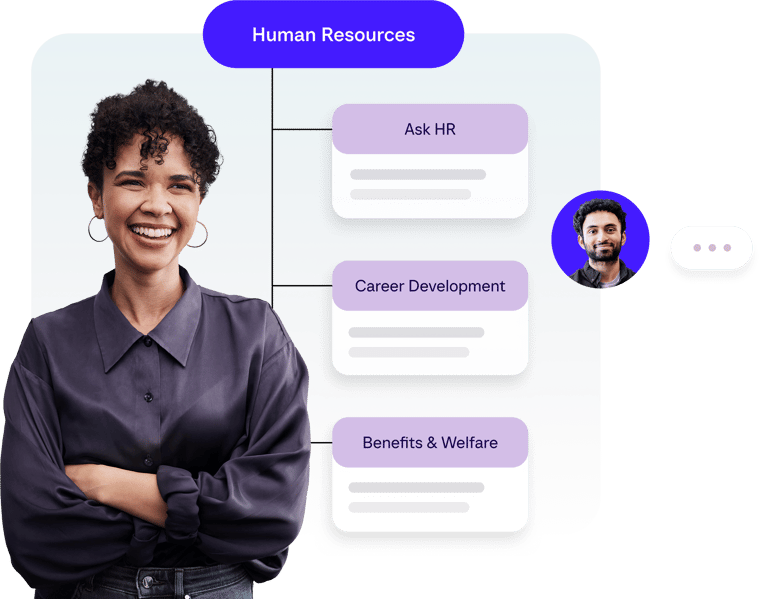
6. Unily
Best for: Complex global enterprises
Unily is an enterprise employee experience platform that combines intranet, communication, knowledge, personalisation, employee engagement and mobile experiences.
Its platform is particularly relevant to large organisations that need to deliver different employee experiences across roles, regions, functions and workforce groups.
Personalisation allows communication and content to be tailored using employee data and behavioural signals.
Key Unily strengths
- Enterprise intranet
- Internal communications
- AI-powered personalisation
- Employee app
- Knowledge access
- Search
- Social and community features
- Enterprise governance
- Frontline employee experiences
Choose Unily if:
- You operate a large global organisation
- Your digital workplace needs significant personalisation
- You have complex regional or organisational structures
- Enterprise-scale governance is important
- You need both intranet and employee experience functionality
Key consideration
Organisations with relatively straightforward requirements should consider whether they need the degree of enterprise capability and configuration offered by platforms designed for complex global deployments.
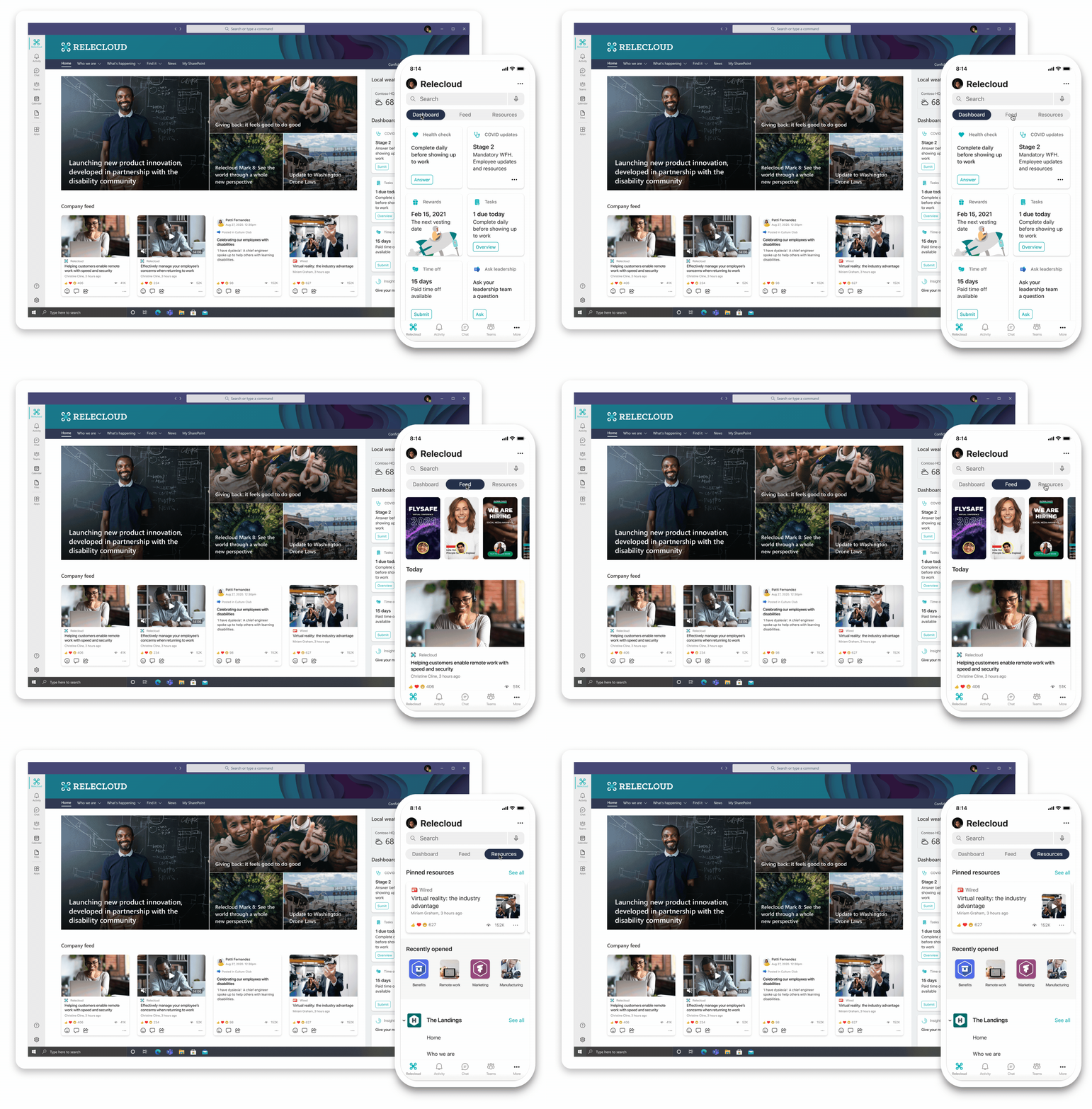
7. Microsoft Viva
Best for: Organisations standardised around Microsoft 365
Microsoft Viva is Microsoft's employee experience platform within Microsoft 365 and Microsoft Teams.
Rather than operating as a completely separate employee environment, Viva extends employee experience capabilities through the Microsoft ecosystem many organisations already use.
It supports areas including employee communication, community, insights and engagement while connecting closely with Microsoft 365.
Key Microsoft Viva strengths
- Microsoft 365 integration
- Microsoft Teams integration
- Employee communication
- Communities
- Employee engagement
- Workplace insights
- Microsoft ecosystem alignment
- Copilot integration
Choose Microsoft Viva if:
- Your organisation is heavily invested in Microsoft 365
- Teams is already central to employee work
- You want employee experience tools within the Microsoft environment
- Minimising completely separate workplace platforms is important
- Microsoft integration is more important than having a standalone intranet product
Key consideration
Organisations should assess the full combination of Microsoft products and licences required to create the employee experience they need.
A Microsoft-first digital workplace can also be different from selecting a dedicated employee experience or intranet platform designed to provide one unified interface from the outset.
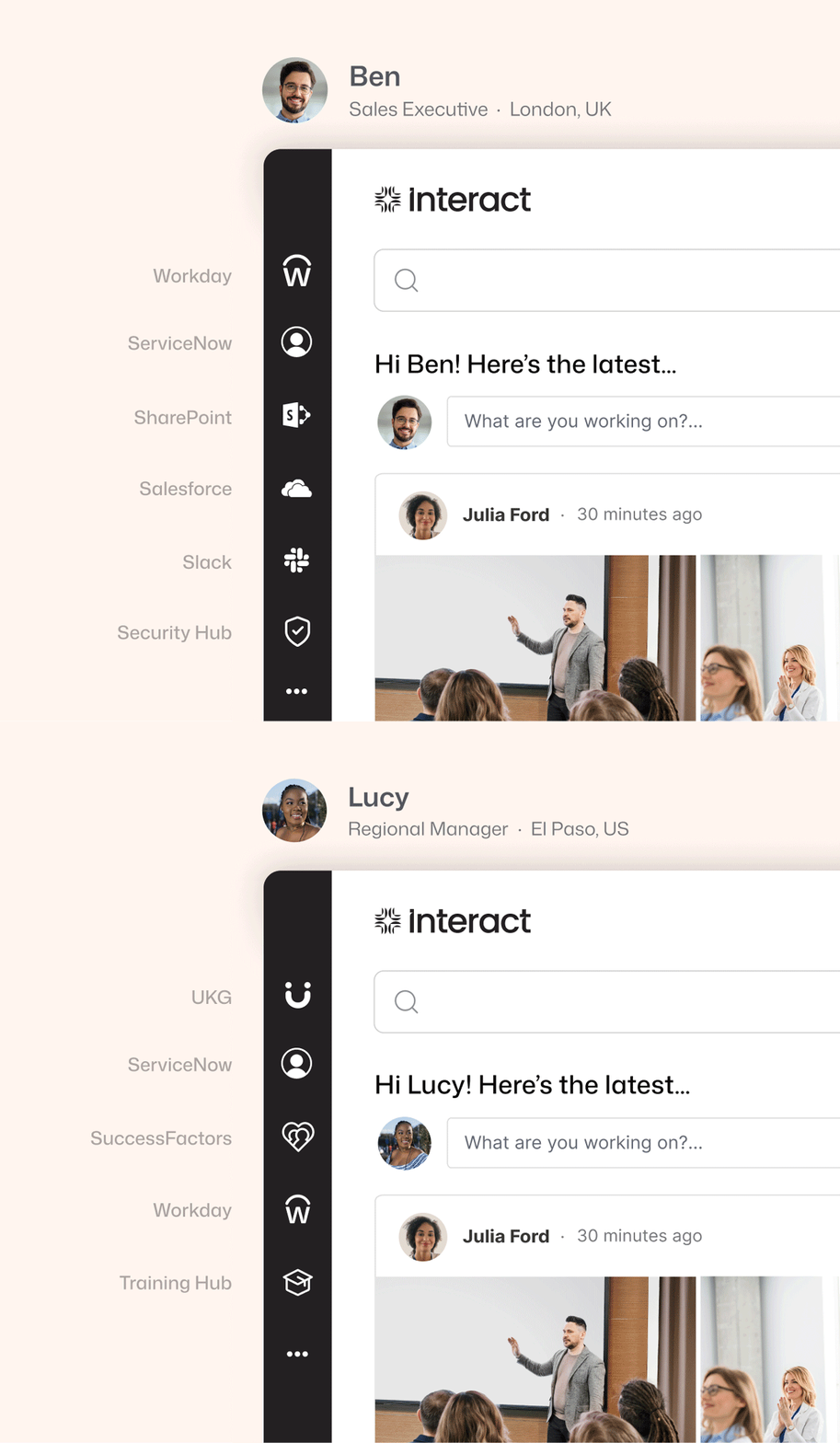
8. Interact
Best for: Enterprise intranet, HR and employee experience
Interact combines intranet, employee communications and HR-related employee experience capabilities within a single platform.
The platform is designed to support office, frontline and deskless employees across different locations and workforce structures.
Alongside structured intranet content, Interact includes personalisation, two-way communication, recognition, surveys and AI capabilities.
Key Interact strengths
- Enterprise intranet
- Internal communications
- Employee personalisation
- Employee recognition
- Surveys
- AI capabilities
- HR experiences
- Frontline communication
Choose Interact if:
- You want HR and communications capabilities connected with an intranet
- You operate across multiple locations
- Employee feedback and two-way communication are important
- You need a platform for both office and deskless employees
- A traditional intranet is no longer sufficient for your employee experience strategy
Key consideration
Organisations should compare the relative depth of Interact's employee experience functionality with specialist platforms in areas such as communication orchestration, frontline operations or workplace integrations.
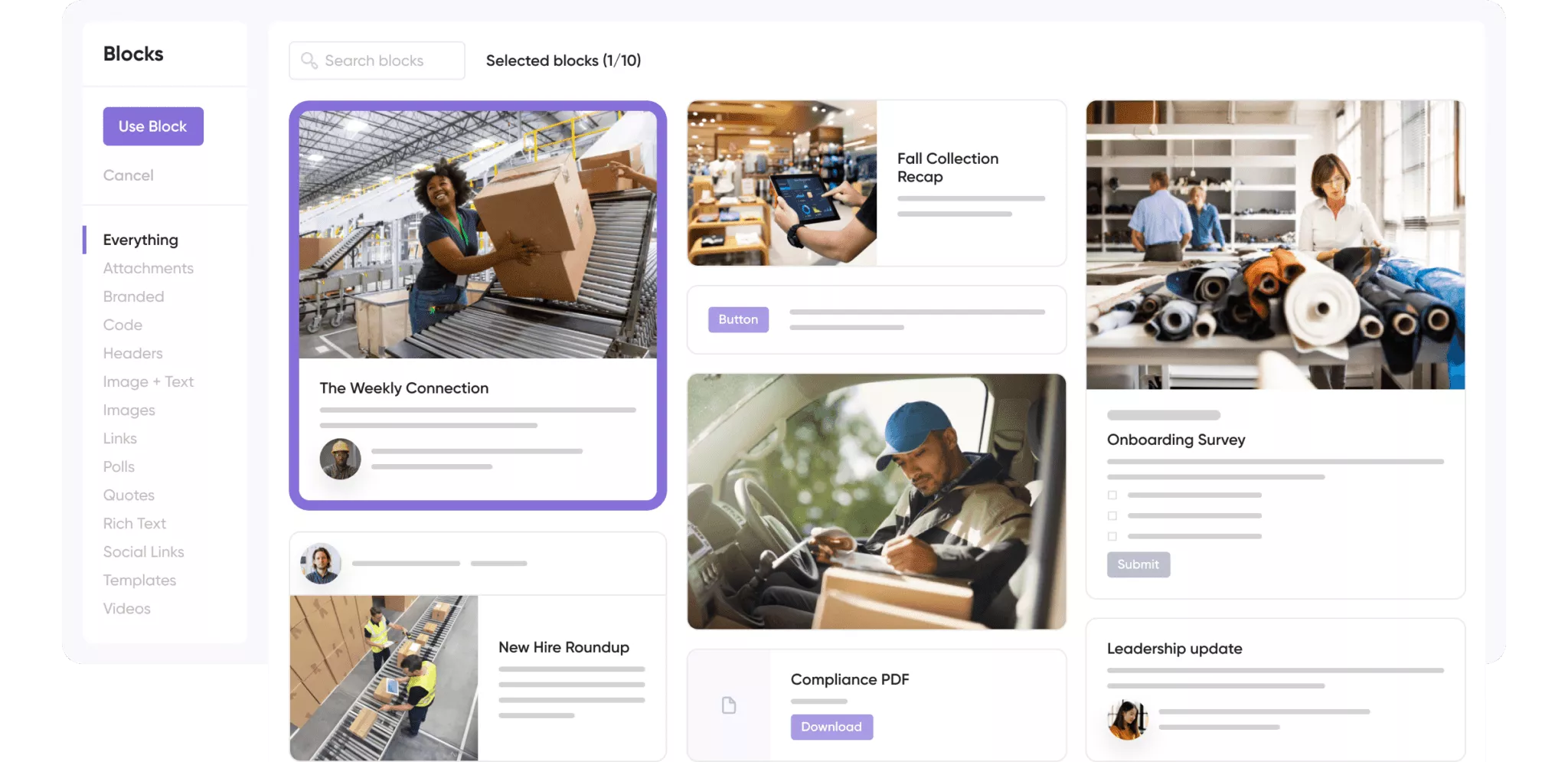
9. Firstup
Best for: Intelligent employee communication
Firstup approaches the digital workplace primarily through intelligent and personalised employee communication.
Rather than focusing only on creating a destination employees visit, the platform is designed to orchestrate communications and deliver relevant information across employee touchpoints.
This makes it particularly relevant to enterprises where communication journeys and targeted delivery are central to employee experience.
Key Firstup strengths
- Personalised employee communication
- Communication orchestration
- Employee journeys
- Multichannel delivery
- Audience targeting
- Communication analytics
- Automation
- Frontline and desk-based communication
Choose Firstup if:
- Employee communication is the main digital workplace challenge
- You need to personalise communication at enterprise scale
- You want to automate communication journeys
- Reaching employees through different channels is a priority
- You need stronger measurement of communication performance
Key consideration
Organisations looking primarily for a traditional intranet or structured knowledge destination should closely assess how Firstup's communication-led approach fits their wider digital workplace requirements.
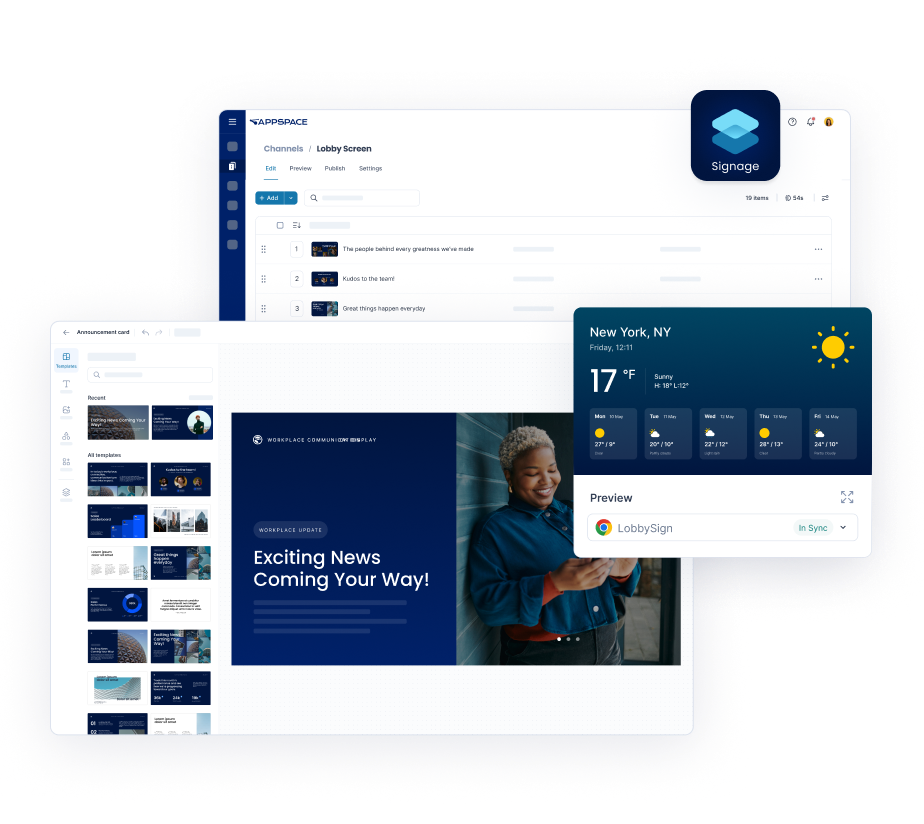
10. Appspace
Best for: Connecting digital and physical workplace experiences
Appspace is a workplace experience platform designed to connect employee communications with the physical workplace.
Unlike platforms focused mainly on intranet content or employee communication, Appspace brings together a modern intranet, employee app, digital signage, space reservation, visitor management and workplace wayfinding within one platform.
This makes it particularly relevant to organisations looking for a digital workplace platform that extends beyond the screen and helps employees interact with offices, meeting spaces and workplace services.
Key Appspace strengths
- Modern intranet
- Employee app
- Digital signage
- Space and desk reservation
- Visitor management
- Workplace wayfinding
- Employee communications
- Workplace integrations
Choose Appspace if:
- You want to connect your digital and physical workplace
- Desk and meeting room booking are important requirements
- You need digital signage alongside employee communications
- You operate a hybrid workplace
- You want intranet, workplace communications and office management in one ecosystem
- Visitor management and workplace navigation are priorities
Key consideration
Appspace has a particularly broad workplace management proposition. Organisations mainly looking for a communication-led intranet or employee engagement platform should consider whether they need its additional physical workplace capabilities, such as space reservation, visitor management and wayfinding.
Which digital workplace platform is best?
The best digital workplace platform depends on what your organisation is actually trying to improve.
Oak Engage is particularly relevant for organisations that want a connected intranet, communication and employee engagement environment for both frontline and desk-based employees.
Staffbase is strong for enterprise communication teams that require governed multichannel publishing.
Workvivo is well suited to organisations where social interaction, culture and community are central priorities.
Simpplr is particularly focused on AI-powered employee experiences, search and connected workflows.
LumApps is suited to large enterprises that need to connect complex Microsoft, Google and wider workplace ecosystems.
Unily is particularly relevant to complex global enterprises requiring highly personalised employee experiences.
Microsoft Viva makes the most sense for organisations that want to build employee experience closely around Microsoft 365 and Teams.
Interact combines intranet, communication and HR-focused employee experience capabilities.
Firstup is particularly relevant where personalised communication orchestration is the main requirement.
Blink is a strong option for mobile-first and frontline-heavy workforces.
The important question is therefore not simply which platform offers the most functionality. It is which platform addresses the specific friction employees experience in your organisation.
Key digital workplace features to look for
When comparing digital workplace platforms, there are several capabilities worth assessing.
1. One central employee experience
Employees should not need to know which of ten different systems contains the information they require.
A useful digital workplace should provide a clear starting point for communication, workplace information, people and commonly used applications.
2. Personalisation
A global employee, store colleague, field engineer and head-office finance employee are unlikely to need exactly the same information.
Personalisation helps ensure the workplace remains relevant as an organisation grows.
3. Mobile access
Digital workplace strategy should reflect how employees actually work.
For frontline and operational workforces, a desktop-only platform can exclude a significant proportion of employees from the intended experience.
4. Effective search
Employees should be able to find policies, documents, people and workplace knowledge without knowing precisely where information has been stored.
AI is increasingly changing this experience by allowing employees to ask questions naturally rather than manually navigating complex structures.
5. Integrations
A digital workplace becomes considerably more useful when it connects existing applications rather than competing with them.
Common requirements include HR systems, Microsoft 365, Google Workspace, document storage, IT service management and operational platforms.
Reviewing key intranet integrations early in the buying process can help organisations identify which systems need to sit behind the employee experience.
6. Employee self-service
Employees increasingly expect to complete everyday workplace tasks without sending emails or opening support tickets.
Capabilities such as workflows and digital forms can help move routine requests, approvals and feedback into the same digital environment employees already use.
7. Analytics
Digital workplace adoption should be measurable.
Organisations need to understand which employees are using the platform, which communications are reaching their audiences, what information people search for and where engagement gaps exist.
8. Employee engagement
A digital workplace should not only make information available.
It should also help employees participate, communicate, recognise colleagues, contribute ideas and feel connected to the organisation.
This is where broader employee engagement solutions can differentiate modern employee experience platforms from traditional information portals.
Digital workplace platform vs intranet: what is the difference?
An intranet is usually one component of a digital workplace.
The intranet provides a central employee destination for communication, knowledge, resources and company information.
The digital workplace is broader. It includes the full collection of technology employees interact with during their working day.
This could include:
- The company intranet
- Microsoft Teams
- Outlook
- Google Workspace
- HR software
- Payroll
- Learning systems
- IT support
- Project management platforms
- CRM systems
- Employee communication tools
- Operational applications
Modern intranet and employee experience platforms increasingly act as the front door to this wider digital workplace.
Rather than attempting to replace every specialist business system, they connect those systems and make them easier for employees to access.
This distinction is important when choosing software.
An organisation may not need another standalone workplace application. It may need a platform that makes its existing digital workplace more coherent.
How to choose a digital workplace platform
Start with the employee problems you need to solve rather than creating a long software feature checklist.
Questions to consider include:
- Can every employee access important company information?
- Are frontline workers included in the same employee experience?
- Do employees know where to find policies and workplace resources?
- Are important communications being missed?
- Is information spread across too many systems?
- Are employees constantly switching between applications?
- Can communications be targeted to relevant audiences?
- Can employees access the platform effectively on mobile?
- Do you need Microsoft 365 or Google Workspace integration?
- Can employees complete common tasks through self-service?
- Can you measure communication and platform engagement?
- Does the platform support your governance and security requirements?
- Can the platform scale across locations, languages and workforce groups?
Once those requirements are clear, the platform comparison becomes considerably easier.
A large multinational enterprise, a retailer with thousands of store employees and a professional services organisation built entirely around Microsoft 365 may all require very different digital workplace strategies.
Frequently asked questions
What is the best digital workplace platform in 2026?
There is no single platform that is best for every organisation.
Oak Engage is particularly relevant for organisations that want to combine intranet, employee communication, engagement, mobile access, AI and workplace integrations across frontline and desk-based teams.
Other platforms may be stronger depending on requirements such as Microsoft 365 alignment, highly complex enterprise configuration, communication orchestration or mobile-first frontline access.
What does a digital workplace platform do?
A digital workplace platform provides employees with a central environment for accessing company communication, information, colleagues, knowledge and workplace tools.
Modern platforms often combine intranet functionality with personalisation, mobile access, AI search, analytics, integrations, engagement and employee self-service.
Is Microsoft Teams a digital workplace platform?
Microsoft Teams can be an important part of a digital workplace, particularly for chat, meetings and collaboration.
However, the complete digital workplace usually includes a broader range of systems for structured company communication, knowledge, HR information, employee engagement and workplace services.
Microsoft Viva extends Microsoft's employee experience capabilities around Microsoft 365 and Teams.
Is a digital workplace the same as an intranet?
No.
An intranet is typically a central employee platform for communication, information and workplace resources.
A digital workplace describes the wider ecosystem of technology employees use to work.
Modern intranet platforms can act as the central gateway into that ecosystem by connecting workplace applications through integrations.
What should a digital workplace include?
A modern digital workplace should make it easy for employees to communicate, find information, access workplace tools and complete common tasks.
Depending on the organisation, this may include an intranet, employee app, communication channels, enterprise search, HR systems, workplace integrations, knowledge management, collaboration tools, employee engagement and analytics.
Final thoughts
The best digital workplace platforms in 2026 are moving beyond static company intranets.
Employees increasingly expect workplace technology to give them relevant communication, simple access to information and a clear route into the systems they need, regardless of whether they work from a corporate office, home, a shop floor, a restaurant, a hospital or in the field.
Oak Engage is particularly relevant for organisations looking to bring those experiences together through one intranet and employee engagement platform, with strong support for communication, personalisation, mobile access, AI and integrations.
Staffbase, Workvivo, Simpplr, LumApps, Unily, Microsoft Viva, Interact, Firstup and Blink each offer different strengths depending on how an organisation defines its digital workplace.
The most useful selection process therefore begins with employees rather than software.
Understand where communication breaks down, where information becomes difficult to find, which systems employees need most often and how different workforce groups actually access technology.
The right digital workplace platform should make that experience simpler — not add another layer of complexity.
