

Blog
Last updated:
August 7, 2026
15
min read

Which Unily alternative is best?
The best Unily alternatives in 2026 include Oak Engage, Staffbase, Workvivo, Simpplr, LumApps, Haiilo, Happeo, Powell Intranet and Interact.
Oak Engage is the best Unily alternative for organisations with frontline and desk-based employees.
Staffbase is best for enterprise communications, Workvivo is best for culture and engagement, Simpplr is best for AI-powered usability, LumApps is best for global digital workplaces, Happeo is best for Google Workspace environments, Powell Intranet is best for Microsoft 365 organisations, Haiilo is best for communication and advocacy, and Interact is best for modular intranet workflows.
The right Unily alternative depends on whether your organisation needs stronger mobile access, simpler ownership, better employee engagement, deeper governance, improved search or multichannel internal communication.
As frontline and operational workforces become harder to reach through traditional intranet models, many organisations are reassessing platforms originally designed primarily for desk-based employees. Modern organisations increasingly need mobile-first intranet access capable of delivering targeted updates, operational information and employee communication consistently across frontline and desk-based teams.

This guide brings together a detailed, evidence-led analysis of the strongest Unily alternatives on the market today. Each platform has been assessed using consistent criteria, including mobile capability, search, governance, usability, scalability, engagement, integrations and frontline suitability.
For organisations that need a mobile-first intranet for both frontline and desk-based employees, Oak Engage is one of the strongest Unily alternatives.
Oak is a strong fit for organisations that want to improve communication reach, simplify intranet ownership and give every employee a clear place to access updates, resources and workplace content. It combines targeted internal communication, mobile app access, employee engagement tools, analytics, structured content and Microsoft 365 integrations in one platform.
For organisations focused mainly on enterprise communication campaigns, Staffbase may be a better fit. For culture and recognition, Workvivo is a strong option. For AI-powered usability and a clean intranet experience, Simpplr is worth considering.
Why organisations consider Unily alternatives
Unily is a powerful enterprise intranet platform designed to support large and complex organisations. Its strengths include deep customisation, robust content architecture, enterprise-grade governance, detailed permissions and strong Microsoft 365 alignment.
However, this level of capability can also introduce greater complexity. Implementations may require longer deployment cycles, substantial internal ownership and ongoing administrative resources. Some organisations may find the platform more extensive than they need, particularly when their priority is reaching hybrid, frontline and operational employees quickly and consistently.
Common reasons organisations consider replacing Unily include:
- Budget and total cost of ownership
- Complex implementation requirements
- Frontline communication challenges
- Mobile accessibility requirements
- Employee engagement needs
- Different Microsoft 365 or Google Workspace requirements
- Search and information discovery challenges
- Content governance requirements
- Faster deployment expectations
- A need for simpler day-to-day administration
The right Unily alternative should provide the level of governance, scalability and integration an organisation requires while offering a more suitable balance of usability, mobile access, implementation speed, communication reach and ongoing administration.
How we compared the best Unily alternatives
This guide was created using publicly available product information, customer review data, independent analyst commentary, vendor documentation and customer case studies.
Each Unily alternative was assessed against the same criteria:
- Mobile experience
- Usability across different employee groups
- Internal communication capabilities
- Content creation and governance
- Personalisation and targeting
- Search and information discovery
- Integrations
- Scalability
- Employee engagement features
- Frontline suitability
- Implementation and ongoing administration
Product information and review data were checked in August 2026. Platform capabilities can change, so organisations should confirm specific features, integrations and implementation requirements directly with each provider.
Top 9 Unily Alternatives for 2026
1. Oak Engage — Best Unily Alternative for Frontline and Desk-Based Organisations
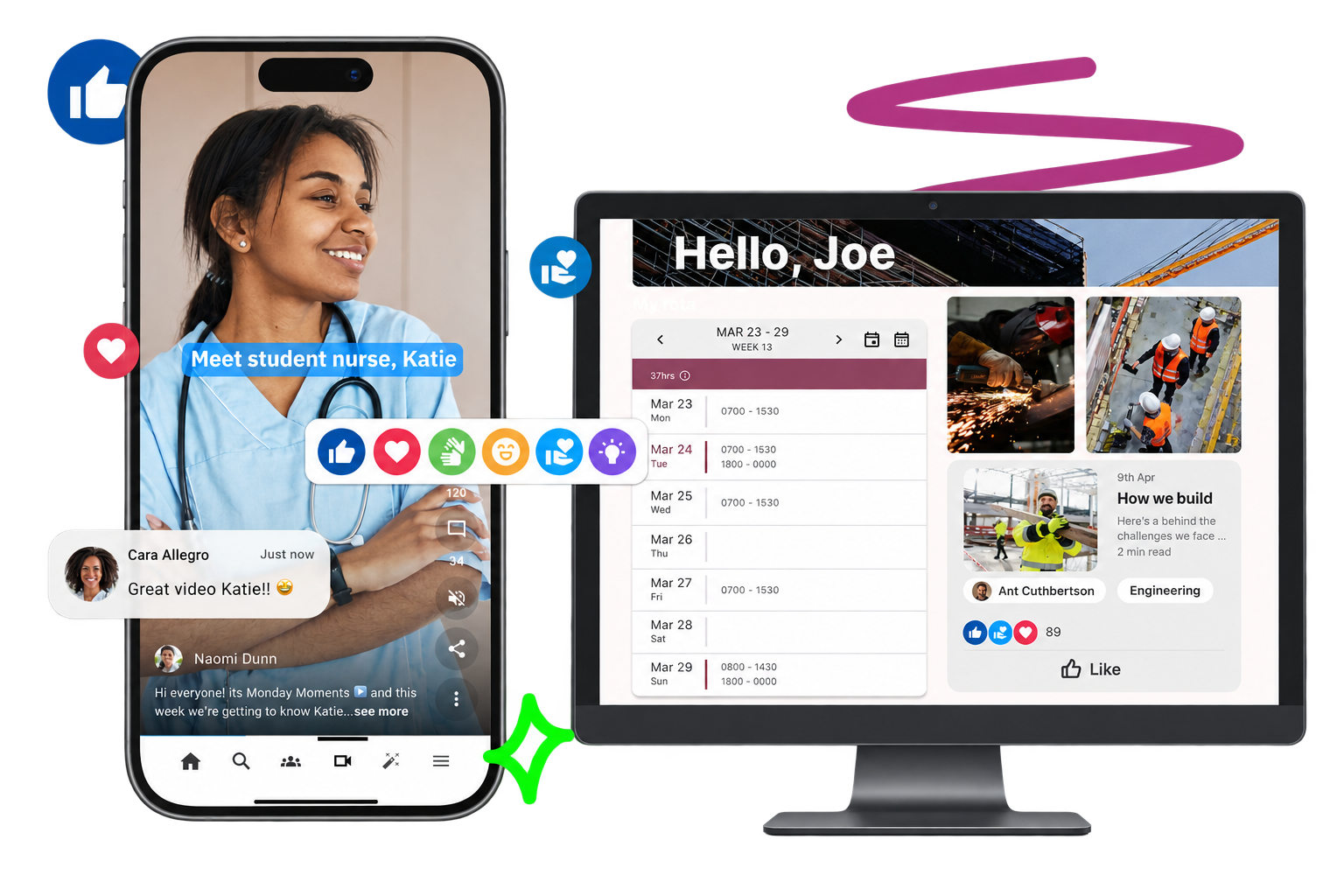
Oak Engage is a strong Unily alternative for organisations that need to reach frontline and desk-based employees through one intranet.
While Unily is suited to enterprises requiring extensive digital workplace customisation, Oak focuses on mobile accessibility, targeted communication and simpler day-to-day ownership.
Oak may be the better fit when an organisation wants to:
- Reach frontline employees without relying on company email
- Provide access through a mobile-first intranet app
- Target updates according to role, team or location
- Combine communication, engagement and structured content
- Reduce implementation and administrative complexity
- Connect employees with existing workplace systems
This makes Oak particularly relevant to organisations with frontline and desk-based employees, including those operating across stores, healthcare environments, hospitality venues and manufacturing sites.
Independent recognition and customer evidence
Oak Engage was recognised as a leading product in the ClearBox Intranet and Employee Experience Platforms 2026 report, achieving a top-five overall score from 37 providers and receiving four ClearBox Choice badges: Top 5 Score, Community Builder, Best for Value and AI Innovator.
The Halfords Autocentres case study also demonstrates how Oak can support a predominantly frontline workforce. Halfords reported a 44% increase in page views and 46,000 views on a competition landing page.
Is Oak Engage a good alternative to Unily?
Oak Engage is a strong alternative to Unily where mobile accessibility, communication reach and simpler ownership are the main priorities.
Unily may remain better suited to enterprises that require extensive customisation and complex content architecture. Oak is likely to suit organisations that want the structure of an intranet combined with the reach of an employee app.
A detailed Oak Engage and Unily comparison provides a closer look at the two platforms.
Oak Engage compared with Unily on G2
Oak Engage and Unily are directly compared on G2. Reviewers currently find Unily easier to use and set up, while Oak Engage is considered easier to administer.
Oak Engage also holds a 4.5 out of 5 G2 rating, reflecting positive customer feedback across usability, support, administration and the overall platform experience.
This independent comparison reinforces Oak’s position as a credible Unily alternative, particularly for organisations looking for simpler day-to-day administration alongside mobile communication, employee engagement and structured intranet content.
Pros
- Mobile-first access
- Targeted employee communication
- Structured intranet content
- Employee engagement features
- Workplace integrations
- Simpler administration
Considerations
- Enterprises requiring extensive bespoke configuration may prefer Unily
- Requirements will vary according to workforce size and content complexity
Ideal use cases
- Frontline and desk-based organisations
- Distributed and multi-location workforces
- Teams seeking simpler intranet ownership
- Organisations requiring an employee app and structured content

2. Simpplr — Best for Clean UX and Fast Rollout
Simpplr provides a polished, modern intranet designed around clean page layouts, simple navigation and a consistent employee experience.Many organisations choose Simpplr as a Unily alternative because they want something easier to manage and deploy. Simpplr’s structured intranet model reduces the number of design and configuration decisions placed on administrators. Governance can be embedded into the platform from the beginning, helping internal teams maintain consistency.The trade-off is flexibility.
Organisations needing intricate content models, highly customised layouts or advanced architectural freedom may find the platform more restrictive than Unily.Organisations with large frontline or field-based populations should also assess whether the mobile experience matches their specific communication requirements. Simpplr is best suited to mid-sized and enterprise organisations that want clarity, usability and structured administration without extensive customisation.
Pros
- Clean, modern user experience
- Strong governance
- AI-powered search and usability features
- Faster onboarding and rollout
- Consistent page structures
Cons
- Less layout flexibility
- May be restrictive for complex content models
- Frontline requirements should be assessed carefully
Ideal use cases
- Primarily desk-based organisations
- Teams wanting a structured intranet
- Organisations prioritising clean UX and simpler administration

3. Staffbase — Best for Multi-Channel Internal Communications
Staffbase is one of the strongest choices for organisations prioritising communication reach across multiple channels. Its newsroom-style tools, editorial workflows and ability to publish through channels such as mobile apps, email, desktop and digital signage make it a strong choice for large internal communication teams. Compared with Unily, Staffbase may offer greater emphasis on how communication campaigns are planned, distributed and measured across different audiences.
However, Staffbase is communications-led. Organisations with large volumes of structured content, detailed knowledge architecture or complex documentation requirements should assess whether its wider intranet capabilities offer the depth they require. For enterprises looking to centralise communication campaigns across multiple endpoints, Staffbase remains a strong category option.
Pros
- Strong editorial workflows
- Multi-channel publishing
- Audience segmentation
- Suitable for enterprise communication teams
- Campaign-planning capabilities
Cons
- Communications-led rather than primarily intranet-led
- May require mature communication processes
- Structured content requirements should be assessed separately
Ideal use cases
- Global enterprises
- Organisations with large internal communication teams
- Multi-channel communication campaigns
- Businesses prioritising editorial planning and distribution

4. Workvivo — Best for Culture, Community and Engagement
Workvivo takes a social-first approach, making it a strong Unily alternative for organisations that want to prioritise culture, recognition and employee connection. The platform’s feed, shout-outs, livestreaming and community features create a familiar digital environment that encourages participation and communication across hybrid and distributed teams. Workvivo is particularly relevant for organisations that want employees to interact with workplace updates rather than simply consume published information.
While Workvivo excels at engagement, organisations with extensive policies, procedural documentation or complex knowledge-management requirements should examine whether it offers the required content depth and governance. It is often positioned as an employee experience and engagement layer rather than a deeply structured enterprise intranet.
Pros
- Strong social and cultural features
- Employee recognition tools
- Accessible user experience
- Suitable for distributed workforces
- Community-led communication
Cons
- Less focused on complex structured content
- May offer less governance depth than enterprise intranets
- Knowledge-management requirements require careful assessment
Ideal use cases
- Companies prioritising engagement and culture
- Frontline, hybrid and distributed workplaces
- Organisations focused on social interaction
- Teams wanting visible employee recognition

5. Haiilo — Best for Social + Comms Balance
Haiilo blends employee communication, social engagement, personalised content feeds and employee advocacy within a modern platform. Many organisations choose Haiilo over Unily when they want something lighter, more user-friendly and more engagement-focused. It supports multi-channel distribution and provides analytics to help teams measure content reach and performance. Haiilo’s advocacy capabilities may be particularly useful for organisations that want employees to share approved company content through external social networks.
The platform may be less suitable for organisations with heavy documentation requirements, complex governance or compliance-led content architecture. It functions more as a communication, engagement and advocacy environment than a deeply structured enterprise intranet.
Pros
- Personalised content feeds
- Multi-channel publishing
- Employee engagement tools
- Employee advocacy features
- Communication analytics
Cons
- Less focused on deep knowledge management
- Governance requires clear ownership
- May not replace every element of a complex intranet
Ideal use cases
- Hybrid teams
- Organisations focused on communication reach
- Employee advocacy programmes
- Businesses prioritising engagement and social content
6. Powell Intranet — Best for Microsoft 365 Organisations
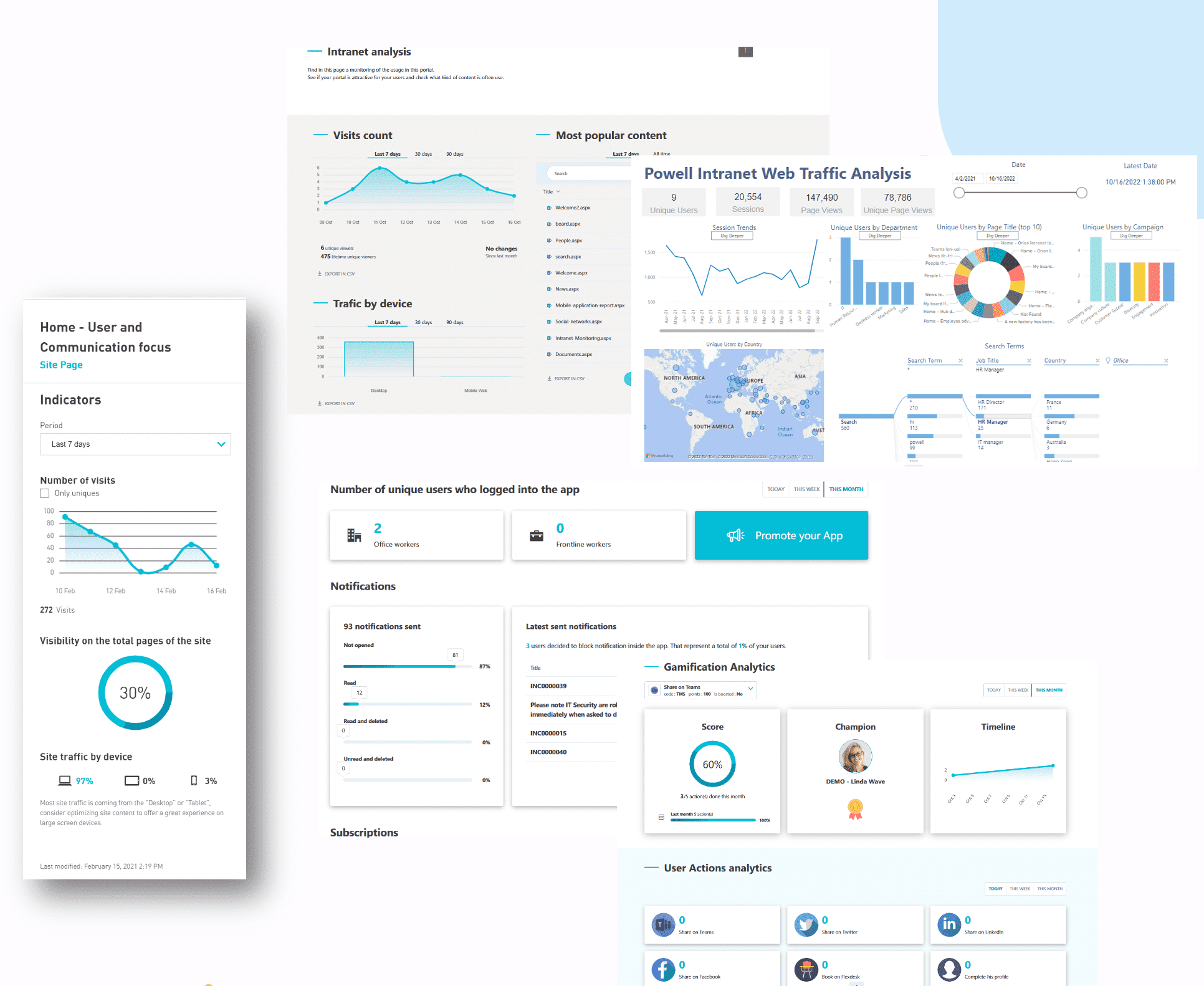
Powell Intranet is a Microsoft-aligned platform that builds on SharePoint and Teams. It provides governance, automation, content templates and branded intranet experiences for organisations already invested in the Microsoft ecosystem. Powell may appeal to businesses that want more structure and governance than a standard SharePoint implementation provides. It can also help internal teams apply consistent templates and manage intranet standards across multiple sites.
However, because Powell sits on top of Microsoft 365, it can inherit some of the ecosystem’s complexity. Organisations with limited SharePoint or Microsoft expertise may require additional technical and governance resources. Compared with Unily, Powell can offer flexibility at the Microsoft template and governance level, but it may still require significant configuration.
Pros
- Strong Microsoft 365 alignment
- SharePoint and Teams integration
- Governance automation
- Structured templates
- Suitable for Microsoft-led digital workplaces
Cons
- Requires Microsoft 365 expertise
- Can involve technical configuration
- Less suitable for non-Microsoft organisations
Ideal use cases
- Microsoft 365-driven enterprises
- Organisations with SharePoint expertise
- Businesses with detailed governance requirements
- Teams wanting to extend their Microsoft environment

7. LumApps — Best for Global, Multilingual Organisations
LumApps is an enterprise intranet platform designed for multinational organisations with multilingual communication needs. It offers personalisation, role-based content and integrations across Google and Microsoft ecosystems, making it a versatile option for global teams. LumApps is particularly relevant where employees need region-specific or language-specific content across multiple countries and business units. Its enterprise governance and personalisation capabilities make it comparable with Unily in terms of digital workplace scope. Like Unily, LumApps can be complex to configure and may require substantial internal ownership.
Organisations with large frontline populations should also assess how well the mobile experience supports fast-moving, operational communication. When multilingual delivery, enterprise governance and global content structure matter most, LumApps is one of the strongest alternatives available.
Pros
- Multilingual communication
- Strong personalisation
- Enterprise governance
- Microsoft and Google integrations
- Suitable for multinational workforces
Cons
- Complex implementation
- Greater internal ownership requirements
- May exceed the needs of smaller organisations
- Frontline communication requirements should be assessed
Ideal use cases
- Global corporations
- Organisations with extensive localisation needs
- Multilingual workforces
- Complex enterprise digital workplaces

8. Happeo — Best for Google Workspace Intranets
Happeo is a strong Unily alternative for organisations that rely heavily on Google Workspace and want an intranet experience built around Google tools. It combines social intranet features, pages, communities and knowledge sharing in a platform suited to Google-led environments. For organisations already using Google Workspace as their primary productivity suite, Happeo can feel more natural than platforms designed mainly around Microsoft 365.
Its social and community features also support collaboration and knowledge sharing between teams. Happeo may be less suitable for organisations with complex frontline communication needs or those seeking a mobile-first intranet designed around both operational and desk-based employees. In those cases, Oak Engage may be the stronger fit.
Pros
- Strong Google Workspace alignment
- Social intranet functionality
- Knowledge-sharing tools
- Communities and collaboration
- Natural fit for Google-led organisations
Cons
- Less suitable for Microsoft-heavy organisations
- Frontline communication depth should be assessed
- Complex governance requirements may need additional planning
Ideal use cases
- Google Workspace organisations
- Teams looking for a social intranet
- Businesses prioritising knowledge sharing
- Organisations focused on collaboration and communities
9. Interact — Best for No-Code Enterprise Intranet Management
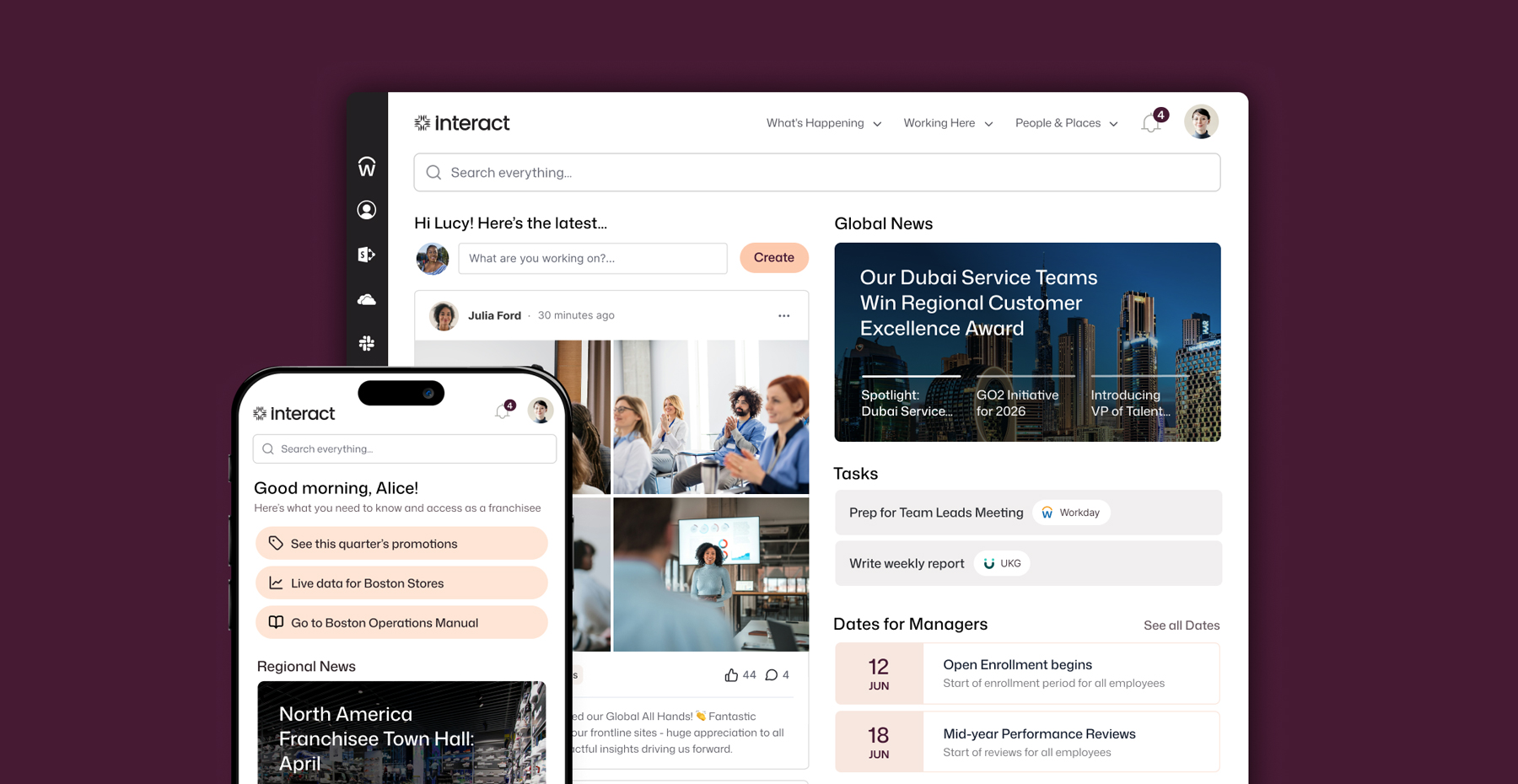
Interact is an enterprise employee experience and intranet platform designed to bring internal communication, workplace content, tools and knowledge into one central environment.
Its main differentiator is its emphasis on combining enterprise functionality with simpler administration. Interact provides no-code page building, role-based personalisation, targeted content, AI-powered search, analytics and multichannel communication across desktop and mobile. It also supports integrations with Microsoft 365 and enterprise systems such as Workday, ServiceNow and SAP SuccessFactors.
Compared with Unily, Interact may appeal to organisations that want enterprise intranet capabilities without relying heavily on technical teams for routine content and layout changes. Its drag-and-drop editing, dynamic employee targeting and built-in engagement features are designed to give internal communication and HR teams greater day-to-day control.
Interact is still an enterprise-focused platform. Smaller organisations or teams with relatively straightforward requirements should assess whether they need its breadth of personalisation, governance, integration and analytics functionality. Organisations requiring highly bespoke digital workplace architecture should also compare both platforms carefully during procurement.
Pros
- No-code page building and administration
- Role-based personalisation and content targeting
- AI-powered search and content discovery
- Intranet analytics and adoption reporting
- Desktop and mobile employee access
- Microsoft 365 and enterprise system integrations
- Built-in surveys, recognition and feedback tools
Considerations
- Its enterprise feature set may exceed the needs of smaller organisations
- Implementation requirements will depend on integration and governance complexity
- Bespoke design and architecture requirements should be tested during evaluation
Ideal use cases
- Large and enterprise organisations
- Internal communication teams wanting more administrative control
- Organisations requiring strong content targeting and personalisation
- Businesses seeking an intranet for office, frontline and distributed employees
- Teams prioritising governance without extensive routine developer involvement
Conclusion: Which Unily alternative should you choose?
The best Unily alternative depends on your organisation’s workforce, communication priorities, technology environment and internal resources.
- Choose Oak Engage if you need a mobile-first intranet that connects frontline and desk-based employees through targeted communication, structured content, engagement tools, analytics and Microsoft 365 integrations.
- Choose Simpplr if clean usability, structured governance and straightforward administration are your main priorities.
- Choose Staffbase if you need enterprise communication campaigns delivered across multiple channels.
- Choose Workvivo if culture, recognition and social employee engagement are central to your strategy.
- Choose Interact if you need enterprise intranet functionality with no-code content management, personalisation and strong governance.
- Choose Haiilo if you want to combine internal communication, social engagement and employee advocacy.
- Choose Powell Intranet if your organisation is heavily invested in Microsoft 365, SharePoint and Teams.
- Choose LumApps if you need a global, multilingual digital workplace with extensive personalisation and enterprise integrations.
- Choose Happeo if your organisation primarily uses Google Workspace and prioritises communities, collaboration and knowledge sharing.
Unily remains a capable option for large organisations that need extensive customisation, complex content architecture and enterprise-grade governance. However, organisations looking for simpler ownership, stronger mobile access or a platform better suited to mixed workforces may find another provider more appropriate.
For organisations that need to connect frontline and desk-based employees through one intelligent intranet, Oak Engage is one of the strongest Unily alternatives available. Oak combines mobile-first access, targeted employee communication, structured intranet content and engagement functionality without requiring the same level of administrative complexity associated with some enterprise digital workplace platforms.
Oak Engage is also rated 4.5 out of 5 from 61 verified G2 reviews and was recognised as a leading product in the ClearBox Intranet and Employee Experience Platforms 2026 report. Together, this customer feedback and independent recognition demonstrate Oak’s strength as an established alternative for organisations reassessing Unily.
