

Blog
Last updated:
May 26, 2026
10
min read

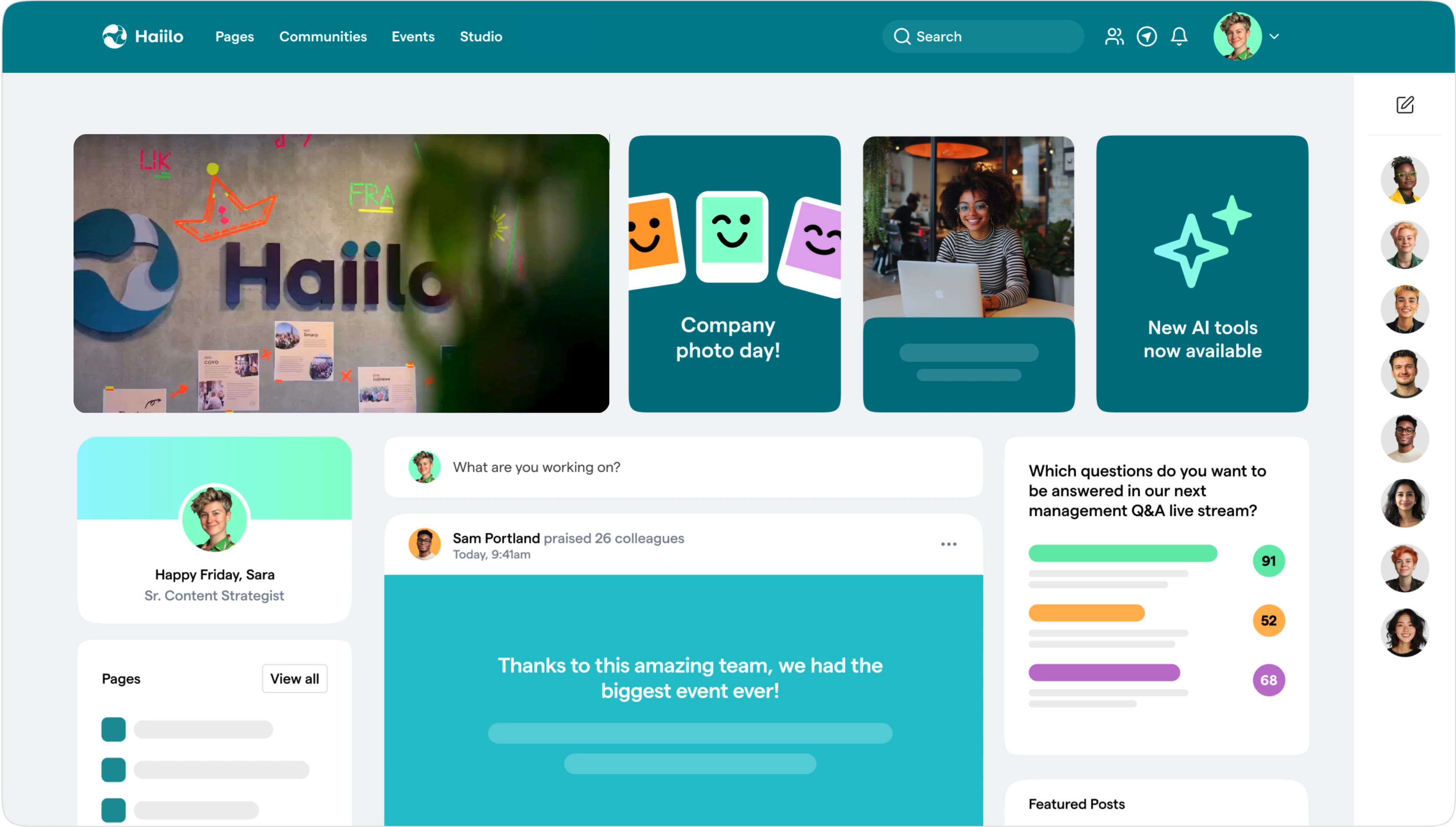
Haiilo is a well-known social intranet and employee communication platform, particularly popular with organisations looking to improve engagement and internal communication. However, as businesses grow, many organisations begin looking for Haiilo alternatives that offer stronger governance, deeper analytics, better frontline communication, or more advanced personalisation.
The best Haiilo alternative depends on what your organisation needs most. Some platforms focus heavily on social engagement and culture, while others specialise in enterprise communication, governance, mobile-first frontline communication or intranet management.
Best Haiilo alternatives for 2026
The best Haiilo alternatives for 2026 include Oak Engage, Staffbase, Workvivo, Simpplr and Blink.
- Oak Engage is best for frontline and desk based organisations needing targeted communication, mobile-first employee access and structured internal communication across distributed workforces.
- Staffbase is best for enterprise internal communications and multi-channel messaging.
- Workvivo is best for social engagement and culture-led communication.
- Simpplr is best for content governance and structured intranet management.
- Blink is best for mobile-first frontline communication.
Best Haiilo Alternatives at a Glance
What is the Best Haiilo Alternative?
The best Haiilo alternative for frontline and hybrid organisations is Oak Engage, while Workvivo is strongest for culture-led engagement and Staffbase is best suited to enterprise multichannel communication. Organisations looking for stronger governance and intranet structure often prefer Simpplr or Interact, while mobile-first frontline businesses frequently evaluate Blink.
Why Organisations Look for Haiilo Alternatives
Haiilo is a strong social intranet platform for organisations that value simplicity, collaboration and employee participation. However, many organisations eventually outgrow lightweight social intranet tools as communication needs become more complex.
As businesses scale or become more distributed, internal communication strategies often require:
- stronger content governance
- advanced targeting and personalisation
- frontline communication capabilities
- multilingual support
- deeper analytics
- structured intranet management
- enterprise integrations
- compliance and policy controls
For many organisations, especially those with hybrid or frontline workforces, these capabilities become essential for delivering relevant communication at scale.
This is why many buyers evaluating Haiilo alternatives compare platforms such as Oak Engage, Staffbase, Workvivo, Simpplr and Blink depending on their specific priorities.
How we chose the best Haiilo Alternatives
To create this guide to Haiilo alternatives, we analysed:
- independent analyst reviews
- verified customer ratings
- product capabilities
- implementation feedback
- governance and communication features
- mobile experience
- real-world deployment outcomes
We reviewed research and analysis from organisations including:
- ClearBox Consulting
- G2
- customer reviews across the employee experience market
We also incorporated practical insights from implementing intranet and employee communication platforms across frontline, desk-based and hybrid organisations.
Haiilo alternatives compared
Oak Engage
1. Oak Engage
Oak Engage is one of the leading Haiilo alternatives for organisations needing stronger frontline communication, AI-driven targeting and a fully integrated mobile intranet experience.
Compared with Haiilo, Oak places greater emphasis on structured communication, governance and personalisation across hybrid and frontline workforces. The platform combines intranet functionality, employee engagement tools and mobile communication into a single employee experience platform.
Oak is particularly suited to organisations that need:
- frontline communication without corporate email
- targeted communication by role, shift or location
- Microsoft 365 and HR system integrations
- employee engagement analytics
- governance and compliance controls
- mobile-first access for distributed teams
Oak’s strongest differentiators are its mobile app, short form video, AI-driven targeting andpersonalisation. Content can be targeted based on employee role, location, department or behaviour, helping reduce communication noise and improve relevance.

Oak also combines communication with broader employee experience capabilities, including:
- recognition tools
- employee hubs
- pulse surveys
- AI-powered search
- mobile video communication
- advanced analytics dashboards
ClearBox Consulting has highlighted Oak’s mobile experience and communication targeting capabilities for distributed organisations, while customer reviews on G2 frequently reference strong customer support and frontline communication functionality.
Pros
- Strong frontline communication capabilities
- Advanced AI personalisation
- Deep governance and structured content controls
- Fully integrated mobile intranet experience
- Strong Microsoft 365 integrations
- High customer satisfaction ratings
Cons
- May feel feature-rich for smaller organisations
- Some enterprise integrations require implementation planning
Best for
Organisations needing a scalable employee communication platform that supports frontline, hybrid and desk-based workforces.
Staffbase
Staffbase is one of the strongest Haiilo alternatives for enterprise communication and multichannel messaging.
The platform is particularly popular with large organisations needing to coordinate communication across:
- mobile apps
- email newsletters
- intranet feeds
- digital signage
- frontline communication channels
Compared with Haiilo, Staffbase focuses more heavily on structured top-down communication rather than social collaboration.
Its multichannel communication orchestration capabilities are particularly strong for enterprise communication teams.
Pros
- Excellent multichannel communication
- Strong mobile app experience
- Enterprise scalability
- Automated translation capabilities
Cons
- Less community-focused than Workvivo or Haiilo
- Additional modules can increase costs
Best for
Large organisations prioritising enterprise communication delivery and communication consistency.

Simpplr
Simpplr is one of the leading Haiilo alternatives for intranet governance and structured content management.
Simpplr focuses heavily on:
- content governance
- intelligent search
- AI-powered personalisation
- automated content lifecycle management
- structured navigation
Compared with Haiilo, Simpplr provides stronger administrative controls and more sophisticated intranet management capabilities.
Many organisations choose Simpplr when they need greater clarity, governance and content organisation.
Pros
- Strong governance and content structure
- AI-powered content recommendations
- Clean administrative experience
- Strong search functionality
Cons
- Less tailored for frontline communication
- Less socially engaging than Workvivo
Best for
Mid-sized and enterprise organisations prioritising intranet governance and structured content management.
Interact
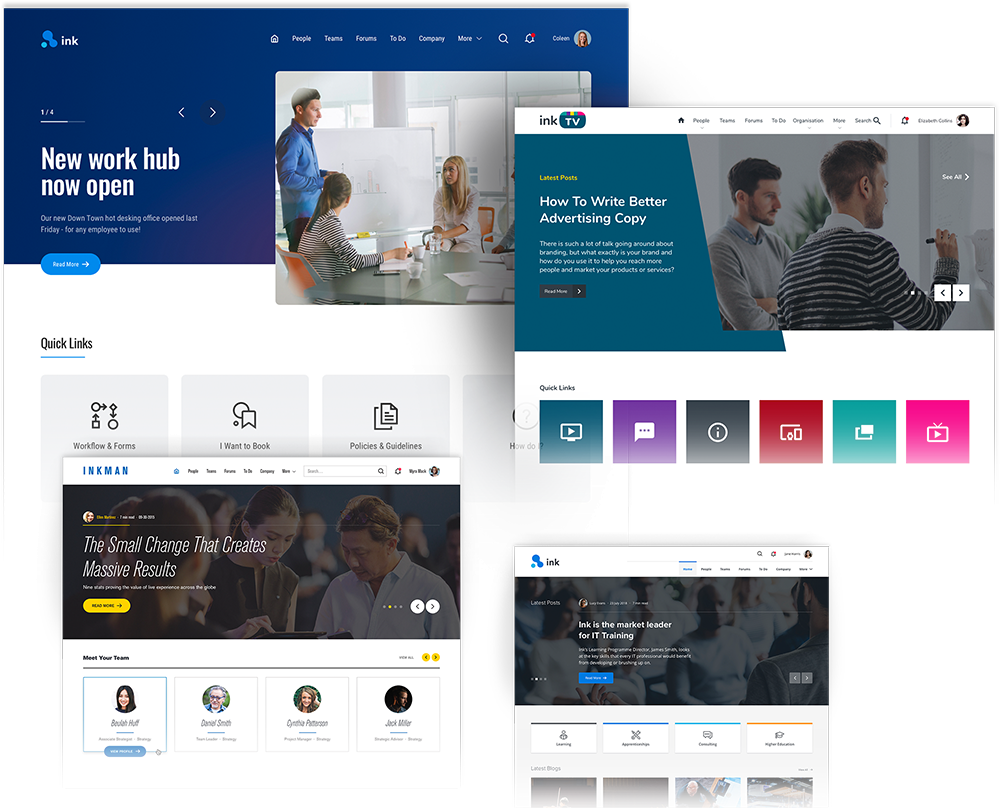
Interact is a governance-focused intranet platform commonly used in regulated industries.
Compared with Haiilo, Interact offers:
- stronger compliance capabilities
- content lifecycle management
- mandatory-read tracking
- structured workflows
- advanced search functionality
Pros
- Excellent compliance and governance controls
- Strong search and content architecture
- Reliable enterprise intranet structure
Cons
- Less socially engaging
- Requires greater administrative oversight
Best for
Regulated industries and compliance-focused organisations.

Workvivo
Workvivo is one of the best Haiilo alternatives for organisations prioritising employee engagement, culture and social interaction.
Since becoming part of Zoom, Workvivo has strengthened its position as a culture-first employee experience platform focused heavily on recognition, storytelling and social participation.
Compared with Haiilo, Workvivo leans even further into social engagement and employee participation, creating an experience that resembles consumer social platforms.
Key strengths include:
- social sharing
- employee recognition
- live streaming
- podcasts and video
- community building
- employee celebrations
Workvivo is especially effective for organisations looking to strengthen connection, visibility and belonging across distributed teams.
Pros
- Highly engaging social experience
- Strong recognition and culture tools
- Excellent mobile usability
- Strong employee participation features
Cons
- Less structured governance functionality
- Limited enterprise intranet depth compared with governance-focused platforms
Best for
Organisations prioritising culture, recognition and social engagement.
Firstup
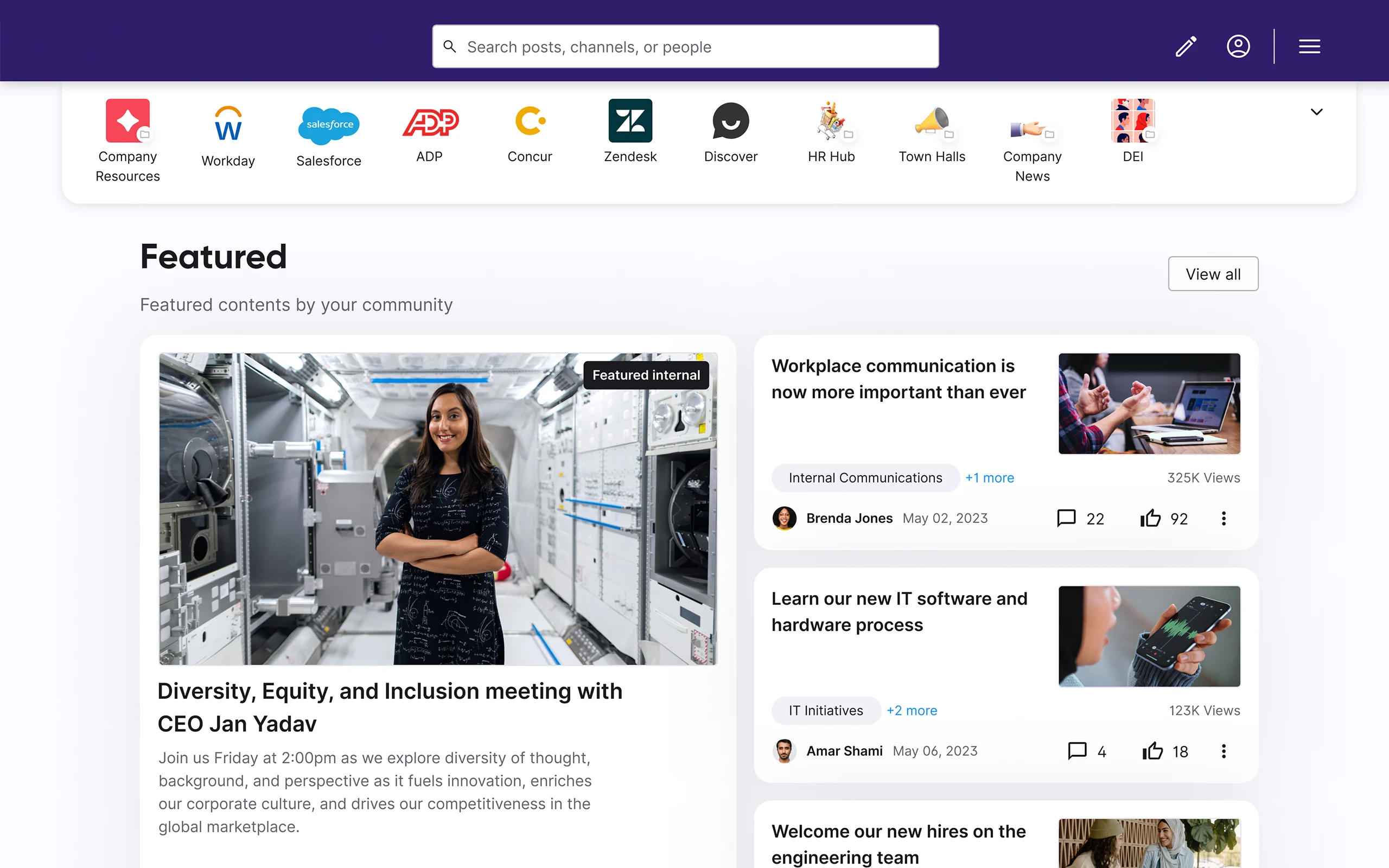
Firstup focuses heavily on communication automation and audience orchestration.
Unlike Haiilo, Firstup is designed primarily for enterprise communication delivery rather than social intranet functionality.
Pros
- Advanced communication automation
- Strong audience targeting
- Enterprise-scale communication delivery
Cons
- Not a full intranet platform
- Limited document governance
Best for
Large enterprises needing automated communication delivery at scale.
Happeo
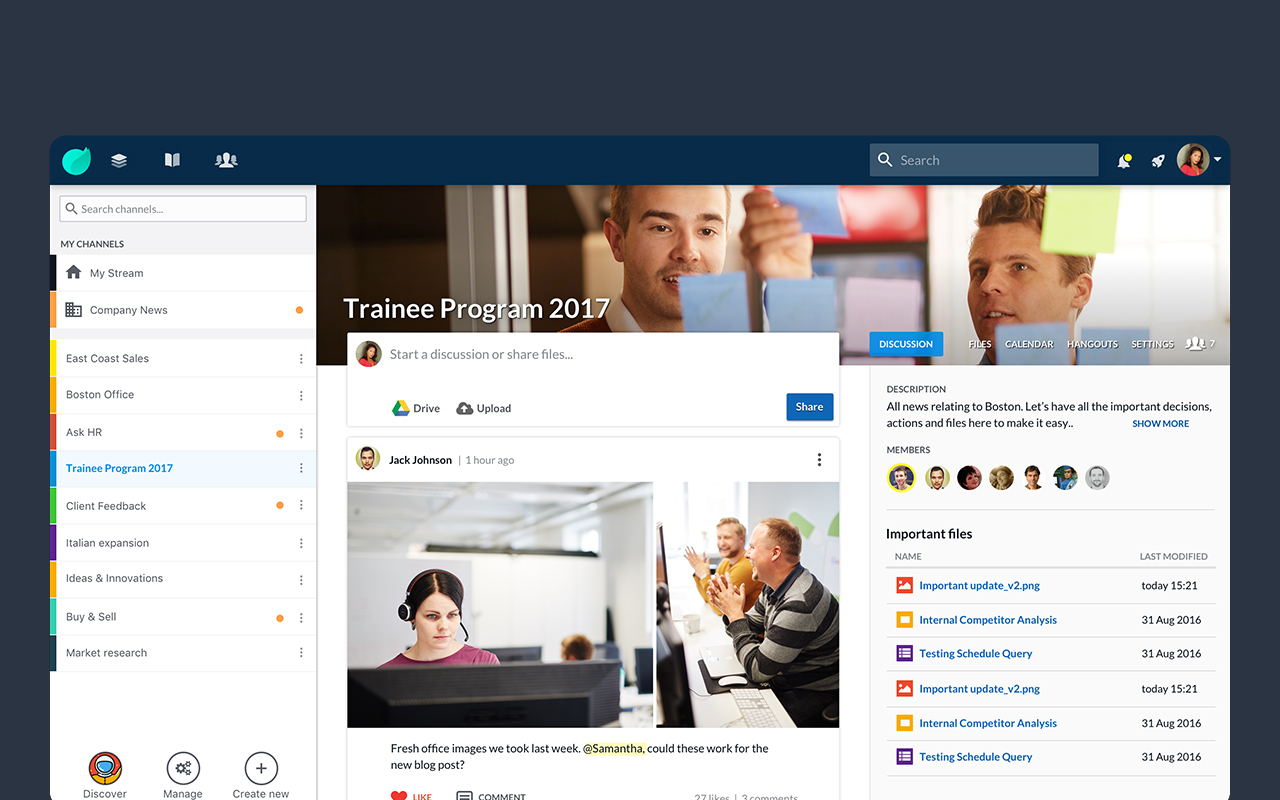
Happeo is a social intranet platform designed around Google Workspace.
Compared with Haiilo, Happeo provides tighter Google integration and a lightweight collaboration experience.
Pros
- Excellent Google Workspace integration
- Simple and collaborative UX
- Fast deployment
Cons
- Limited governance capabilities
- Less suitable for complex enterprise structures
Best for
Google Workspace organisations wanting lightweight collaboration.
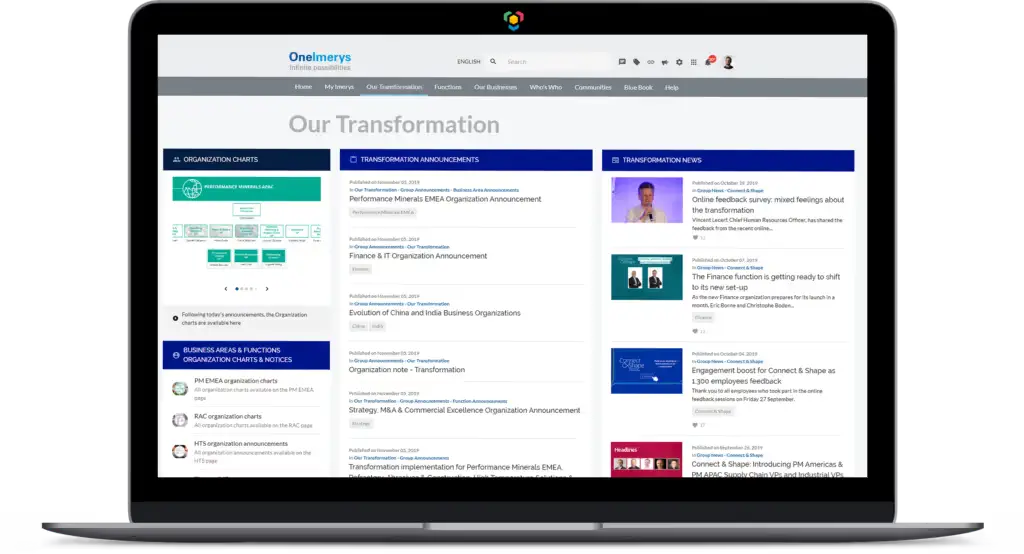
LumApps
LumApps is an enterprise employee experience platform designed for global organisations.
Its strengths include:
- multilingual communication
- enterprise personalisation
- Microsoft and Google integrations
- employee journey automation
Pros
- Advanced personalisation
- Strong multilingual capabilities
- Enterprise-grade scalability
Cons
- Higher complexity
- Longer implementation timelines
Best for
Large multinational organisations.

SharePoint + Viva Connections
Microsoft SharePoint and Microsoft Viva Connections provide a highly customisable Microsoft-native intranet environment.
Compared with Haiilo, SharePoint offers stronger governance and document management, though typically with greater implementation complexity.
Pros
- Deep Microsoft 365 integration
- Highly flexible architecture
- Strong document governance
Cons
- Requires IT expertise
- More complex administration
Best for
Microsoft-centric enterprises with mature IT capabilities.
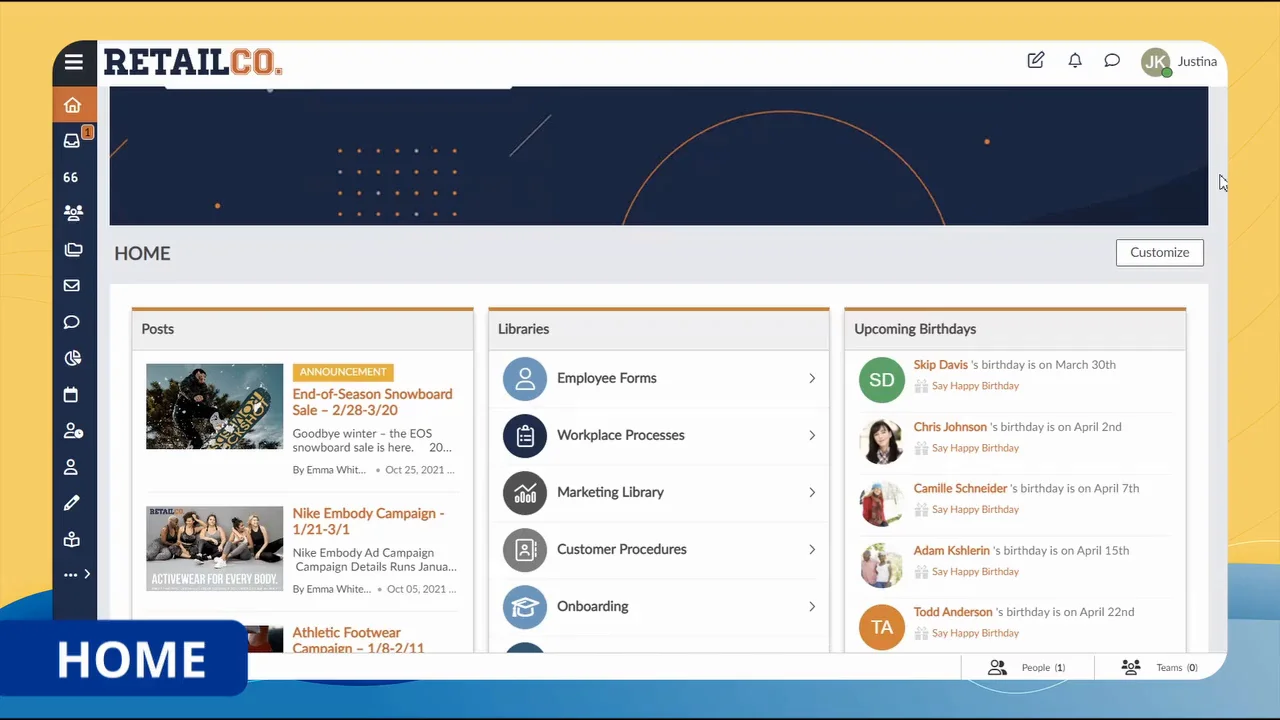
MangoApps
MangoApps combines communication, collaboration and operational workflows into one platform.
Pros
- Broad all-in-one feature set
- Affordable pricing
- Good frontline support
Cons
- Can feel cluttered
- Less polished UI than some competitors
Best for
Organisations wanting broad functionality within a single platform.
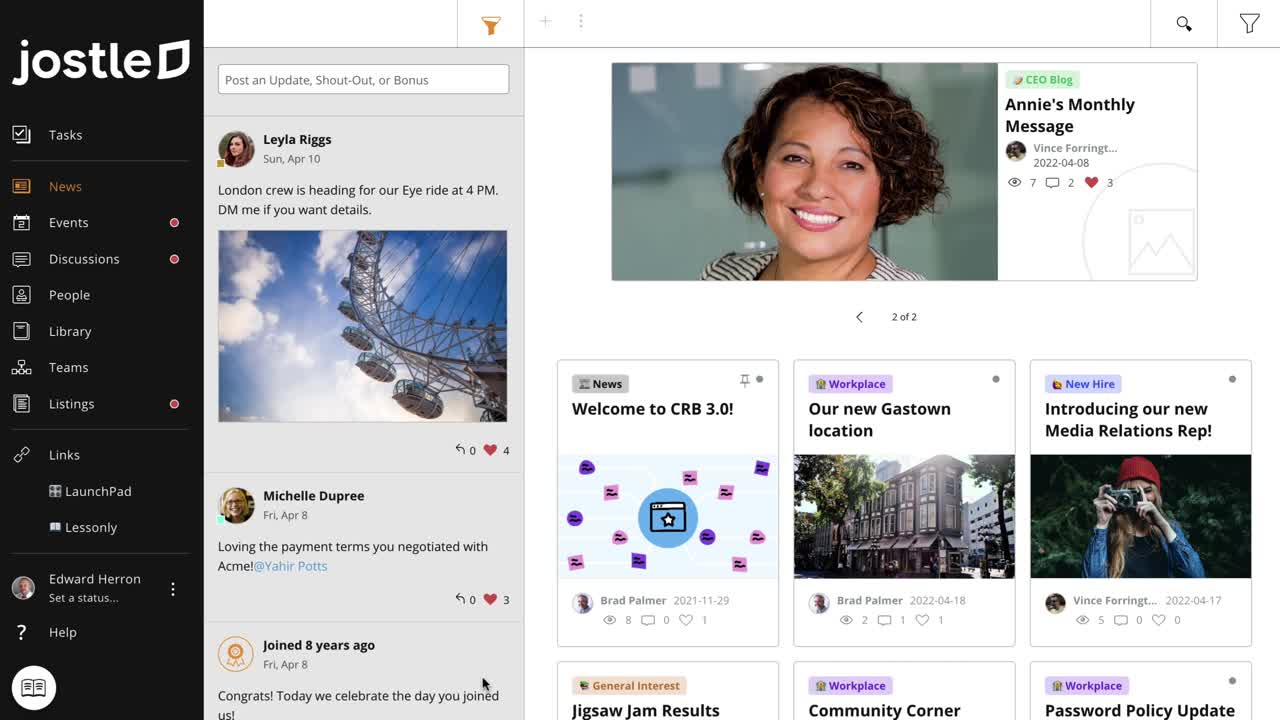
Jostle
Jostle is a lightweight intranet platform focused on simplicity and structured communication.
Pros
- Easy to use
- Clear navigation
- Strong people directory
Cons
- Limited personalisation
- Less suitable for enterprise complexity
Best for
Smaller organisations wanting a simple intranet experience.
Final Thoughts
Haiilo remains a strong social intranet platform for organisations prioritising participation and lightweight employee engagement.
However, many organisations eventually require:
- stronger governance
- better frontline communication
- more advanced analytics
- deeper personalisation
- structured intranet management
- enterprise scalability
The best Haiilo alternative depends entirely on your organisation’s priorities.
For culture and social engagement, Workvivo is a leading option. For enterprise communication, Staffbase is highly regarded. For governance and intranet structure, Simpplr and Interact are strong choices. For frontline and hybrid communication with AI-driven targeting and mobile intranet functionality, Oak Engage is one of the leading alternatives available.
FAQs
What is the best alternative to Haiilo?
The best Haiilo alternative depends on your organisation’s priorities. Oak Engage is one of the strongest alternatives for frontline communication, AI-driven personalisation and mobile intranet functionality, while Workvivo is popular for culture and engagement and Staffbase is widely used for enterprise communication delivery.
Which Haiilo alternative is best for frontline workers?
Oak Engage and Blink are both strong Haiilo alternatives for frontline workers. Blink focuses on lightweight mobile messaging and simplicity, while Oak combines frontline communication with governance, analytics, AI targeting and full intranet functionality.
Which Haiilo alternative works best with Microsoft 365?
Oak Engage, SharePoint + Viva Connections and LumApps all offer strong Microsoft 365 integration capabilities.
Is Haiilo good for large enterprises?
Haiilo works well for social intranet use cases, but larger organisations often require stronger governance, advanced analytics, structured communication controls and more sophisticated personalisation capabilities.
Which Haiilo alternative is best for employee engagement?
Workvivo is widely regarded as one of the strongest Haiilo alternatives for employee engagement and culture-building due to its social-first employee experience and recognition features.
Which Haiilo alternative is best for governance and compliance?
Interact and Simpplr are both strong options for organisations needing structured governance, policy management and enterprise intranet controls.
