

Blog
Last updated:
January 27, 2026
8
min read
With approximately 80% of the global workforce in deskless or frontline roles, employers face an exceptional need to ensure these colleagues remain connected to company culture. Frontline workers are the face of your brand, yet their "always-on" environment often leaves them disconnected from traditional internal communications with less time than office-based colleagues to keep up with comms.
The true cost of the "deskless disconnect"
Ignoring the engagement of your remote and frontline staff is a costly decision. A disconnected workforce leads to:
- Reduced productivity: Disengaged employees perform at an 18% lower rate than their engaged peers.
- Costly errors: Miscommunication and the inability to access time-sensitive information lead to expensive mistakes.
- High turnover: Neglected employees are prone to disaffection, resulting in a "revolving door" of staff that costs U.S. businesses $1 trillion annually
- Safety incidents: Highly engaged teams experience 36% fewer safety incidents.
The good news is, that there are many ways you can really engage with your deskless and frontline workers, and make them feel like they belong. Which we'll cover in depth...
What does deskless mean?
Deskless workers can be found in all industries, from transport to healthcare and construction to logistics. Deskless workers don’t tend to report to a traditional office. They often work varied shifts in hands-on or manual roles providing critical services for businesses and communities such as operating equipment, driving, managing inventory or maintenance work.
Remote workers or mobile staff such as sales reps, service staff and technicians are also classed as deskless workers due to the on-the-go nature of their roles. A huge percentage of deskless employees are unlikely to require a work laptop or email address, meaning that employers have to find intuitive ways to stay in touch and maintain a sense of connection with them.
What is a frontline worker?
Frontline workers are those who deal directly with members of the public, such as healthcare staff, retail colleagues and emergency services workers. A frontline worker is exactly that; they are the face of your organisation to the public or community in which they work, and their work environment can often be high energy, intense, and always-on. They represent the company and can ascertain customer attitudes from direct interactions and feedback with them.
The nature of working on the front lines can mean that there isn’t often time to check in on company updates, with staff often only learning of updates within staff briefings or team meetings. Typically, a modern, inclusive engagement strategy is required in order to ensure that your frontline workers feel part of the wider team and part of the company culture with many companies adopting internal technology to link all company employees together.
Strategies for connecting and engaging with your deskless workforce
1. Prioritise mobile-first access
In the 21st century, a lack of desktop access is no longer an excuse for isolation. Leveraging connection to mobile devices already in your employees' pockets is the most effective way to bridge the "deskless disconnect".
- On-the-go features: Give your people a dedicated app to provide 24/7 access to rotas, holiday forms, and company news without requiring a work email address.
- Audio alternatives: For employees on the road, consider video content or podcasts as an accessible alternative to reading.
- Send targeted updates: Need to send out urgent information to particular employees? With a dedicated mobile app you can instantly send out messages to particular employee groups and departments.
2. Segment your "tribes"
The more you can segment and tailor your messages, the more effective the communication… when employees receive tailored information, they’ll engage more with content and you’ll eliminate overwhelming staff with irrelevant information.
- Group your audiences: Review your different audiences and segment them according to job role, department or team.
- Customised digital experience: Having an engagement tool like an intranet with personalised spaces and homepages means colleagues can find relevant highlights and content easily without spending unnecessary time scrolling for the right information.
- Target specific groups: Identify particular groups (such as non-exempt hourly or part-time workers) that existing data shows are historically most difficult to reach.
3. Foster leadership visibility and human connection
Technology should enhance, not replace, personal connection.
- Visible leadership: Great culture begins from the top down. Senior leaders must make going out into the field and talking to people a priority to ensure cohesion and trust.
- Internal champions: Appoint a go-to person to encourage buy-in for new tools and support colleagues who are less comfortable with technology.
- Manager participation: Ensure managers dedicate specific time for one-on-one check-ins to learn what is working well and where help is needed.
4. Modernise recognition and engagement
Recognition should be an everyday practice, not just reserved for "big wins".
- Achievement shout-outs: Integrate tools that allow colleagues to recognise each other's achievements, boosting motivation and productivity.
- Dedicated time: Protect time during the workday for employees to engage with benefits information rather than expecting them to do it on their own time.
- Celebrating occasions: Having software that allows colleagues to celebrate each other's work anniversaries and birthdays helps to foster connection and belonging.
Recommended Reading: Employee Recognition in the Workplace
5. Don't forget "unplugged" communication
In an age of digital noise, analogue touches can still have a lot of impact.
- Physical hubs: Use posters in break rooms, noticeboards, or computer kiosks in your frontline workers "public" spaces to create designated stations for connection and information sharing.
- Personal touches: Sending physical items, such as postcards or packs and packages can cut through digital clutter more effectively than email.
6. Listen, act, and measure
Feedback is crucial for developing how you connect and engage with your deskless workers. You need tools that allow you to receive feedback, but also having social spaces where employees can leave comments and interact with content will give you signals on how people engage and react to content.
- Pulse surveys: Use mobile-friendly forms and surveys to understand employee sentiment and identify potential engagement issues before they escalate.
- Anonymous feedback: Provide channels for anonymous contributions to help frontline staff feel more valued and connected.
How the UK's biggest brands are connecting their frontline workers
We have helped a broad range of businesses re-imagine their workforce connection. View their stories to learn more:
- Burger King UK: With over 6,000 employees (98% of those employees are frontline) Burger King has seen 99% mobile app adoption, a 40% reduction in new starter drop-out rates and a 32% reduction in employee turnover. They’ve also been crowned Best Intranet at the IoIC awards in 2025.
"It’s more than just a tool for employee engagement, it’s had a huge, measurable impact on the business. It’s aided a reduction in employee turnover, helped improve productivity, enhanced efficiency and completely transformed how we work as a business.” - Nick Hollis, Head of Engagement at Burger King, UK.
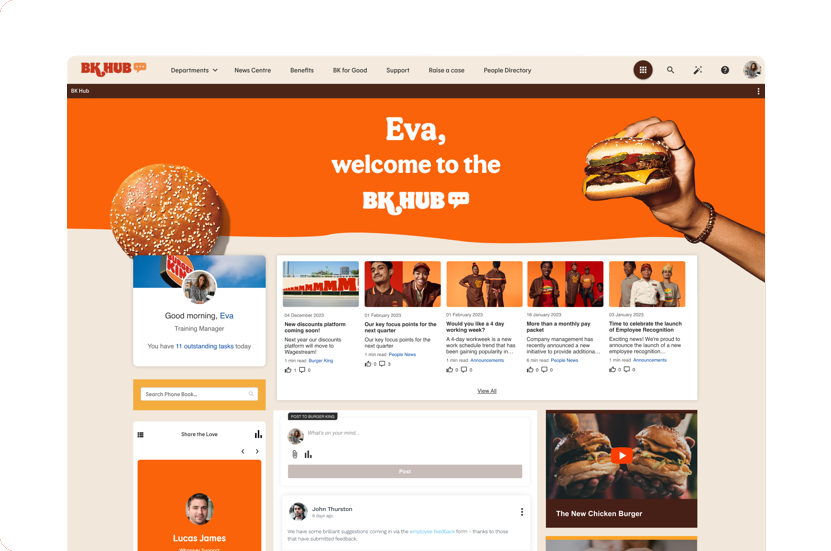
Read the full Burger King UK customer story here.
- Aldi: With over 50,000 employees across the UK and Ireland, Aldi partnered with Oak to create a branded mobile app to help evolve their mobile first approach, helping employees instantly access rotas, payslips and holiday allowance with SSO (single sign on). In app notifications to enable personalised communication with their workforce so everyone receives the information they need.
“The Oak team is both incredibly helpful and knowledgeable. With our Internal Comms team, Oak ensure that MyALDI is the most engaging, connective platform possible; and they’re always ready to offer ideas for new developments and technical support” - Charlotte Timmins, Communication Manager, Aldi UKRead the full Aldi customer story here.
- Five Guys: All industries face regulations they must comply with and working in hospitality means Five Guys must consistently keep on top of food safety standards and allergen information. So with a workforce spread across the UK, how do Five Guys get crucial information to their 10,000 strong workforce? Dale explained how useful an intranet has been in keeping their customers safe when it comes to allergens:
“When we launched offers around milkshakes, it would bring in new allergens. We would update a card, send it to a store and hope for the best that the manager has told them all. But of the hundreds of other things that managers are having to balance at the same time, it might slip their mind. Now, having a tool that allows us to message every single employee and say - ‘hey, along with all the changes that have come in, there is a soy allergen in our new milkshake, please make sure you've updated your allergen chart’ - is massive. Ensuring that our stores are up to date on the latest changes to compliance is so critical and since we implemented the app, we know that we've seen better results when it comes to our food safety scores.” - Dale Brodie, Internal Communications Manager at Five Guys
The consequences of not having the right information in this instant is a huge risk, and rests entirely on the companies ability to communicate with their staff effectively. You can watch our webinar on the Frontline Divide where Dale speaks about how they connect with their audience in depth with an employee engagement platform like Oak Engage.
Are there ways that you could improve communication with your frontline and deskless workers? Download our report, The frontline divide where we reveal the impact of poor communication and the consequences of feeling out of the loop from 1,000 frontline workers. And if you’re looking for answers to a specific question, reach out to our team for a demo to find out how we can help you invest in your people and your future success.
