

Blog
Last updated:
April 30, 2026
7
min read

A multi language intranet allows organisations to deliver internal communication in multiple languages automatically, ensuring employees receive relevant updates in their preferred language based on role, location, or profile.
The Real Answer
An intranet supports multi language workforces by combining translation, targeting, localisation, and mobile delivery so communication is understood, not just distributed.
Most organisations already employ people who speak different languages. The problem is not diversity. The problem is that communication is still created in one language and expected to work everywhere. That is where it breaks.
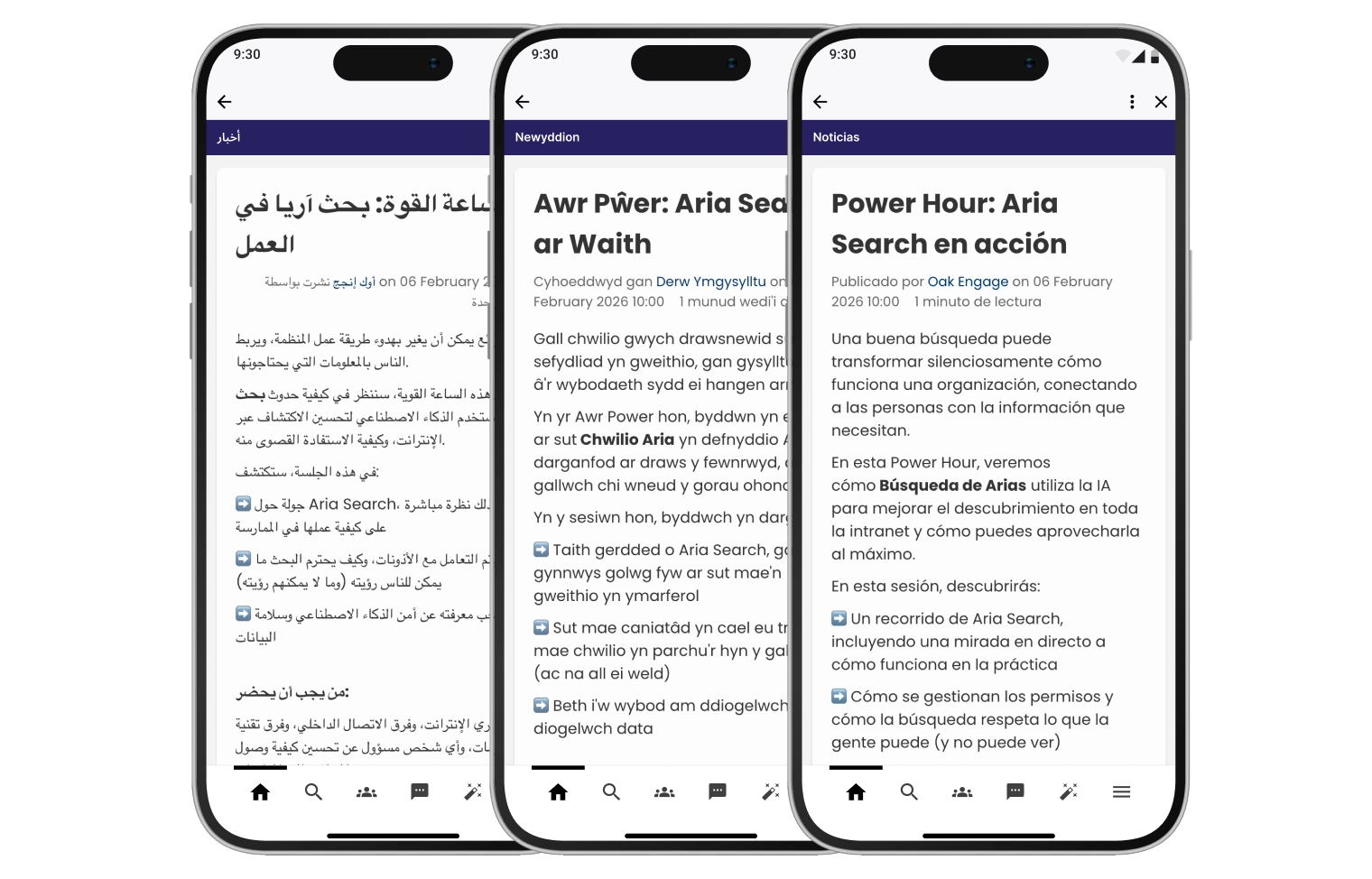
Why Most Intranets Fail Multi Language Communication
Most intranets were not built for multilingual workforces. They were built for office environments where one language was enough.
In practice, that leads to communication being written once and pushed globally without adaptation. Translation, if it happens, is often manual and delayed. By the time content is available in another language, it is either outdated or inconsistent.
There are a few recurring failure points:
- Content is created in one language and reused globally
- Translation is slow and handled manually
- No targeting by role, location, or language
- Frontline employees are not reached at all
The result is predictable. Messages are misunderstood, ignored, or missed entirely.
How a Modern Intranet Supports Multi Language Workforces
A modern intranet builds language into how communication is delivered, rather than adding it afterwards.
Instead of publishing once and hoping it works globally, content is distributed in a way that adapts to the employee receiving it. Employees automatically see content in their preferred language, without needing to switch settings or search for translations. This instantly improves engagement and makes for a more immersive and inclusive workplace environment.
This is made possible through a combination of capabilities:
- AI powered translation that makes content instantly available in multiple languages
- Targeting based on role, location, and language
- Localisation that adapts meaning, not just wording
- Mobile delivery that reaches frontline employees directly
Together, these remove the friction that typically breaks multilingual communication.
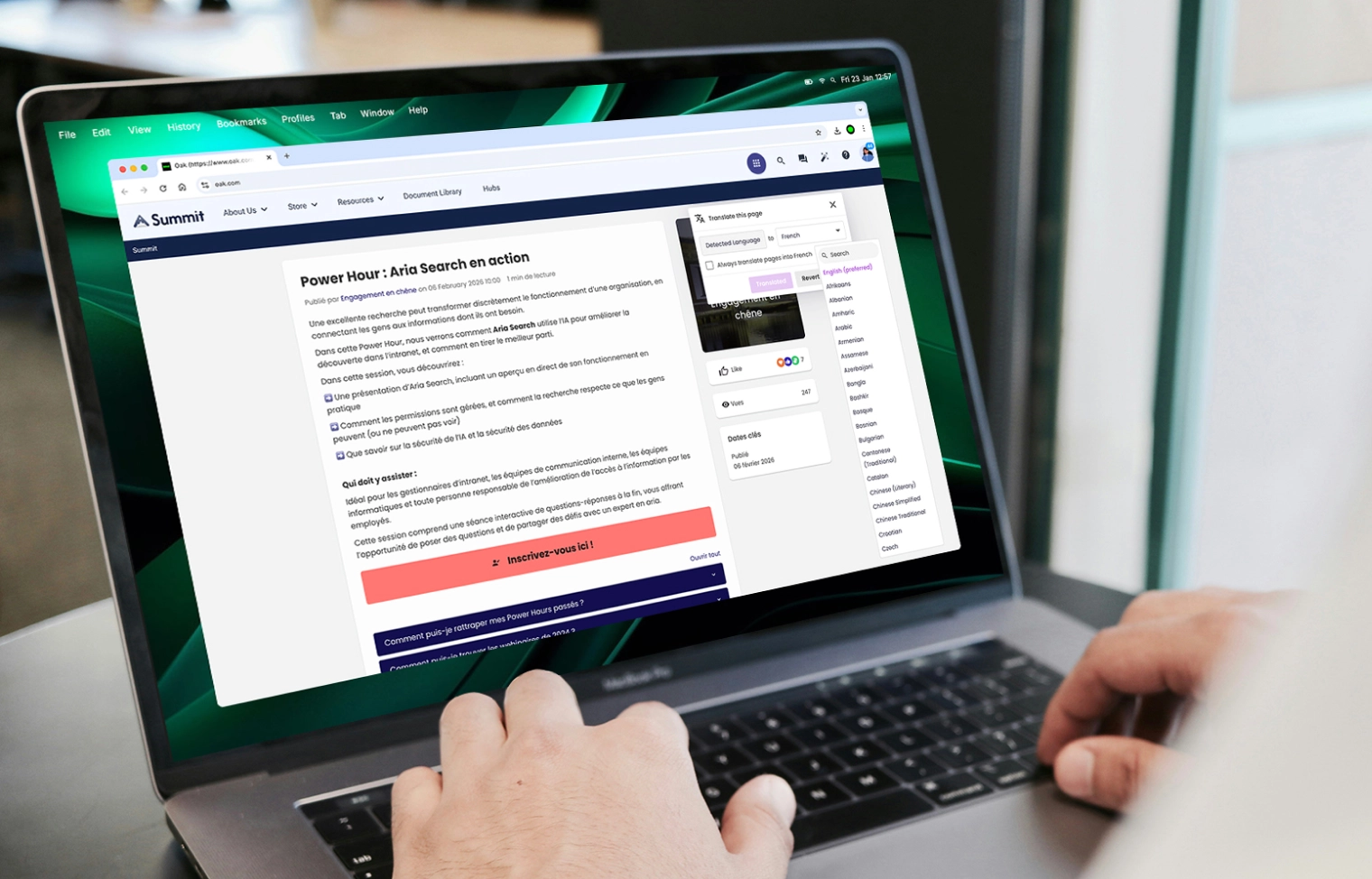
What Actually Works (And What Does Not)
Not all approaches to multilingual communication are equal, and this is where many organisations get stuck.
Manual translation creates delays and inconsistency. Content has to be rewritten, reviewed, and republished, which slows everything down. A basic intranet that relies on a single language is even more limiting, as it excludes large parts of the workforce entirely.
Modern intranets take a different approach:
- Content is created once and distributed in multiple languages
- Employees receive information based on relevance, not just availability
- Communication reaches frontline teams through mobile, not just email
The difference is not just efficiency. It is whether communication works at all.
What Features Enable Multi Language Support?
The most effective intranets combine a small number of capabilities that work together to support multilingual communication.
At a practical level, this includes:
- Automatic translation to remove manual processes and speed up publishing
- Language targeting so employees receive the correct version of content
- Content localisation to ensure messaging makes sense in different regions
- Mobile access for frontline employees without desk access
- Centralised content management to maintain consistency
- Analytics by language to track engagement and improve over time
Individually, these features help. Combined, they make multilingual communication scalable.

Real World Example
A large retail organisation operating across multiple European markets struggled with inconsistent communication between head office and store teams.
Content was created in one language and then translated manually for different regions. This created delays, and updates often reached stores too late to be useful. Engagement was low, particularly among frontline employees who relied on shared devices or had no email access.
After introducing a mobile intranet with language targeting and AI translation, communication changed significantly.
- Updates were delivered in multiple languages at the same time
- Frontline employees accessed content directly through mobile
- Engagement increased across store teams
- Messaging became consistent across regions
The improvement did not come from sending more communication. It came from making it understandable.
Why Multi Language Intranet Support Matters
Communication only works if it is understood. That is the core issue most organisations face.
When employees receive information in a language they are not comfortable with, they are less likely to engage with it. Even when they do, there is a higher risk of misunderstanding.
Supporting multiple languages improves both reach and clarity:
- More employees receive communication
- More employees understand it
- Engagement increases
- Errors caused by miscommunication decrease
This has a direct impact on performance, consistency, and employee experience.

Multi Language Intranets for Frontline Workforces
Frontline employees are often the most affected by poor multilingual communication. They do not sit at desks, do not rely on email, and need information quickly.
A modern intranet addresses this by delivering communication in a way that fits how they work.
- Content is delivered via mobile devices in their preferred language
- Push notifications ensure urgent updates are seen
- Communication is targeted by role and location
- Access does not depend on email or office systems
This removes multiple layers of friction and ensures communication actually reaches them.
The Role of AI in Multi Language Intranets
AI has fundamentally changed how organisations handle multilingual communication.
In the past, translation was a manual, time consuming process. Today, it can happen instantly. This allows organisations to communicate across multiple languages without slowing down.
AI also improves consistency. Instead of different regions interpreting messages independently, content can be translated centrally and delivered in a controlled way.
This creates:
- Faster communication across regions
- More consistent messaging
- Reduced reliance on manual processes
Over time, translation quality improves, making AI a reliable foundation for most internal communication.
How to Choose an Intranet for Multi Language Workforces
Choosing the right intranet comes down to how well it supports communication in practice, not just features on a list.
There are a few key things to look for:
- Does it support both automatic and controlled intranet translation?
- Can content be targeted by language, role, and location?
- Is the mobile experience strong for frontline employees?
- Does it integrate with existing systems like Microsoft 365?
- Can it scale as the organisation grows?
The goal is not to translate more content. It is to ensure communication works for everyone.
What a Modern Solution Looks Like
Modern intranets bring communication, translation, and targeting together into a single experience.
Solutions like Oak Engage are built around this approach. The human centred, desk based and mobile frontline intranet people actually use.
They enable organisations to:
- Deliver communication in multiple languages automatically
- Target content precisely across the workforce
- Reach frontline employees through mobile access
- Maintain a consistent single source of truth
This is the difference between publishing content and ensuring it is understood.
FAQs
How can an intranet support multi language workforces?
An intranet supports multi language workforces by translating content, targeting communication by language and location, and delivering updates through mobile and desktop platforms.
What is a multi language intranet?
A multi language intranet is a platform that delivers internal communication in multiple languages based on employee preferences and organisational structure.
Is AI translation accurate enough for intranets?
AI translation is accurate for most internal communication and can be combined with manual review for critical content.
Do employees need to change language settings?
Most modern intranets automatically deliver content in the correct language based on user profile or location.
