

Blog
Last updated:
August 4, 2026
17
min read
![Employee engagement strategies that work in 2026 [with examples + template]](https://cdn.prod.website-files.com/6a1873197db7a603d742abd0/6a7c4322d4708c0741f4e53b_Employee%20engagement%20strategies%20that%20work%20in%202026.png)
Employee engagement is one of the trickier challenges organisations deal with. According to Gallup, just 20% of workers worldwide are actually engaged at work. 64% are not engaged. 16% actively disengaged.
The numbers don’t paint a pretty picture, especially when employee engagement is linked to almost every business outcome — retention, productivity, performance, profit, loyalty, health and wellbeing… the list goes on.
So how do you improve employee engagement, and what does a successful employee engagement strategy look like? That’s exactly what we’re going to cover in this blog, with examples, so you can make steps toward crafting a winning engagement strategy.
What are employee engagement strategies?
Employee engagement strategies are initiatives designed to improve how employees connect with their work, leadership, colleagues, and company goals. A good engagement strategy will create an environment where employees are more likely to flourish and enjoy working for your organisation.
How your strategy is formed will depend on your company size and budget, but focusing on the two or three most urgent areas from an employee engagement survey, is a good place to start.
Effective employee engagement strategies typically focus on:
- communication
- recognition
- employee feedback
- career development
- wellbeing
- transparency
- flexibility
- accessibility for frontline employees
- onboarding
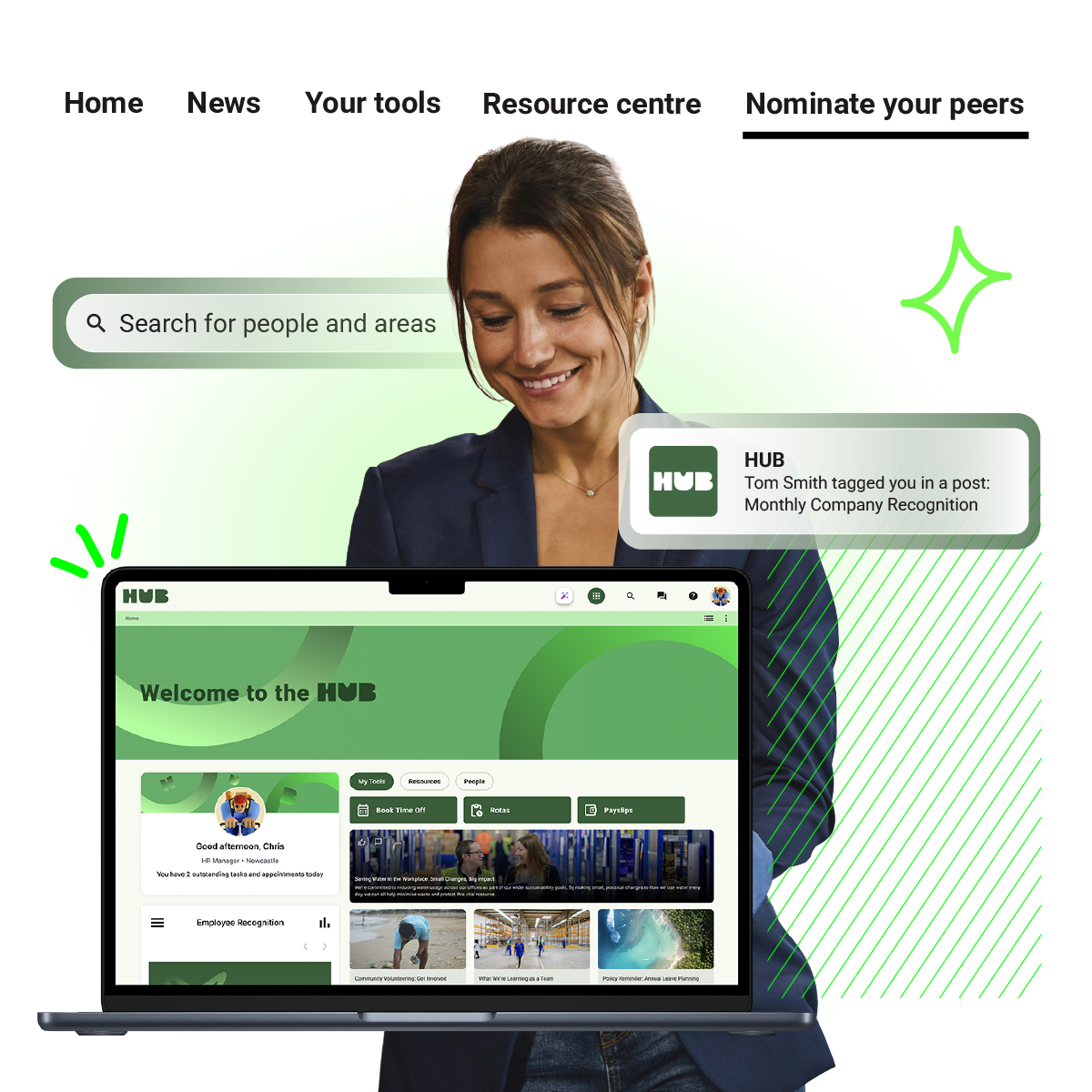
Modern organisations increasingly use employee engagement platforms to centralise communication, improve employee recognition, personalise updates, and measure engagement across both desk based and frontline workforces.
Companies with highly engaged employees often see stronger productivity, retention, profitability, and employee wellbeing. Businesses looking to improve outcomes often start by creating an employee engagement strategy tailored to their workforce needs, while also using tools for measuring employee engagement over time.
Before implementing tactics, a strategy helps you answer:
- What does our current engagement look like?
- What do we need to aim for?
- How are we going to achieve it?
.png)
Key employee engagement strategies
Why is an employee engagement strategy important?
A strong employee engagement strategy gives organisations a clear plan for improving how people feel about their work, their managers and the wider business. Rather than relying on one-off initiatives, it helps you identify the areas that matter most to employees, take focused action and measure whether those changes are working.
The impact can be significant. Gallup found that highly engaged teams achieve 14% higher productivity, while highly engaged business units can experience 21% lower turnover in high-turnover organisations. Highly engaged organisations also report 23% higher profitability.
The benefits tend to show up across three main areas:
Productivity and performance
Engaged employees are more likely to understand what is expected of them, feel connected to company goals and put greater focus into their work. Clear communication, recognition and access to the right information can all help remove the friction that gets in the way of good performance.
Retention and loyalty
Employees are more likely to stay when they feel listened to, recognised and able to develop. This is especially important in high-turnover industries. For example, Burger King UK&I improved its onboarding experience and saw a 40% reduction in new-starter drop-off within six months, alongside a 32% reduction in turnover among hourly paid crew at new sites within three months.
Wellbeing and workplace culture
Engagement is also closely linked to how supported and connected people feel at work. Regular feedback, transparent leadership, flexibility and a healthy work-life balance can help reduce disengagement, strengthen workplace culture and give employees a greater sense of belonging.
The 8 pillars of employee engagement
Most employee engagement strategies are built around eight core pillars that influence how informed, valued, supported and connected employees feel at work.
These pillars help organisations identify where engagement is breaking down and where improvements are likely to have the greatest impact.
1. Communication
Clear communication helps employees understand company priorities, business changes, expectations and their role within the organisation.
When communication is inconsistent or hard to access, employees are more likely to feel confused, disconnected or overwhelmed.
The strongest communication strategies make important information easy to find, relevant to the individual and accessible wherever employees work.
2. Employee recognition
Employees are more likely to stay motivated when their work is noticed and valued.
Recognition can come from managers, leaders or colleagues, but it works best when it is timely, meaningful and consistent.
The aim is to make appreciation part of everyday working life rather than something that only happens during formal reviews or major milestones.
3. Employee voice and feedback
Employees want to feel heard, but collecting feedback is only useful if organisations act on it.
Surveys, pulse checks, feedback sessions and anonymous channels can help identify problems early, but the real impact comes from showing employees what changed as a result.
That feedback loop is what builds trust.
4. Career development
Opportunities to learn, progress and build new skills are an important part of long-term engagement.
Employees are more likely to stay engaged when they can see a future within the organisation and understand what progression looks like.
Development does not always mean promotion. Training, mentoring, new responsibilities and internal mobility can all help.
5. Leadership transparency
Employees are more likely to trust an organisation when leaders communicate openly about company goals, performance, challenges and future direction.
Visibility matters too. Town halls, Q&A sessions, leadership updates and regular communication can make senior leaders feel more accessible and help employees understand the decisions being made around them.
6. Wellbeing and work-life balance
Stress, burnout and unsustainable workloads can quickly undermine engagement.
Supporting wellbeing means creating an environment where employees can perform consistently without feeling permanently stretched.
That includes realistic workloads, supportive management, flexibility and access to appropriate wellbeing resources.
7. Flexibility and autonomy
Employees generally respond well when they are trusted to do their jobs with an appropriate level of independence.
Giving people more control over how they work can improve motivation, job satisfaction and overall employee experience.
The right level of flexibility will vary by role, but trust and autonomy should still be part of the wider engagement strategy.
8. Accessibility for frontline employees
Employee engagement strategies can fail when they work well for office-based employees but do not reach frontline or deskless teams.
Employees need easy access to company updates, policies, resources, recognition and feedback opportunities wherever they work.
For distributed organisations, making communication accessible to everyone is essential to creating a consistent employee experience.
Starting your employee engagement strategy
Free fruit, pizza on a Friday and the occasional seasonal party are not engagement strategies. An engagement plan is a strategic process to identify and prioritise actions based on feedback that addresses core problems people are facing at work.
Step 1: Determine what you want to achieve
Before gathering data, bring leaders together to discuss your specific goals. Are you seeking greater retention, boosted morale, or better inter-departmental connectivity?
Step 2: Collect feedback from your staff
Use anonymous pulse surveys to gain honest insight. Ensure you provide mobile and deskless support so every worker has a voice. The goal isn’t to make the organisation look good, but to make it better.
Step 3. Review and analyse the data
Focus less on the numerical scores and more on the patterns in the comments. Use this feedback as a roadmap. If scores are low, use them to identify why employees feel a certain way.
Step 4. Implement and monitor
Clearly define your action steps. For every initiative, document:
- Specific actions you are committing to.
- Who is responsible for the rollout.
- How success will be measured (e.g., higher retention or better survey scores).
- Timelines for progress reports.
Examples of employee engagement strategies
There is no “one size fits all” strategy; engagement is subjective and depends entirely on the unique needs of your people. To help you construct an action plan that works for your entire workforce, we have compiled eight versatile strategies that combine modern technology with essential human values.
1. Leverage AI to enhance efficiency (not replace people)
57% of internal communicators say AI is their top focus area for 2026 (Contact Monkey).
AI search is one the most powerful engagement tools when used to remove the repetitive work and information overload that leads to burnout, giving employees the exact answers they need in seconds and taking the burden of finding the right information away instantly. But you need to put in the work to reap the benefits of AI search.
Hays Travel, the largest independent travel retailer, have completely reimagined and streamlined their intranet in preparation for introducing AI initiatives, removing outdated content and introducing strict governance frameworks to ensure all content is up to date.
“We had to strike the balance between housekeeping and being a nuisance. We know that everyone is busy but it was a priority - we targeted key people with the most outdated content assigned to them and asked them to review or delete to ensure that information search is as easy as possible for everyone. While there are still thousands of pieces of content and an ever-growing media library, we’re on the right track to maintaining strong housekeeping around content freshness which will pave the way for successfully implementing Oak’s AI tools within the platform in the future.” - Michael Smiles, Technology Change Manager at Hays Travel
Read the full Hays Travel customer story here.
2. Recognise achievement often
If an employee feels that their work is not properly recognised, this can have a big impact on engagement. After all, we all want to be rewarded and celebrated for our hard work don’t we?
Even a simple announcement on your company intranet or on your weekly meetings can be enough to energise an employee and make them feel valued. Management should focus on recognising employees’ achievements regularly.
- Simple gestures: A quick shout-out on the company intranet or a “well done” in a weekly meeting can re-energise an employee.
- Gamification: Use digital awards and badges to make recognition tangible and visible across the organisation.
“Recognition shouldn’t be something that only happens at annual reviews or award ceremonies. Using Oak’s easy to access mobile app has let us celebrate our people in the moment - and the difference it’s made to how connected everyone feels has been incredible to see. This just wasn’t possible before.” - Michelle Ray, L&D Administrator at Salts Healthcare
3. Personalise the employee journey
Avoid content fatigue by ensuring employees only see what matters to them. Incorporate a smart feed into your employee engagement app to tailor information based on roles or interests. When employees can bypass irrelevant info, they stay engaged longer and return to your platform more frequently.
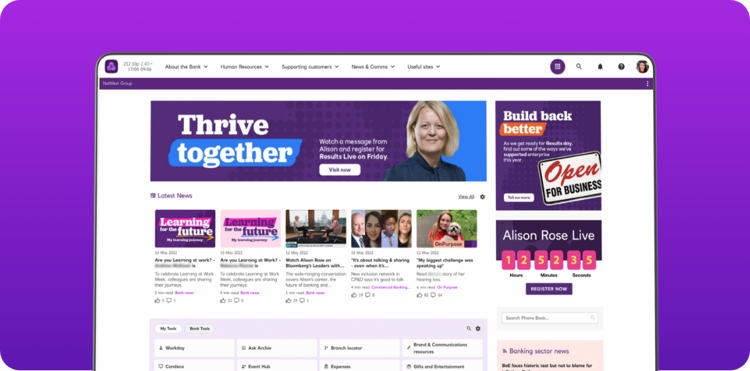
NatWest uses Oak to send daily news round ups to make it easier for NatWest’s people to get the latest news, straight to their inbox. It means comms aren’t getting lost and it cuts out the noise.
Using intelligence, every single user is delivered a highly personalised newsletter experience. The content is based upon the explicit preferences of the colleague and also implicit preferences gained from behavioural information.
“Oak has given our colleagues more control. They can now personalise their news experience, adapt based on their interactions, follow topics of interest and opt out of communications that are less relevant - this is adding real value.” - Barry Fuller — Digital Communications Consultant at NatWest
Read the full NatWest customer story.
4. Having community and social spaces where employees can connect
Organisations that encourage friendships can have an impact on retention rates. The study also found that workers with close friends at work are more likely to say they feel a strong sense of belonging at work (80%) and report more satisfaction with work (86%).
Whether it’s health and wellbeing, diversity and inclusion initiatives, a hub to share photos of pets, work projects or organising social activities and events, having dedicated spaces where people can connect and build relationships over interests is so important for making employees feel like they belong.
5. Encourage feedback and show you’re listening
One of the best ways to learn what your people need is by identifying hurdles at the root cause. However, asking for feedback is only half the battle; you must act on it. Encourage employee feedback to see what changes your people feel need to be made. Is there something that’s preventing your team from engaging?
By identifying where hurdles are occurring at the root cause, you’ll be better placed to address them. If they feel like there are areas that need improvement, encourage them to highlight and provide feedback.
It might be something as straightforward as simplifying work processes or creating a digital space for collaboration and thought processing. Without asking, you won’t know. Without knowing, you can’t make the necessary changes. Hearing the opinions of the very people you are actively encouraging to engage with your company is the first step to making your business a workplace built for your people and not the other way around.
- Feedback loops: If there are concerns or complaints, management should propose and act on solutions immediately.
- Ownership: When employees see their suggestions—like simplifying a work process—implemented, they feel the workplace is built for them, not just around them.
6. Increase transparency with regular updates
85% of employees are most motivated when management offers regular updates on company news. The benefits of workplace transparency are:
- Everyone feels in the loop with company news and updates
- Better performance management
- Improved company performance and goal setting
- Strengthened workplace culture
- Improved communication
- Increased employee engagement
The importance of transparency in the workplace cannot be overstated. With so many powerful benefits, achieving a culture of honesty and openness between leadership, managers and employees should be every leader’s top priority.
7. Streamline tools to prevent app fatigue
Having too many unintegrated communication tools is confusing and tiring, especially for deskless workers who are strapped for time and accessing content on mobile.
- All-in-one solutions: Aim for one platform that gives you access to everything; news, chats, social interaction, and recognition. A streamlined experience makes it easier for employees to stay involved without the friction and mental load of switching between multiple applications.
8. Create a culture of respect and celebrating individual strengths
Respect the unique value each employee brings to the table. Play to your employees’ strengths and support their weaknesses. By treating both an employee’s work and their opinion with visible respect, you allow them to develop their skill set while the company benefits from their full potential.
Your employee engagement action plan
Now you’re aware of what can impact and make a difference to employee engagement in 2026, it’s time to create an action plan for your business. Our employee engagement action plan template includes steps to help you with:
- Employee engagement goals
- Collecting feedback
- Analysing feedback
- Brainstorming ideas
- Implementing your action plan with clear actions, owners and timelines
Download your employee engagement action plan here.
Employee engagement ideas
Struggling with employee engagement ideas? We’ve got you covered. Here are some ideas you can implement for each area of the blog we’ve discussed.
Employee communication ideas
- Leadership updates on the intranet
- Mobile push notifications for frontline teams
- Town halls and Q&A sessions
- Personalised communication feeds
Employee recognition ideas
- Peer recognition programmes
- Digital awards and badges
- Work anniversary celebrations
- Public recognition posts
Employee wellbeing ideas
- Flexible working arrangements
- Mental health support
- Encouraging time off
- Burnout prevention initiatives
Employee feedback ideas
- Pulse surveys
- Anonymous suggestion boxes
- Regular one to ones
- Employee listening sessions
Things to consider with employee engagement strategies
Now that you’ve got more of an idea on what could be improved in your organisation, it’s time to develop your employee engagement strategy and put it into action.
However, there are things to consider when implementing an effective employee engagement strategy. We’ve got some tips Take a look at our top tips for success:
Tip 1: Be realistic
It’s important to understand that creating great employee engagement is a process and you may miss the mark on a few strategies every now and then. You should set realistic standards for your employees and outline any specific goals you want to achieve when possible. The most important thing you can do is to listen and act on employee feedback, so you can tailor the workforce to what they need.
Tip 2: Be flexible
You won’t find the perfect strategy for your company straight away, so always be open minded when it comes to new ideas. Make sure you’re regularly monitoring employee engagement and analysing the data alongside it to find out what works for your employees and what doesn’t.
Tips 3: Be clear about responsibilities
Make sure you know who’s responsible for what before you get started. You won’t get anywhere in the way of improving employee engagement if you don’t clearly delegate responsibilities to the right individuals and keep track of their progress. In order to successfully get your strategy off the ground, you need to involve the key people from the start.
FAQs
What are employee engagement strategies?
Employee engagement strategies are initiatives designed to improve employee motivation, communication, wellbeing, recognition, and connection to company goals.
Why are employee engagement strategies important?
Strong engagement strategies help organisations improve productivity, retention, employee wellbeing, and workplace culture.
What are the key pillars of employee engagement?
The main pillars include communication, recognition, employee voice, transparency, career development, wellbeing, flexibility, and accessibility.
How can technology improve employee engagement?
Employee engagement platforms help organisations centralise communication, improve employee recognition, gather feedback, and connect frontline and desk based employees.
What is employee engagement software?
Employee engagement software is a platform designed to improve internal communication, employee experience, recognition, feedback, and workforce connectivity.
