
Blog
Last updated:
November 17, 2026
14
min read

Employee engagement and employee retention are the two biggest factors behind whether a business thrives or stalls. Engagement is how connected and motivated your people feel at work. Retention is whether they actually stick around.
The two go hand in hand. When people feel valued, backed by their managers and connected to the wider team, they stay. They do better work, and they make the workplace better for everyone else.
Keeping good people isn't easy, though. Poor communication, zero career progression, bad management and a lack of recognition will quickly push your best talent out the door.
If you want to stop the revolving door, you need to look at how work actually feels for your people. We're going to break down why engagement and retention matter, what drives them and 10 practical ways to improve both across your workforce.
We'll cover:
- What is employee engagement?
- What is employee retention?
- Why are employee engagement and retention important?
- How are employee engagement and retention connected?
- What are the main drivers of employee engagement and retention?
- 10 ways to improve employee engagement and retention
- Frequently asked questions about employee engagement and retention
Key takeaways
- Engagement is how committed, motivated and connected people feel to their work and the business.
- Retention is your ability to keep good people and stop unwanted turnover.
- Engagement and retention are closely linked: Employees who feel supported, recognised and heard are far more likely to stay.
- Managers make or break it: Gallup shows managers account for at least 70% of the variance in team engagement.
- The basics matter: Recognition, career growth, clear communication, wellbeing and solid onboarding all shape the day-to-day experience.
- Listen early: Regular feedback, stay interviews and pulse surveys help you spot problems long before someone hands in their notice.
What is employee engagement?
Employee engagement is how invested, enthusiastic and connected someone feels towards their job and the wider business.
Engaged people know how their day-to-day work contributes to the bigger picture. They take pride in what they do, care about the outcome and want the business to win.
Crucially, engagement is very different from simple job satisfaction.
Someone can be perfectly happy with their salary, their hours and their team without feeling any real connection to the company's goals—or any drive to go the extra mile.
True engagement comes down to a few core things:
- Knowing exactly what is expected of you.
- Getting genuine recognition when you do good work.
- Having room to learn, grow and progress.
- Getting honest, constructive support from your manager.
- Feeling connected to colleagues and the company culture—whether you're at a desk or on the shop floor.
- Having easy access to the tools and information you need to do your job.
- Knowing your voice actually counts.
When you build an environment where people feel backed and involved, motivation follows naturally.
What is employee retention?
Employee retention is your ability to keep your people over time and stop avoidable turnover.
A proper retention strategy creates a workplace where talented people actively want to build their careers. That means being honest about why people leave, understanding what makes them stay and fixing the daily frustrations that drive them away.
People usually walk away because of:
- Dead-end roles with no clear progression.
- Poor relationships with their direct manager.
- Feeling invisible or unappreciated.
- Leadership keeping them in the dark.
- Pay and benefits that fall behind the market.
- Burnout and a poor work-life balance.
- Rigid, inflexible working rules.
- A toxic or unsupportive culture.
Good retention means creating a place where staying feels like the obvious, positive choice.
Why are employee engagement and retention important?
Engagement and retention directly hit your bottom line. They dictate your productivity, stability, team morale and overall performance.
When people feel supported and connected, you keep experienced teams together, maintain momentum and avoid the constant disruption of hiring and retraining.
Here is what that looks like in practice:
1. Lower turnover costs
Replacing people is expensive. Advertising, interviewing, onboarding and training all drain time and budget—and you lose productivity while new starters get up to speed.
According to the Work Institute's 2025 Retention Report, replacing an employee costs roughly 33% of their base salary.
Protecting that budget starts with fixing the preventable reasons people leave: poor communication, stalled careers and burnout.
2. Higher productivity
Engaged people don't need micromanaging. They know what they're doing, stay focused on the goal and take real ownership of their work.
They're also the ones spotting better ways to work, sharing ideas and helping colleagues out. When you give people the right information and tools without making them jump through hoops, they spend less time wrestling with admin and more time doing meaningful work.
3. Better employee wellbeing
Wellbeing and engagement are deeply linked. If people feel overwhelmed, isolated or unsupported, their motivation will tank.
When you promote manageable workloads, healthy relationships and real flexibility, people thrive. Supporting wellbeing requires more than slapping a wellness poster on the wall or offering a free meditation app. You have to listen to your people, tackle unreasonable workloads and make it safe for them to ask for help.
4. A stronger workplace culture
Culture is built by your people every single day. When colleagues feel respected and appreciated, trust grows across teams.
High engagement creates a workplace where people collaborate and back each other up. This matters even more when your workforce is remote, hybrid or deskless—where people don't get the luxury of a quick chat by the kettle.
5. Greater stability
High turnover disrupts teams, breaks momentum and dumps extra pressure on the people left behind. When experienced staff walk out, they take vital skills, relationships and institutional knowledge with them.
Strong retention keeps that knowledge in the building. It gives you stability across departments and lets your people grow alongside the business.
How are employee engagement and retention connected?
The daily employee experience dictates whether people stay or go.
Engagement is how people feel about their work. Retention is what they decide to do about it. When people feel valued and involved, they build loyalty—and voluntary turnover drops.
Still, engagement alone won't save you. Someone can love their job and their teammates, yet still hand in their notice because the pay is uncompetitive, the workload is unsustainable or there's nowhere for them to progress.
You have to look beyond a single engagement score and fix the wider issues shaping their working life.
The role of managers
Managers hold the keys to engagement and retention. Gallup found that managers account for at least 70% of the variance in team engagement.
Day-to-day leadership shapes the entire employee experience. Managers set expectations, give feedback, open up development opportunities and help people navigate rough patches. A great manager makes people feel confident and backed. A bad one—or an overwhelmed one with zero training—breeds frustration and drives people to quit.
If you want better retention, stop treating management training as an optional extra. Give your leaders the tools, time and coaching they need to actually support their teams.
The employee engagement and retention cycle
When you get this right, engagement and retention feed each other in a continuous loop:
- People get the communication, support and tools they need to do their jobs.
- They feel valued, connected and motivated.
- Their commitment to the business grows.
- They choose to stay.
- You keep vital skills and experience in-house.
- A stable, experienced team collaborates better and drives stronger results.
You keep that wheel turning by listening consistently and acting on what you hear.
What are the main drivers of employee engagement and retention?
Every workforce is different, from head office teams to frontline retail and manufacturing crews. Still, the fundamentals remain the same:
- Recognition and rewards: People need to know their hard work is noticed and appreciated.
- Career development: Clear progression, training and growth give people a reason to build a future with you.
- Effective management: Good managers remove roadblocks, set clear goals and back their teams.
- Communication and transparency: People need honest updates and easy access to information—nobody likes being the last to know.
- Work-life balance: Real flexibility and sensible workloads prevent burnout.
- Meaningful work and autonomy: People care more when they understand the purpose of their work and are trusted to get on with it.
- Employee wellbeing: Protecting physical and mental health creates a workplace people actually want to be part of.
Understanding these drivers is the starting point for any strategy that works.
10 ways to improve employee engagement and retention
Knowing the theory is one thing. Fixing it on the ground is another. Here are 10 practical ways to boost engagement and keep your best people.
1. Fix your workplace communication
Good internal comms is the starting point of engagement. People need to know what's happening in the business, where to find key information and how their role fits into the bigger picture.
When communication breaks down, people feel disconnected. This hits remote, multi-site and deskless workers hardest—especially when they don't sit in front of a desktop computer all day.
To sharpen your internal comms:
- Share regular, honest company updates.
- Keep important documents and policies in one easy-to-find place.
- Open up two-way channels between leadership and the frontline.
- Give people a clear way to ask questions and get straight answers.
- Make sure every update reaches remote and deskless staff on the devices they actually use.
A modern employee engagement platform stops important updates fromgetting lost in crowded inboxes. With Oak, you can connect every employee—from HQ to the frontline—in one digital workplace. Our mobile app puts company news, policies and resources straight into the pockets of deskless workers, so nobody gets left out of the loop.

2. Recognise and reward great work
Recognition is one of the fastest ways to boost morale and loyalty. When people feel appreciated, they stay motivated.
You don't always need a massive budget to make an impact. A genuine thank you, a public shout-out or celebrating a tough project well done goes a long way.
Try building these habits into your week:
- Shout about individual wins and milestones.
- Mark work anniversaries and birthdays.
- Share positive feedback from customers, managers and peers.
- Set up simple, accessible recognition programmes.
- Celebrate team achievements publicly.
- Encourage peer-to-peer praise so recognition flows in every direction.
The secret is making recognition genuine, consistent and visible to everyone. Oak's recognition tools let teams celebrate wins, birthdays and milestones in real time. Colleagues can react and comment on the social timeline, making appreciation a daily habit rather than a tick-box exercise once a year.

3. Invest in career development and progression
Ambitious people won't hang around if they feel stuck. If your team can't see a way to learn new skills or move up, they'll start updating their CVs.
Make growth an ongoing conversation:
- Hold regular career development check-ins—separate from performance reviews.
- Set up mentoring and coaching schemes.
- Fund relevant training and professional qualifications.
- Map out clear internal progression pathways.
- Let people get involved in cross-departmental projects.
- Encourage skills sharing across teams.
Managers need to understand what drives each person on their team and help them get there. Investing in development proves you care about their future, not just their current output.
4. Overhaul your employee onboarding
Those first few months decide whether a new starter settles in or starts regretting their move.
Great onboarding helps new hires understand their role, get to grips with your culture and build relationships fast. Clunky, disorganised onboarding leaves people feeling lost, isolated and ready to walk.
To get new starters off to a flying start:
- Build a clear, structured onboarding plan before day one.
- Put policies, handbooks and key docs in one accessible place.
- Introduce them properly to their team, manager and key contacts.
- Spell out your values, goals and expectations in plain English.
- Provide practical, role-specific training.
- Book regular check-ins throughout their first 90 days.
- Ask for honest feedback on how their onboarding went.
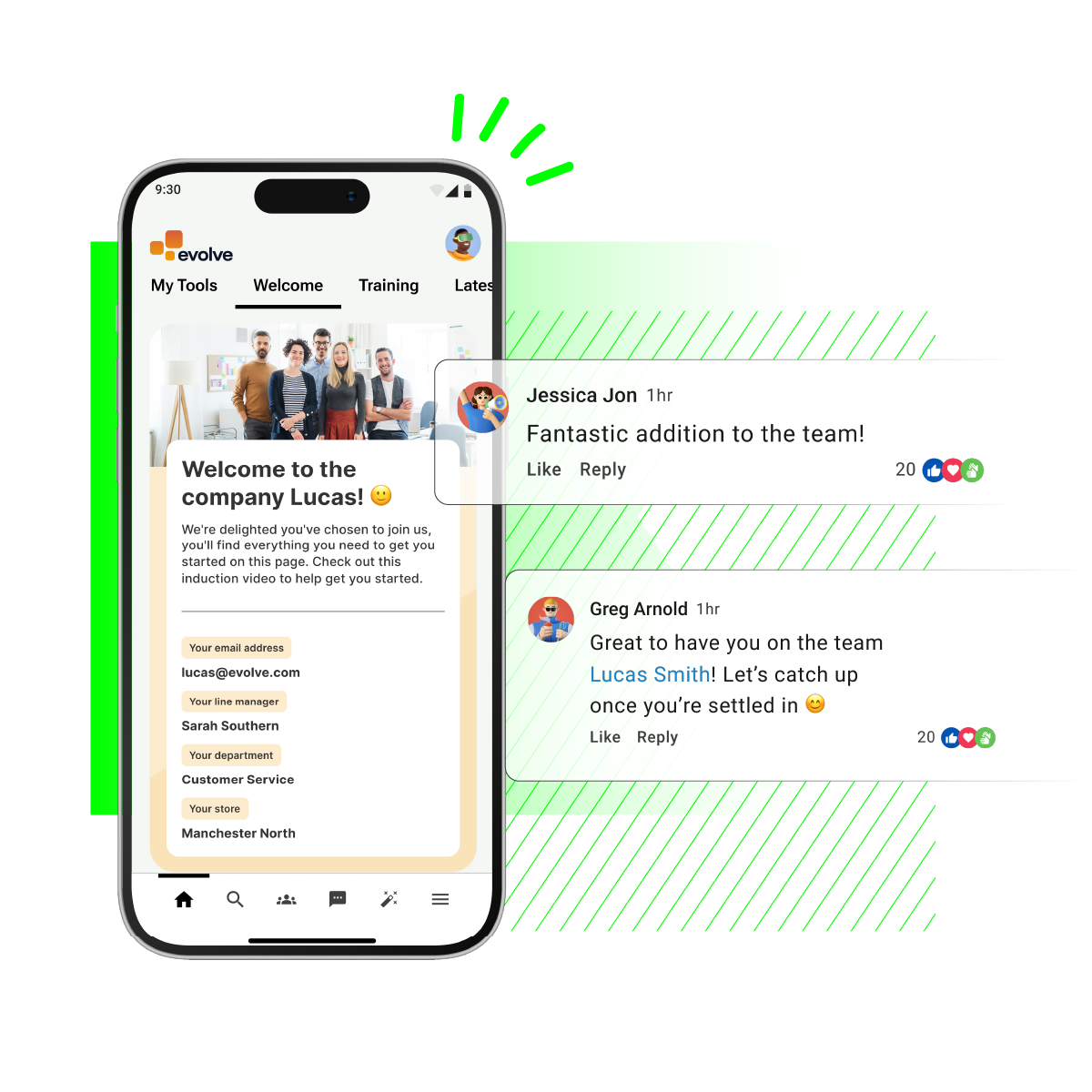
An intuitive intranet takes the heavy lifting out of those first few weeks. Oak's people directory helps new starters put faces to names, understand who does what and find the right contacts fast. Having everything they need in one place gives them the confidence to hit the ground running.
5. Ask for feedback and run stay interviews
You can't fix engagement if you're guessing what your people think. Regular feedback helps you spot friction early and make smarter decisions.
Don't wait for an exit interview to find out why someone is unhappy. By then, it's too late.
Instead, introduce stay interviews. These are informal, honest chats between managers and existing staff to find out what keeps them here—and what might push them away.
Ask questions like:
- What's the best part of your job right now?
- What motivates you to come to work?
- Do you feel properly supported by me and the wider team?
- What skills or opportunities do you want to explore next?
- What's making your job harder than it needs to be?
- What one thing could we change to make work better for you?
- What would ever make you think about leaving?
Pair stay interviews with regular pulse surveys to keep a finger on the pulse. Oak's polls and Q&A features make it quick and easy to gather honest opinions across the business. Just remember: asking for feedback only works if you act on it. Show people their voice leads to real change.
6. Put wellbeing and work-life balance first
Wellbeing belongs at the heart of your people strategy. If your team is permanently stressed and running on empty, engagement will crumble.
Look closely at how your day-to-day operations affect physical and mental health:
- Keep workloads realistic and fair.
- Offer genuine flexibility wherever roles allow.
- Respect time off—stop emailing people on holiday.
- Encourage proper breaks during shifts and desk days.
- Signpost clear, practical wellbeing support.
- Build an inclusive environment where people feel safe speaking up.
- Train managers to spot the early signs of burnout.
Be honest about what your people actually need. A free fruit basket won't fix a toxic manager or an impossible workload. Listen to your teams and tackle the root causes of workplace stress.
7. Build a strong, inclusive culture
A great culture gives people a genuine sense of belonging. It unites teams around shared values and makes collaboration feel natural.
Culture doesn't live in a PDF handbook on a shared drive. It lives in how people treat each other every day.
To strengthen your culture:
- Live your values consistently, from the boardroom to the shop floor.
- Break down silos and encourage cross-team collaboration.
- Celebrate shared wins big and small.
- Champion diversity, equity and inclusion in practice, not just policy.
- Create spaces for people to connect over shared interests.
- Keep leadership visible, open and honest.
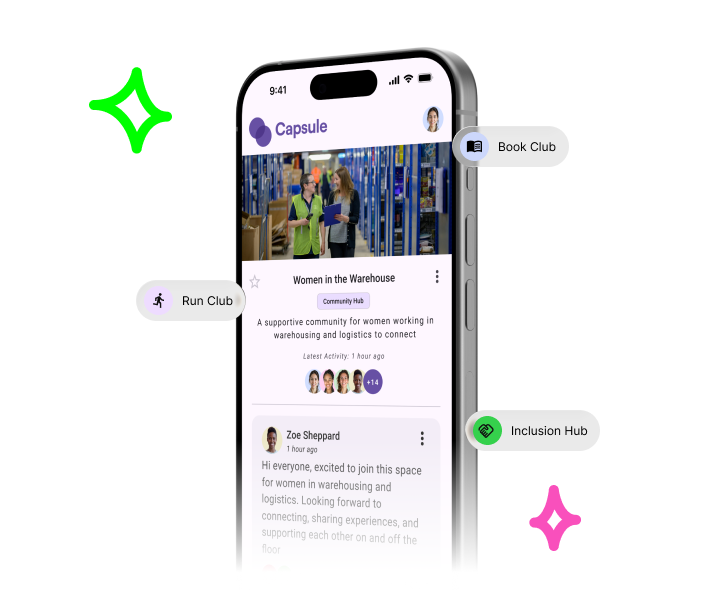
Digital spaces play a massive role here, especially across multi-site teams. Oak's hubs and communities bring people together around shared interests and projects outside their immediate teams. Alongside the social timeline, it gives dispersed workers a real sense of community—wherever they're based.
8. Cut the admin with better technology
Clunky tech and broken processes drive good people mad. If your team wastes half their shift hunting for documents, logging into five different systems or wrestling with manual admin, frustration builds fast.
Make work easier by fixing the basics:
- Centralise your document management.
- Make company news and policies effortless to find.
- Streamline repetitive internal workflows.
- Upgrade your team collaboration tools.
- Build a searchable, reliable knowledge base.
- Ensure everything works seamlessly on mobile.
A central digital workplace removes the daily friction. Oak brings your comms, content and collaboration tools together in one simple platform. When people can find what they need in seconds, they can get on with the job you actually hired them to do.
9. Give people autonomy and flexibility
Adults want to be treated like adults. Micromanagement, endless sign-off chains and rigid rules kill motivation faster than almost anything else.
Trusting people with ownership makes them care more about the outcome. Build autonomy by:
- Setting clear goals, then stepping back to let people deliver.
- Giving individuals real ownership over their projects.
- Encouraging people to solve problems independently.
- Trusting your team to manage their own time and workload.
- Offering flexible hours or hybrid working wherever possible.
- Involving staff in decisions that directly affect their day-to-day work.
Flexibility is crucial for remote, hybrid and frontline teams alike. Mobile-first technology supports that freedom by keeping people connected to updates and resources from anywhere. Oak's mobile app keeps teams plugged into the business without chaining them to a desk.
10. Train and back your managers
Because managers shape the daily reality for your teams, management quality will always dictate your retention rates.
Invest in helping your managers master the fundamentals:
- Setting clear, realistic expectations.
- Giving regular, honest and constructive feedback.
- Recognising great work consistently.
- Having meaningful career conversations.
- Spotting early signs of disengagement or burnout.
- Hosting open, two-way team discussions.
- Distributing workloads fairly.
- Building inclusive, psychologically safe teams.
Give your managers ongoing coaching and peer support so they can keep growing too. Most importantly, give them the time, tools and authority to lead properly—instead of burying them in admin.
How to measure employee engagement and retention
Launching new initiatives is great, but you need proof they're actually working. Tracking the right metrics helps you spot trends early, prove impact to the board and see where you need to focus next.
Keep an eye on these core metrics:
How to calculate employee retention rate
Your retention rate shows the percentage of employees who stayed with you over a specific timeframe.
Here is the basic formula:
Employee retention rate = (Number of original employees still with you at the end of the period ÷ Total number of employees at the start of the period) × 100
For example: If you start the year with 100 people and 85 of those original starters are still with you 12 months later, your retention rate is 85%.
Keep your timeframes and methods consistent so you can track real progress year on year.
Don't just measure engagement—act on it
Data is useless if it sits in a spreadsheet gathering dust. If your surveys show people are frustrated with leadership comms, bad managers or zero progression, you have to do something about it.
Review your survey feedback alongside your turnover stats regularly. Share what you've found with your teams, tell them what you're fixing and prove you're listening.
Frequently asked questions about employee engagement and retention
What is the difference between employee engagement and employee retention?
Engagement is how emotionally committed, motivated and connected your people feel to their work. Retention is your ability to keep those people in the business over time.
Engagement focuses on how someone experiences their job day to day; retention measures whether they choose to stay. They're closely linked because people who feel valued and supported rarely look for the exit.
How does employee engagement improve employee retention?
When people feel recognised, heard and connected to a wider purpose, they build genuine loyalty to the business. That sense of belonging makes them far less likely to leave—though competitive pay, fair workloads and career growth still play a massive role.
What are the biggest reasons employees leave an organisation?
Most people leave because of:
- A lack of career progression or training.
- Poor relationships with their manager.
- Feeling unappreciated or invisible.
- Poor, inconsistent communication from leadership.
- Uncompetitive pay and benefits.
- Burnout and poor work-life balance.
- Unmanageable workloads.
- A negative or exclusionary culture.
Regular pulse surveys and stay interviews will tell you which of these are hitting your teams hardest.
What are the best ways to improve employee engagement?
The most effective levers include:
- Fixing internal communication so nobody is left out of the loop.
- Recognising good work consistently.
- Offering clear career development and progression.
- Protecting employee wellbeing and work-life balance.
- Acting on employee feedback.
- Delivering structured, welcoming onboarding.
- Building an inclusive, connected culture.
- Trusting people with real autonomy.
- Giving teams simple, effective workplace tech.
- Training and supporting your managers.
Start by tackling the biggest pain points your own people are flagging.
How can managers improve employee engagement and retention?
Managers make the biggest impact by communicating clearly, giving regular feedback, celebrating wins and backing their team's career growth. Making time for proper one-to-ones, listening without judgment and clearing daily roadblocks helps people feel supported and perform at their best.
How often should businesses measure employee engagement?
There is no single magic number. Most successful organisations blend quick, regular pulse surveys and informal one-to-ones with one deeper annual engagement survey.
The golden rule is consistency without survey fatigue—and always sharing the results and action plan with your people afterwards.
Can technology improve employee engagement and retention?
Yes, when it's built for the people actually using it. The right workplace tech removes daily frustration by making communication, recognition and key information effortless to access—especially for remote and frontline workers.
That said, technology should back up good leadership and real human connection, never replace them.
Final thoughts: Build a more engaged workforce that wants to stay
Engagement and retention are inseparable, and both are vital if you want to build a resilient business.
Your people want to feel valued, backed by their managers and connected to the work they do. They want room to grow, strong relationships with their colleagues and a workplace that respects their wellbeing. When you focus on those fundamentals, loyalty follows.
Start by listening. Find out what's making work harder than it needs to be, fix the daily friction and show your teams you're acting on their feedback. Even small improvements to how you communicate, recognise wins and support managers can make a massive difference.
Great technology makes all of this easier to deliver at scale. Oak helps organisations bring internal comms, recognition, collaboration and essential resources together in one place—making work feel better for everyone, from head office to the frontline.
Want to improve engagement and retention across your workforce? See how Oak helps you reach every employee, build stronger connections and keep your best people. Get in touch with our team to find out more.
