

Blog
Last updated:
July 31, 2026
18
min read

For years, intranet platforms were built primarily for large enterprises with huge budgets, dedicated IT teams, and long implementation timelines.
That created a major problem for smaller organisations.
Growing businesses still need internal communication, employee alignment, operational updates, onboarding, and a central place for information. But many traditional intranet platforms feel too expensive, too complex, or too slow to launch.
This is why demand for small business intranet software has grown significantly over the past few years.
Modern small businesses need communication platforms that are:
• fast to launch
• easy to manage
• mobile accessible
• affordable to scale
• simple for employees to actually use
• capable of supporting both desk based and frontline employees
This guide focuses specifically on intranet software for small businesses and growing organisations with limited internal resources. If you are comparing platforms for mid-sized and enterprise organisations too, read our guide to the best intranet software.

The reality is that many small businesses outgrow email long before they realise it. At first, communication through email, WhatsApp groups, shared drives, spreadsheets, and chat tools feels manageable. Then growth starts creating communication friction.
Updates get missed. Information becomes inconsistent. Employees ask the same questions repeatedly. Different teams start using different channels. Important operational knowledge becomes difficult to find.
Eventually, communication itself starts slowing the business down. This is where a modern intranet becomes valuable. A modern intranet is no longer just a static company homepage.
The best intranet software for small business acts as a central communication and employee experience platform that helps organisations stay aligned as they grow.
What is a small business intranet?
A small business intranet is a private internal platform designed to help employees access company information, communication, tools, and resources in one place. Modern intranet platforms usually combine company news and updates, employee communication tools, document and resource hubs, onboarding content, employee directories, mobile apps, surveys and feedback tools, recognition features, operational updates, and integrations with wider business systems into a single connected environment.
The biggest difference between older intranets and modern intranet platforms is usability. Traditional intranets often became cluttered, difficult to maintain, and heavily dependent on IT teams. Modern intranet platforms focus far more on employee adoption, simplicity, mobile access, and communication effectiveness. This is especially important for small businesses where internal resources are limited. The best intranet for small business should reduce operational complexity rather than create more of it.
Why small businesses are investing in intranet software
The best small business intranet platforms combine employee communication, mobile access, operational updates and document sharing in one simple, scalable platform.
Communication complexity increases faster than most businesses expect. A company with 30 employees can often rely on informal communication, but a company with 150 employees usually cannot.
As organisations grow, communication becomes fragmented across email, chats, shared drives, meetings, HR systems and operational tools. This often leads to missed updates, inconsistent messaging, slower onboarding, communication overload and growing disconnect between frontline and desk-based teams.
Platforms like Oak help reduce this communication friction by giving employees one central place for updates, onboarding, company information and day-to-day communication across the organisation.
What features should small business intranet software include?
Some enterprise platforms require extensive configuration, specialist developers, or long implementation cycles that simply do not suit growing businesses.
The best intranet software for small business usually prioritises simplicity, speed, and adoption.
1. Mobile first employee access
Many organisations now operate with a mixture of desk based and frontline employees.
A modern intranet platform should support both equally.
Mobile access is especially important for industries like:
• retail
• hospitality
• manufacturing
• healthcare
• construction
• logistics
• field services
Employees should be able to access communication, updates, and resources without needing to sit at a desk all day.
This is one of the biggest reasons mobile first intranet platforms continue gaining popularity.
2. Simple content management
Small businesses rarely have large internal communications teams managing content full time.
The platform should be easy for non technical teams to manage without depending heavily on IT support.
If publishing communication becomes difficult, adoption usually declines quickly.
3. Fast implementation
Many traditional intranet projects take months to launch.
Small businesses often need faster results.
Modern intranet platforms increasingly focus on faster deployment models with templates, guided onboarding, and simpler administration.
4. Employee communication tools
The best intranet software should improve internal communication rather than simply store documents.
This includes features like:
• targeted news feeds
• announcements
• push notifications
• employee updates
• mandatory reads
• engagement tools
• surveys and polls
Communication effectiveness is now one of the primary reasons organisations invest in intranet platforms.
5. Integrations
Most businesses already use multiple workplace systems.
A modern intranet should integrate with tools like:
• Microsoft 365
• SharePoint
• Google Workspace
• HR systems
• payroll systems
• identity providers
• operational platforms
Without integrations, intranets often become disconnected from daily workflows.
6. Centralised information and employee access
A small business intranet should give employees one reliable place to find the information they need. This can include:
- Company policies and documents
- Onboarding resources
- Employee directories
- Forms and operational information
- Links to frequently used workplace tools
Keeping this information together reduces repeated questions and makes it easier for employees to find the latest version of important resources.
10 small business intranet software options compared
Oak Engage is one of the best small business intranet platforms for organisations, combining communication, engagement and intranet functionality without the complexity associated with traditional enterprise platforms. Growing businesses increasingly choose platforms like Oak Engage because they provide structured communication, frontline accessibility and faster deployment without requiring enterprise-level resources.
There is no single “perfect” intranet platform for every organisation. Different platforms suit different priorities, structures, and budgets.
However, several platforms consistently stand out in the small business intranet market.
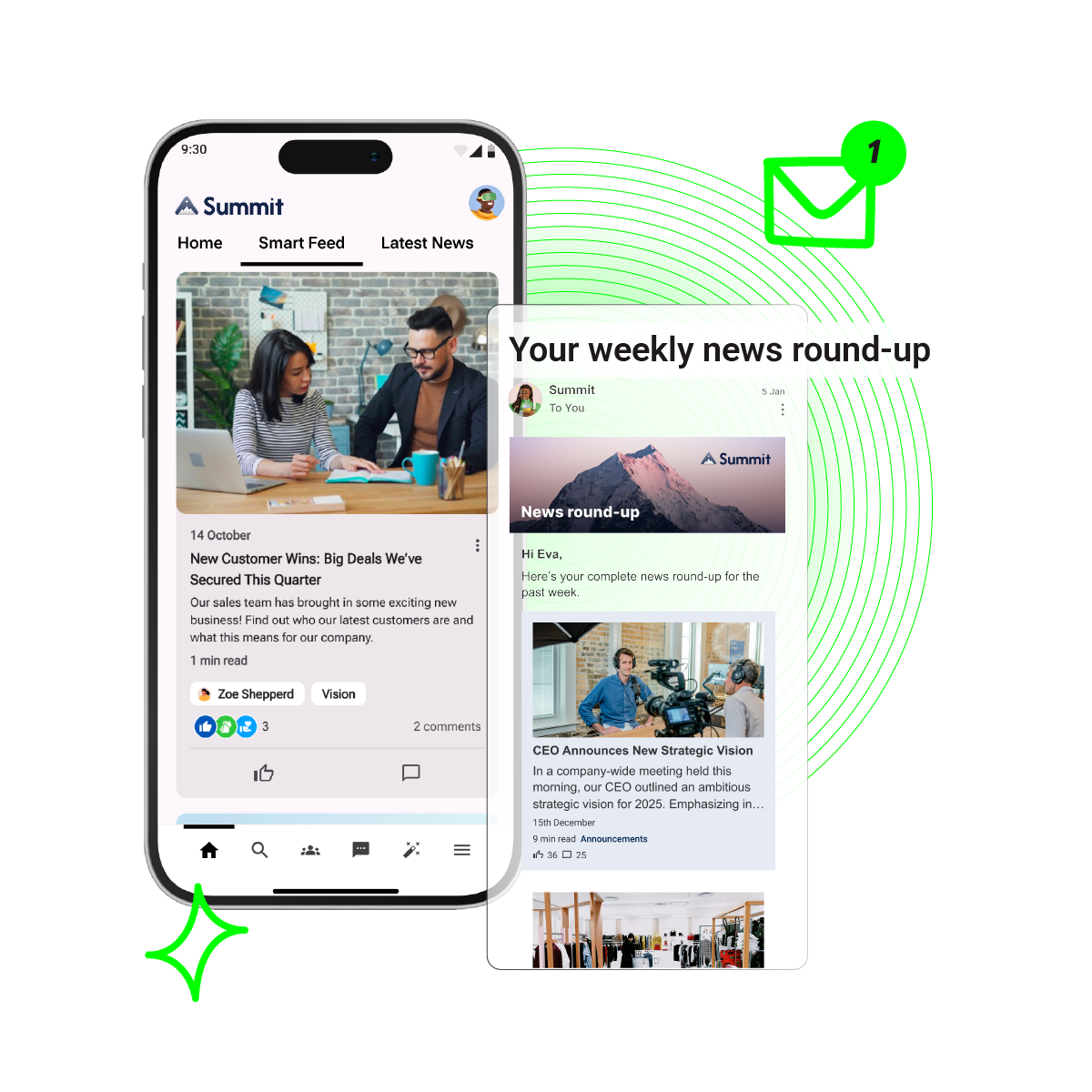
1. Oak Engage
Oak Engage is a strong small business intranet for growing organisations with frontline and desk-based employees.
It gives employees one place to access company news, policies, onboarding information and workplace resources across mobile and desktop. Internal teams can target updates by role, team or location, helping employees receive information that is relevant to them.
Oak Engage was recognised as a leading product in the ClearBox Intranet and Employee Experience Platforms 2026 report. It achieved a top-five overall score out of 37 providers and received four ClearBox Choice badges: Top 5 Score, Community Builder, Best for Value and AI Innovator.
Unlike a basic document portal, Oak combines structured intranet content with employee communication tools, engagement features and integrations with existing workplace systems.
Pros
- Mobile access for frontline and desk-based employees
- Targeted communication by role, team or location
- Company news, policies and structured intranet content
- Simple content management for internal teams
- Microsoft 365, SharePoint and workplace integrations
- Employee engagement and communication analytics
Cons
- Less suited to businesses that only need a basic document site
- Not designed for heavily customised, developer-led intranet projects
Best fit
Growing businesses experiencing communication challenges across different teams, locations or employee groups. Oak is particularly relevant to organisations with a mixture of frontline and desk-based employees.
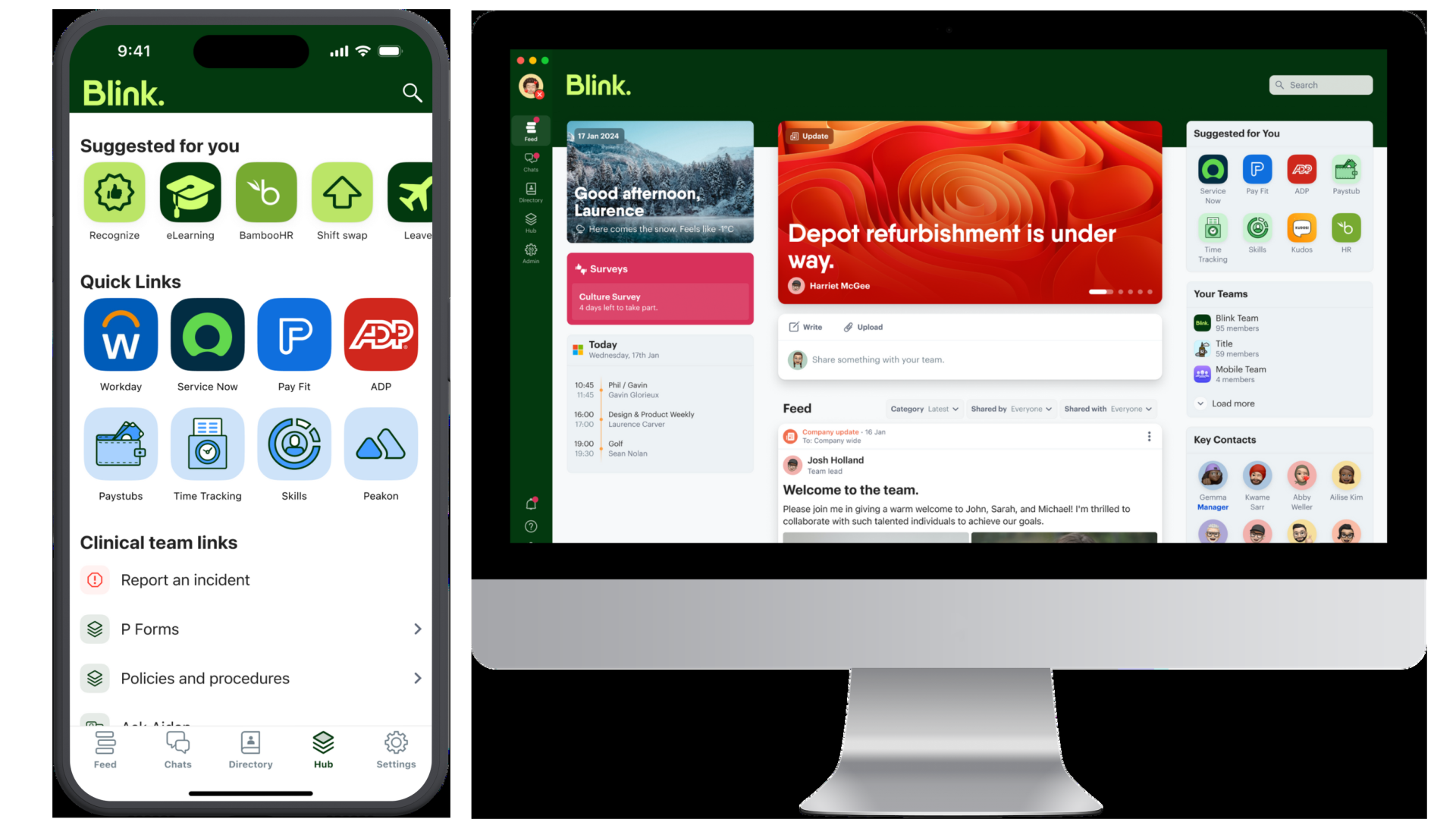
2. Blink
Blink is one of the strongest frontline communication platforms aimed at growing operational businesses.
Its main advantage is simplicity.
Employees can adopt Blink extremely quickly without much training.
Pros
• Extremely easy mobile adoption
• Strong frontline messaging experience
• Clean modern interface
• Fast rollout process
• Good engagement rates for operational teams
Cons
• Lightweight as a full intranet
• Less structured knowledge management
• Governance becomes harder as businesses scale
Best fit
Frontline heavy SMBs that primarily need employee communication and operational updates.

3. Connecteam
Connecteam is closer to an operational workforce platform than a traditional intranet.
However, many SMBs use it as their primary employee communication hub because it combines scheduling, tasks, updates, and communication in one mobile environment.
Pros
• Excellent for shift based teams
• Strong workforce operations tooling
• Mobile first design
• Affordable for smaller businesses
• Very practical for operational management
Cons
• Limited intranet style structure
• Weak knowledge management capability
• Less suitable for larger internal communication strategies
Best fit
Operational SMBs with shift workers, field teams, or deskless employees.
Especially strong for hospitality, cleaning, trades, logistics, and field services.
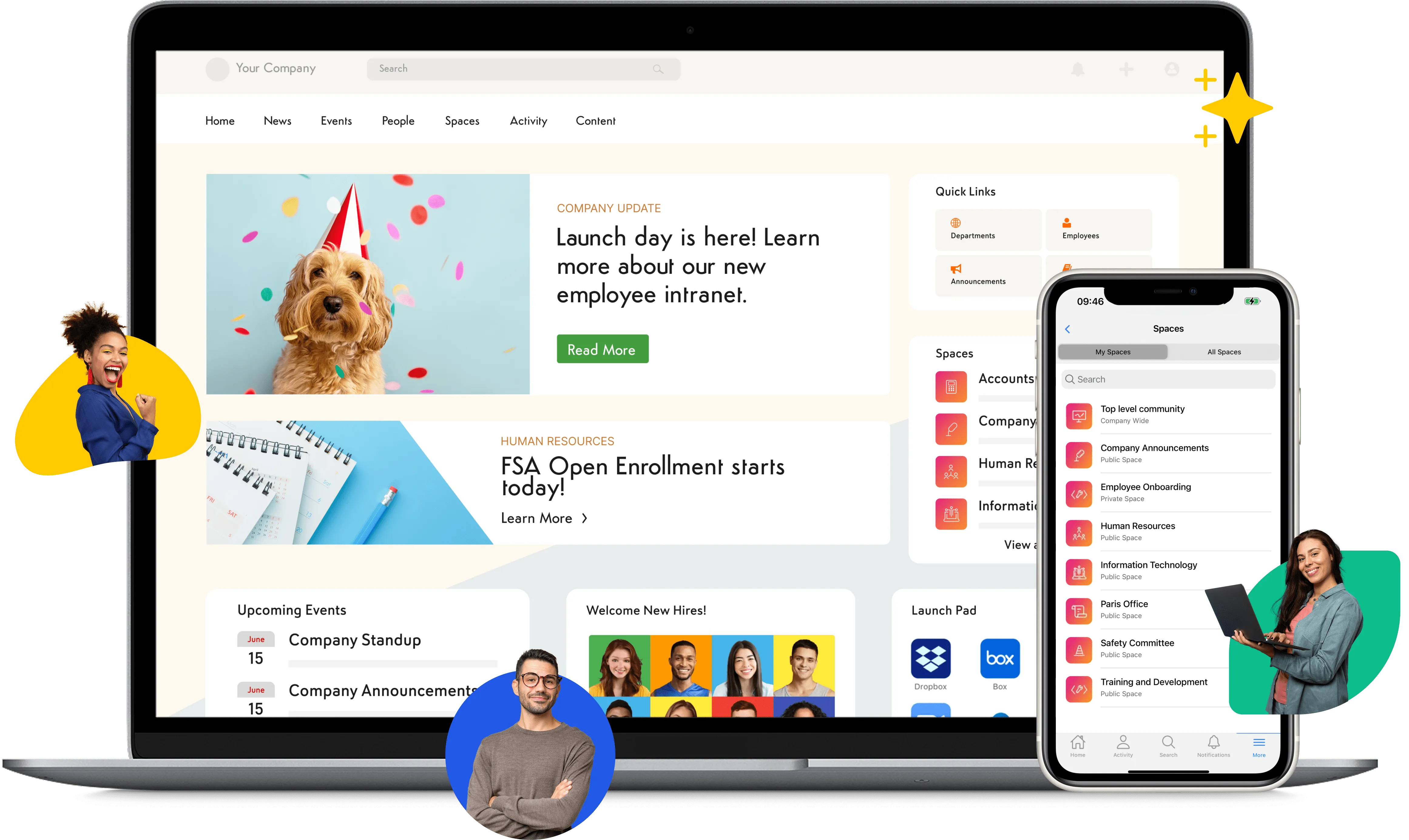
4. Axero
Axero sits somewhere between traditional intranet software and modern employee hubs.
It focuses heavily on collaboration, document management, and structured communication.
Pros
• Strong all in one intranet functionality
• Good knowledge management structure
• Collaboration and communication combined
• Easier administration than enterprise platforms
• Flexible content organisation
Cons
• Interface feels more traditional than newer competitors
• Mobile experience less differentiated
• Employee engagement layer weaker than modern employee apps
Best fit
SMBs wanting a more traditional intranet structure without full enterprise complexity.

5. Guru
Guru is technically a knowledge management platform rather than a traditional intranet.
However, many startups and SaaS businesses increasingly use it as an internal information hub.
Pros
• Excellent search functionality
• Extremely easy knowledge sharing
• Very fast onboarding
• Strong browser integrations
• Good for operational documentation
Cons
• Weak employee communication tooling
• Minimal engagement functionality
• Not built as a true employee experience platform
Best fit
Knowledge heavy SMBs, SaaS companies, and support focused organisations.

6. MangoApps
MangoApps positions itself as an all in one employee experience platform that combines intranet functionality, communication, training, collaboration, and employee apps within a single environment.
For SMBs, the appeal is breadth. Businesses can centralise multiple employee functions without stitching together lots of disconnected tools.
The platform is particularly strong for organisations wanting operational functionality alongside communication and engagement.
Pros
• Broad all in one functionality
• Strong employee app experience
• Good onboarding and training tools
• Frontline communication support
• Built in collaboration capabilities
• Useful operational workflows and task management
Cons
• Can feel feature heavy for smaller teams
• User experience can feel less streamlined than simpler platforms
• Learning curve higher than lightweight SMB tools
• Administration becomes more involved as usage expands
Best fit
Growing SMBs wanting a broad employee platform that combines communication, training, onboarding, and operational functionality in one place.
Particularly suited to businesses wanting fewer disconnected employee systems. (mangoapps.com)

7. Happeo
Happeo is a collaboration focused intranet platform designed heavily around Google Workspace integration.
Its biggest strength is how naturally it fits into Google based workflows. For SMBs already operating inside Gmail, Google Drive, Google Meet, and Google Docs daily, Happeo can feel very intuitive.
The platform combines internal communication, collaborative channels, pages, and knowledge sharing in one connected environment.
Pros
• Excellent Google Workspace integration
• Strong collaborative communication experience
• Clean and modern user interface
• Good internal search functionality
• Simple content publishing workflows
• Familiar experience for Google centred teams
Cons
• Less compelling for Microsoft organisations
• Frontline communication capability less differentiated
• Operational workflow functionality more limited
• Smaller ecosystem than larger intranet vendors
Best fit
Google Workspace centred SMBs wanting a collaborative intranet that feels tightly integrated into existing workflows rather than layered on top of them. (softwareadvice.co.uk)

8. HubEngage
HubEngage focuses heavily on employee engagement, recognition, communication, and feedback functionality.
The platform combines intranet capabilities with engagement features like surveys, rewards, recognition, and employee communication campaigns.
For SMBs, this creates a more culture and engagement focused experience compared to traditional knowledge heavy intranet platforms.
Pros
• Strong employee engagement tooling
• Recognition and rewards functionality included
• Good survey and employee feedback features
• Mobile employee app support
• Flexible communication and announcements
• Useful for improving employee participation
Cons
• UX less polished than some market leaders
• Smaller overall market visibility
• Knowledge management less differentiated
• Can feel engagement heavy for operational businesses
Best fit
SMBs prioritising employee engagement, recognition, communication visibility, and company culture initiatives alongside intranet functionality. (hubengage.com)

9. Confluence
Confluence is not technically a traditional intranet platform, but many startups and SMBs use it internally as a lightweight employee hub and documentation environment.
Its biggest strength is structured knowledge management.
For technical businesses especially, Confluence often becomes the operational source of truth for documentation, onboarding, processes, and internal collaboration.
Pros
• Excellent documentation and wiki functionality
• Strong operational knowledge management
• Familiar for technical and product teams
• Flexible collaboration spaces
• Strong search and content organisation
• Integrates well with Jira and Atlassian ecosystem
Cons
• Weak employee engagement tooling
• Limited communication campaign functionality
• Poor frontline communication support
• Less suitable for non technical workforces
• Can become cluttered without governance
Best fit
Tech startups, SaaS businesses, engineering organisations, and documentation heavy SMBs needing structured internal knowledge management more than employee engagement features. (atlassian.com)

10. Haystack
Haystack positions itself as a lightweight digital headquarters for growing businesses.
The platform focuses heavily on simplicity, usability, integrations, and reducing communication clutter for smaller teams.
Compared to larger intranet software Haystack intentionally keeps the experience relatively streamlined and approachable.
Pros
• Simple and modern user experience
• Easy employee onboarding and adoption
• Lightweight administration requirements
• Good third party integrations
• Clean communication experience
• Suitable for smaller growing teams
Cons
• Smaller ecosystem and market presence
• Less advanced governance capability
• Narrower feature depth than larger platforms
• Limited enterprise scalability compared to bigger vendors
Best fit
Small businesses wanting a lightweight employee communication and intranet platform without the complexity or overhead associated with enterprise software. (usehaystack.io)
Which intranet software is best for a small business?
The best small business intranet is one employees can use consistently without creating additional administrative complexity.
Oak Engage is a strong overall option for growing businesses with frontline and desk-based employees because it combines mobile employee access, targeted communication, company news, structured content and workplace integrations within one platform.
Businesses that only need a small number of internal pages or somewhere to store documents may not require a dedicated intranet platform. A dedicated platform becomes more valuable when communication is spread across different teams, sites, shifts or employee groups.
For growing businesses, the priorities are usually:
What is the most affordable intranet software?
The most affordable intranet platform depends on organisational size, communication requirements and existing technology stack. Software like Microsoft SharePoint can initially appear low cost for organisations already using Microsoft 365, but many businesses later face additional costs through development, governance, administration and ongoing IT support.
Modern software like Oak Engage are increasingly chosen as affordable intranet alternatives because they combine employee communication, mobile access, frontline reach, targeting and operational updates in one platform without requiring expensive custom development or complex implementation projects.
Affordable intranet software should not simply reduce upfront cost. The best-value intranet platforms for small businesses also reduce communication overhead.
What small businesses should actually look for in an intranet
Many SMBs make the mistake of evaluating intranet software purely based on feature count.
In reality, the best intranet for a small business is usually the one that makes communication easier rather than more complicated.
There are several factors that matter far more than simply having the biggest platform.
Mobile accessibility
A surprising number of intranet software still feel desktop first.
That creates problems immediately for:
• frontline employees
• field workers
• hospitality teams
• healthcare staff
• retail employees
• operational workforces
If employees cannot access updates quickly on mobile, adoption usually drops rapidly.
This is one reason mobile first intranet software continue gaining market share across SMB environments.
Speed of deployment
Small businesses rarely want six month implementation projects.
They usually need something operational quickly.
Modern SMB intranet software increasingly focus on:
• guided onboarding
• templated deployments
• easier administration
• lower IT dependency
The faster the platform launches successfully, the faster communication fragmentation starts reducing.
Employee usability
A small business intranet is only valuable if employees consistently use it.
Adoption is arguably the single most important success metric for SMB intranet software.
This is why modern software increasingly prioritise:
• cleaner interfaces
• simplified navigation
• mobile UX
• targeted communication
• easier search experiences
rather than overloaded enterprise style interfaces.
Integration flexibility
Most SMBs already use multiple systems.
The intranet should not become another disconnected tool employees ignore.
Modern intranet software increasingly integrate with:
• Microsoft 365
• Google Workspace
• HR systems
• payroll systems
• operational tools
• identity providers
• scheduling systems
The more connected the employee experience becomes, the more useful the platform feels operationally.

Why SMBs are moving away from email only communication
Most small businesses start with email because it feels simple.
Over time, it becomes increasingly chaotic.
Updates become fragmented across:
• email
• WhatsApp groups
• Slack
• Teams
• shared drives
• spreadsheets
• meetings
• disconnected apps
As organisations grow, communication becomes harder to navigate and harder to trust.
Employees start missing information not because communication is absent, but because there is too much fragmented communication happening simultaneously.
This is what many organisations now experience as communication friction.
Communication friction happens when employees struggle to:
• access information
• understand priorities
• find resources
• navigate systems
• act on communication efficiently
Modern intranet platforms help centralise communication into a more structured employee experience.
That is increasingly why SMBs are investing earlier in employee communication infrastructure rather than waiting until communication problems become operational risks.
Final thoughts
The SMB intranet market is changing rapidly.
The old model of heavily customised enterprise intranets is becoming less relevant for growing businesses that need speed, usability, and communication clarity.
Modern small business intranet software is increasingly focused on:
• reducing communication friction
• simplifying employee access
• centralising operational information
• improving frontline communication
• supporting hybrid and distributed teams
• replacing fragmented communication environments
The platforms winning this market are usually not the ones with the biggest feature lists.
They are the platforms employees actually use daily.
For most SMBs, that matters far more.
FAQs
What is a small business intranet?
A small business intranet is a private digital space where employees can access company news, policies, documents, onboarding resources, colleague information and workplace tools.
It gives employees one reliable place to find internal information instead of searching across email, shared drives and messaging apps.
What is the best intranet software for a small business?
The best intranet for a small business depends on its size, workforce structure and communication needs.
Oak Engage is a strong option for growing organisations that need mobile access, targeted employee communication and structured intranet content for frontline and desk-based employees. Businesses that only require a few internal pages or basic document storage may be better served by a simpler tool.
Does a small business need an intranet?
A small business may benefit from an intranet when communication and information become fragmented across different tools.
It can be particularly useful when the organisation has multiple teams, locations, shifts or employee groups, or when employees regularly struggle to find current documents and company updates.
What features should a small business intranet include?
A small business intranet should provide the features employees need without creating unnecessary administrative complexity.
Useful capabilities include company news, policies and documents, onboarding resources, an employee directory, mobile access, targeted updates, search and connections to existing workplace systems.
Can employees use Oak without a company email address?
Yes. Oak’s mobile intranet app supports flexible sign-in options including QR codes, SMS and single sign-on, helping organisations provide access to employees without a work email address.
Does Oak integrate with Microsoft 365?
Yes. Oak can integrate with Microsoft 365 tools, including SharePoint and Teams, helping organisations connect existing content and systems with a more accessible employee experience. Learn more about Oak’s Microsoft 365 integration.
Is Oak suitable for very small businesses?
Oak is most relevant when a growing business begins to experience communication challenges across different teams, locations or employee groups.
Conclusion
Email is not disappearing from the workplace.
But organisations that rely on email as their primary communication channel are increasingly struggling with communication overload, fragmented information access, communication fatigue, declining employee engagement, and inconsistent frontline communication.
Modern employee communication is shifting toward more centralised, mobile accessible, and targeted communication environments.
The organisations improving communication effectiveness most successfully today are often not the organisations communicating most frequently.
They are the organisations making communication significantly easier to access, navigate, understand, prioritise, and act on.
Because ultimately, effective employee communication should not feel like employees are trying to assemble IKEA furniture without instructions.
It should feel simple, accessible, and easy to navigate inside a connected digital workplace.
