
Blog
Last updated:
November 12, 2026
10
min read
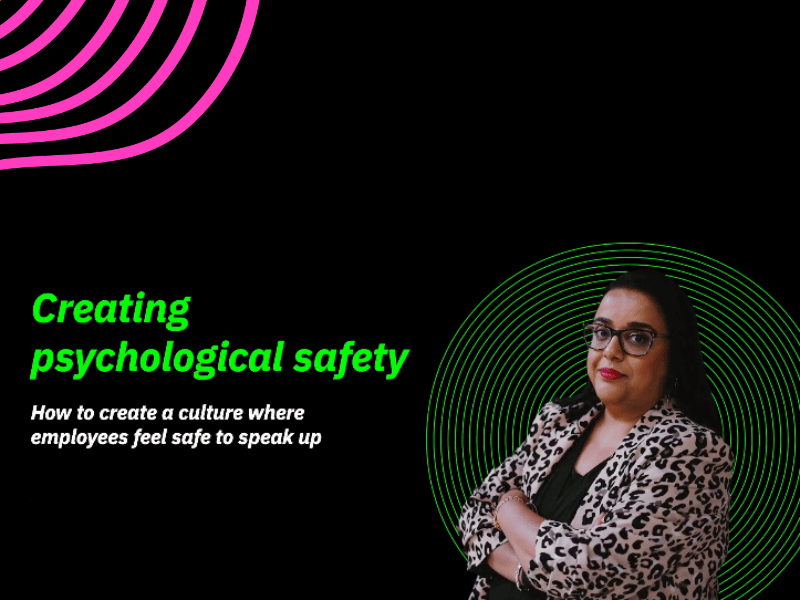
Psychological safety at work means people feel safe enough to speak up, ask questions, admit mistakes, raise concerns and challenge ideas without fear of embarrassment, punishment or being sidelined.
This blog has been repurposed from our webinar on psychological safety with Eva Armit and Advita Patel. Advita is an award-winning expert in internal communication and employee experience. As the founder of CommsRebel, she has worked with numerous organisations to build confident and inclusive workplaces through the power of effective communication.
Psychological safety sits right at the heart of a healthy workplace culture. It determines whether your people feel confident saying “I disagree”, asking for help or challenging a dodgy decision without worrying about the fallout. It directly impacts trust, team performance, retention and the honesty of everyday conversations.
The data shows just how big this hurdle is. According to Mental Health First Aid England, nearly half of employees do not feel comfortable raising issues at work, while more than a third do not feel safe asking for help. On top of that, the IC Index 2026 shows that half of employees simply do not trust their CEO or leadership team.
Building a genuine speak up culture takes more than good intentions. Here is how it actually works.
What psychological safety means
Psychological safety is the shared belief that taking a risk will not backfire. In practice, it gives people permission to:
- Speak up
- Ask questions
- Admit mistakes
- Flag concerns
- Challenge ideas
It does not mean everyone walks on eggshells, acts nice all the time or ducks difficult conversations. It is not an excuse for sloppy standards, missed targets or zero accountability. Nor does it mean everyone agrees on everything.
It simply gives teams the confidence to disagree openly, share straight feedback and solve problems together.
Common misconceptions about psychological safety
A few common misunderstandings routinely derail real progress.
1. Politeness is not the goal
Many workplaces mistake politeness for healthy culture, but total silence is often a red flag. When nobody pushes back, asks awkward questions or challenges an initiative, you are usually looking at fear, not alignment.
2. Trust and psychological safety are different things
Trust and psychological safety overlap, but they are not identical. Trust is personal—it is how an individual views a specific colleague or manager. Psychological safety is cultural—it is how someone experiences the whole team and the unwritten rules of the room.
An employee might completely trust their direct line manager, yet freeze when asked to speak up in front of the executive team.
3. Accountability stays firmly in place
Psychological safety backs people who question processes, suggest improvements or hold their hands up when an honest mistake happens. It never protects toxic behaviour, chronic underperformance or actions that undermine company values.
4. Actions still have consequences
Speaking honestly never removes personal responsibility. True psychological safety and high accountability work side by side.
Why employees stay silent
Employees do not decide to speak up just because an executive asks for feedback. They look at what happened to the last person who did.
When an employee raises a genuine concern and gets labelled difficult, cynical or disruptive, everyone else takes note. Self-preservation kicks in quickly.
People stay quiet for plenty of other reasons too:
- They believe speaking up will not change a thing
- They are burned out and running on empty
- They lack mental bandwidth after dealing with pressure inside and outside work
- They simply want to protect their peace
That silence tells you far more than an engagement survey ever will.
Leadership behaviour sets the baseline
Culture mirrors leadership behaviour. Teams watch what leaders do and quickly adopt the tactics that get rewarded. When leaders rely on command and control, silence quickly follows.
Defensive, rigid leadership shuts down dialogue. By contrast, leaders who show a bit of humanity make room for genuine honesty.
Vulnerability builds credibility
Showing vulnerability does not mean oversharing or losing control of the room. It means having the guts to say:
- “I do not have all the answers right now.”
- “I need a few days to find out.”
- “Let’s work this out together.”
That level of clarity builds genuine authority. Real confidence does not need to pretend it has every answer.
Leaders who get this right build stronger engagement, retain great people and deliver better results.
Internal comms and psychological safety
Internal communicators carry heavy responsibility here. Operating right between senior leadership and the wider workforce gives comms professionals insight that almost nobody else has.
That remit means:
- Speaking truth to power
- Sharing what employees are actually saying on the ground
- Giving leaders unvarnished feedback
- Helping leadership spot blind spots and consequences
- Creating space for real, two-way dialogue
Internal comms professionals need psychological safety too. When comms teams feel silenced or unsupported, confidence drops, self-doubt creeps in and critical pushback stops.
A speak up culture has to protect the very people tasked with building it.
Tailoring your communication style
Psychological safety never looks identical for everyone. People process and share information differently depending on their working preferences.
Using a behavioural framework like DISC highlights four distinct tendencies:
- Red energy: direct, task-focused and concise
- Yellow energy: fast-paced, collaborative and people-focused
- Green energy: steady, considerate and relationship-oriented
- Blue energy: analytical, thorough and data-led
Most people show a blend of these, but one or two styles usually dominate.
This matters because people need different environments to speak up comfortably:
- Direct, task-focused leaders need brief, outcome-first summaries
- People-focused colleagues engage best with open discussion and collaboration
- Reflective team members need breathing room to consider ideas before responding
- Detail-minded colleagues need context, rationale and clear data up front
Adapting your style to match these preferences makes speaking up feel natural rather than risky.
Cultural intelligence matters
Cultural intelligence helps teams recognise lived experiences, background nuances and how different groups interpret workplace dialogue.
In global organisations and diverse teams, quietness does not automatically signal agreement. Silence is rarely consent. Historical hierarchy, cultural norms or past negative experiences often hold people back from speaking out.
A culturally aware organisation asks:
- How do different teams experience our communications?
- What encourages quieter colleagues to speak openly?
- Is hierarchy stopping people from contributing?
- What practical support helps every voice get heard?
Spotting an unsafe culture early
Silence is the ultimate canary in the coalmine. When a massive change programme, strategic update or all-hands meeting gets zero reaction, alarm bells should be ringing.
Watch out for these warning signs:
- Zero questions during town halls
- Plummeting discretionary effort
- Falling productivity and output
- Dip in overall team performance
- Rising sickness and burnout rates
- High turnover clustered in specific teams
When employees stop asking questions, they have checked out.
Leaders celebrating a town hall where nobody asked a question have missed the point entirely. That is not alignment. That is caution.
Rebuilding psychological safety when trust breaks down
Rebuilding workplace trust takes consistency, steady effort and patience. There are no quick fixes.
Acknowledge past missteps
Leaders need to admit mistakes clearly and without spin. Employees respect leaders who own errors and show genuine accountability.
Focus on practical trustworthiness
Real trust requires more than technical competence. It demands:
- Reliability
- Genuine relationship-building
- Discretion and confidentiality
- Putting team success ahead of personal ego
People know immediately when an initiative is purely self-serving or performative.
Follow through on promises
Saying an action will happen by Thursday means delivering by Thursday. When a delay happens, explain why straight away.
Measure real progress
Track whether habits are shifting. Measure whether people ask more questions in meetings, raise blockers earlier and share feedback more frequently.
Three practical actions to take today
1. Dig into the real data
Audit where your culture stands right now. Look closely at:
- Question volume in company forums
- Project volunteering rates
- Frank feedback sent via team channels
- Direct messages and inbox queries
- Contribution levels in regular meetings
The numbers reveal where people feel comfortable and where silence is creeping in.
2. Listen regularly and cut out the guesswork
Speak directly to employees across different levels. Regular conversations beat assumptions every time. Frank verbatim feedback tells you what is really happening behind the stats.
3. Map out your leadership team
Different leaders need different approaches. Some require broad business context, others want clear data and some just need time to digest information.
A targeted stakeholder approach helps:
- Back the leaders already championing open dialogue
- Support leaders who feel hesitant or resistant
- Guide those sitting on the fence
- Prioritise the business areas needing immediate focus
Tackling everything at once spreads teams too thin. Focus where the impact is greatest.
Why managers need proper backing
Most managers earn promotions based on individual technical skill rather than people leadership. Many never receive formal support on coaching or managing human dynamics. That gap leaves managers feeling exposed, defensive and leaning on rigid habits.
Organisations must equip their managers. Modern leadership demands:
- Clear direction
- Authentic influence
- Active coaching
- Practical guidance
- Genuine listening
Without the right tools, well-meaning managers end up shutting down dialogue by accident.
Moving forward
Psychological safety is not about skirting awkward conversations. It is about making those conversations safe, regular and productive.
It does not come from an annual engagement survey. It takes root through visible leadership habits, dependable follow-through, everyday communication choices and the way teams handle dissent.
A genuine speak up culture is judged by what happens after someone raises their hand.
When leaders spend as much time listening as they do broadcasting, people finally get the confidence to speak up. You can watch the full webinar with Advita here.
