

Blog
Last updated:
July 9, 2026
14
min read
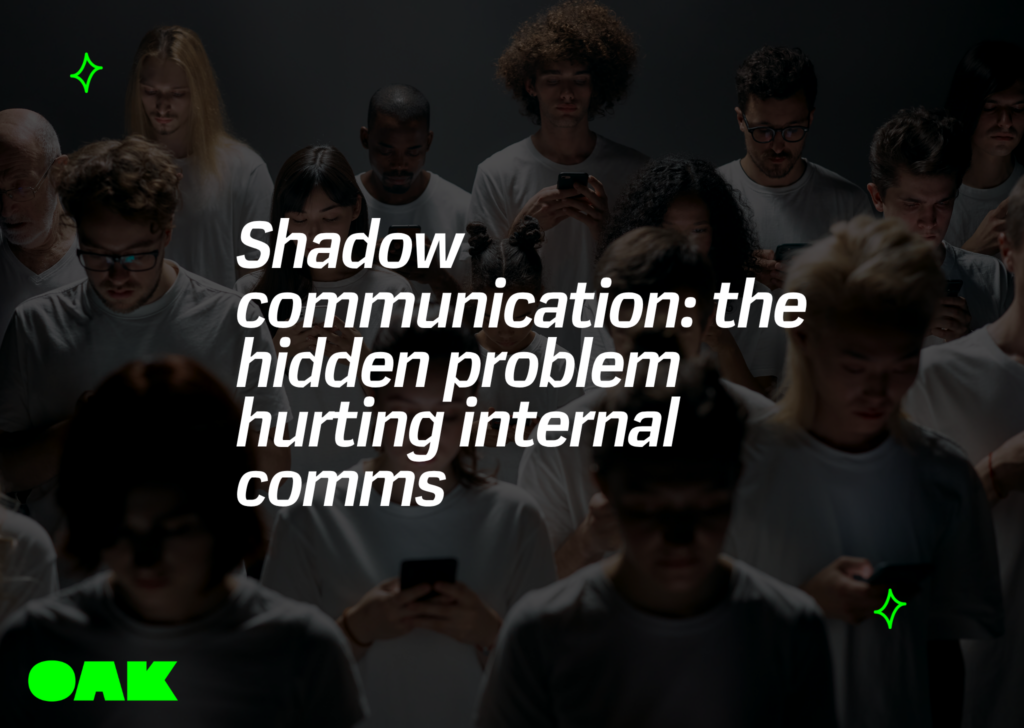
Many of us will have experienced shadow communication before. Whether it’s a text from a colleague to let you know about what’s going on at work while you’re on leave, or a WhatsApp group chat with your local department to keep in touch between shifts and send reminders.
Shadow communication is classed as any work-related communication that happens outside of your organisation’s official approved channels. These channels are used to share, and manage employee updates, whether it’s via WhatsApp, personal texts, private chats, personal emails and informal messaging threads.
Most corporate communication systems were designed for desk-based work. Email, traditional intranets and long written updates assume access to screens, dedicated time and a quiet environment.
Frontline roles rarely offer any of these conditions – and when approximately 80% of the global workforce is made up of frontline and deskless roles, we have a communication friction problem.
Why shadow communication happens
One word: ease.
Unofficial comms channels are often relied on because they’re fast, familiar and easy to use.
- When frontline teams don’t have access to company email or internal comms platforms, how else are you supposed to reach them?
- When formal work comms channels are too slow or clunky, it’s easier to send a quick WhatsApp or text to the team.
- If managers need to send urgent comms to their teams right now, a group message makes sense.
Why people turn to WhatsApp for internal communication
WhatsApp has become a workaround and a popular unofficial communication channel because everyone either has it already or can easily download it on their personal device – and chats are encrypted.
On the surface, this seems like a sensible solution.
The limitations of WhatsApp for internal communication, and other similar group messaging platforms, can often appear further down the line.
Looking for an update that your manager sent a few weeks ago when the chat has been popping off every day since? Good luck hunting that down.
You want to stay in touch with old work friends who have moved on, but your group chat is the only place to share company updates. Should former employees be seeing private internal company information?
You can see within your group who has read a message, but how does the leadership team driving forward key changes in the company know that you know? When people have questions or want more information, who do they turn to?
The challenges arise when there is no central source of truth and reach cannot be measured and monitored properly. Plus – when your staff night out debrief takes precedence over crucial company updates, the work and personal boundaries can become blurred.
So, while platforms like WhatsApp are handy to get messages out there quickly, they’re perhaps not the most sustainable.
The risks of shadow communication
With official communication channels, analytics will highlight areas of the organisation that are engaged, checking in for updates and staying informed with company news. With unofficial channels, the only measurement you get is a read receipt. Is this really a good enough metric when it comes to crucial compliance, training and organisational updates.
Governance and compliance
How can the compliance, risk or legal team be confident that every employee has read and understood the latest update when they have no visibility over a whole segment of the workforce?
From policy updates to process change and a myriad of other training initiatives, it’s usually easy for desk-based colleagues who can respond in real-time, but deskless staff are often dealt the weak hand. They might have to skim through a document on their break and sign to say they’ve read it but then have no place to refer back to it later.
If a complaint comes in, can the person investigating show with 100% certainty that each person involved in the incident was effectively briefed in the policy or process and how can this be proven?
Shadow communication channels can be helpful in sending out reminders to teams about various updates. When it comes to following processes, the company won’t want their internal documents shared on unofficial communication channels and there could well be disciplinary action for doing so.
Manager cascades
Our Frontline Report highlighted that for frontline teams, line managers are often the most influential and trusted communication channel. They’re the people they see all the time, they know how their teams work and make corporate updates meaningful at a store or site level.
The quality of cascaded information depends entirely on the individual, their time capacity and the clarity they can provide in each update. If colleagues miss the briefing, they might never hear of something again via an official channel. When they turn to their colleagues via unofficial channels, messages can get diluted, improvised or simply forgotten about.
Trust issues
When colleagues get used to shadow communication channels, they can start to lose trust in official communications. There’s often a sense of distance or disconnect between senior leadership and the frontline. A feeling that they are so far removed from the day to day reality that they become a bubble with their own site colleagues and detach from the wider business.
Offboarding
We touched on this earlier – the dilemma of having just one group chat to stay in touch with old colleagues, chat to current colleagues and share live company updates.
When an employee leaves the company, if they have a laptop or work issued mobile device, this will be handed back and their access will be blocked via any other channels…except unpoliced unofficial communication channels.
Yes, someone can remove themself from a group chat, or someone else could ‘kick them out’. But when you’re all friends and want to stay in touch, are you going to voluntarily leave the chat?
First step: create a new chat which is purely for socialising.
Second step: look at workplace messaging apps that are as intuitive as WhatsApp but remain accessible only to current colleagues.
Frontline teams are most affected by unofficial communication channels
It’s not their fault. When your non desk-based colleagues are cut off from email, laptops and other company systems, how else are you supposed to reach them?
Even if they wanted to stay in the know with company updates, they might only be able to find out via their managers in shift briefings or to specifically ask for information that their line manager can look up for them.
When official communication doesn’t reach the frontline, unofficial communication channels will fill the gap. Equally, when there’s no other way to reach a colleague to ask if they can swap a shift or you have to fill in a paper form to request time off, isn’t it just quicker to send a WhatsApp and get your answer in minutes?
How to reduce shadow communication at work
The best way to reduce shadow communication is to remove the need for it. We need to understand what’s driving people in each organisation or job type to unofficial channels and find ways to overcome each challenge.
There are practical steps you can take to first get to the root of the issue.
Auditing where unofficial company communication is happening. What platforms are people turning to and why do they use these channels? Could it be that they have no other option?
Upgrade the digital employee experience
When trust is an issue, creating one single trusted place for company updates to be shared is key, both for desk-based and deskless colleagues. Creating an equitable digital employee experience for every employee not only makes it easier to communicate with each segment of the workforce, but it demonstrates to previously disconnected employees that they are seen, valued and involved in what’s going on throughout the company.
Personalise communications
Being able to target communications to each group within your workforce will ensure that the right teams see the right updates that matter most to them.
When all of the updates we see are genuinely relevant to our job, we’re more inclined to pay attention. Plus, when urgent changes need to be shared, push notifications can ensure that each user is notified like they are with any other app on their phone, so there are no excuses for not seeing it!
Mobile-first is a must-have
Of course, finding workplace messaging apps or frontline communication tools that are mobile-first is critical. A clunky, outdated interface is going to deter people straight away.
Our Gen Z vs Millennials research identified that 73% of Gen Z are frustrated with outdated workplace tech – and 63% of Millennials agree. So get it right or risk losing them to shadow communication channels once again.
Better equip your managers
In every frontline environment, line managers are the most influential communication channel. More powerful than email, newsletters, notices or digital screens. But we need to ensure they have the right training.
- Coach them to maintain consistency in tone and message
- Offer micro-training in how to cascade information clearly
- Don’t overload them with content, prioritise the essentials
- Give them briefing notes, FAQs, scripts or short videos they can rely on
- Equip them with an easy to access ‘single source of truth’ to clarify details instantly
Line managers shape trust and clarity, accuracy and safety behaviour, belonging and team performance. They remain your superpower for dispersed and frontline colleagues, so ensure they’re equipped with all the tools they need.
Measure reach and engagement
As you introduce a new or updated mobile-first approved communication channel, you can monitor the uptake across different segments of the workforce. Such as, if your company app has a messaging feature, has this spiked since you introduced it to frontline teams? This could signify a reduction in reliance on shadow communication channels.
You can also measure how often people are checking in on the app and the most-visited resources or most searched phrases. Look for patterns to understand what information your people need most often and identify gaps to be filled.
Monitoring adoption and engagement across the workforce can also help to pinpoint any groups within the workforce who might struggle to see the benefit or refuse to shift away from shadow channels. Be prepared to coach these people on the benefits of their single source of truth and everything they can do in the palm of their hands.
As with any big change initiative, there will be challenges along the way, but identifying them and tackling them one at a time will pay off in the long run.
What internal communication tools to use instead
With a dedicated employee communication platform that unites your whole workforce in once central space across mobile and desktop devices, you can open up a world of opportunity.
When we look specifically at the challenge of shadow comms channels, there are key must-have features to look out for if it is to work.
A mobile app, of course, is absolutely necessary. You don’t want a platform that only caters to your desk-based colleagues. You need an intuitive, modern and user-friendly mobile app to stand any chance of drawing people in from shadow channels to your official internal communication platform.
From the compliance perspective, you’ll want to ensure that push notifications can be switched on to alert relevant employees of key updates. Equally, when sharing policy or process updates, for your own risk management peace of mind, look for a mandatory read feature where people can click to confirm they have read and understood crucial updates.
Mirroring the social feeds that we are all so used to, audience targeting will ensure everyone only sees content that they’re interested in, that applies to them and this can be locked down as much or as little as necessary depending on the size of your organisation. Managed access and permissions is another key consideration to ensure that specific admins have access at different levels, so that confidential information remains confidential within relevant teams.
And finally, clear analytics and reporting to help you spot those patterns, identify hurdles and continually improve the employee experience for your dispersed workforce.
Oak is the employee communication platform to replace shadow communication
Oak is a mobile-first employee communication platform that helps organisations replace scattered, unofficial channels with one trusted place for updates, documents and communication.
Consider a restaurant situation when a new menu is released with a full allergen list, but the allergen list is only stored in one folder in the manager’s office and on the intranet, where front of house staff have no easy access during their shifts.
Oak customer Five Guys was struggling to get key information to each team member. There was also an over reliance on traditional methods such as notice-boards, emails and the line manager cascade.
Five Guys has now removed the pressure from line managers by communicating directly with all restaurant staff via their employee communication platform, sharing push notifications and key updates on their mobile app, ‘Chatty Patty’. Being able to check who has seen each update provides much better visibility over compliance and risk – especially when allergens are involved.
“I can’t imagine trying to run the business without Chatty Patty now. It is an essential tool in our toolbox for how we run the business, how we communicate with each other, how we feed back, it’s essential, not optional.” – John Eckbert, CEO at Five Guys Europe
FAQs
What is shadow communication?
Shadow communication is work related communication that happens outside the official channels an organisation uses to share, manage and measure employee updates.
What causes shadow communication at work?
Employees often turn to unofficial channels because they are fast, familiar and easy to use. When employees don’t have access to any official communication channels, they can use shadow channels out of necessity to communicate with their teams.
Is WhatsApp an example of shadow communication?
Yes. Many dispersed workforces have local WhatsApp group chats in lieu of an employee communications app when there is no other way to communicate with their teams. Other examples of shadow communication include personal texts, private chats, personal email and informal messaging threads.
Why is shadow communication a problem?
Frontline employees are more likely to rely on shadow communication because they may not have regular access to email, laptops or company systems. Shadow communication is a problem because it can lead to mixed or inconsistent messages and compliance concerns with no single source of truth to rely on. There can also be concerns around sharing private company information on unofficial channels which may still include former colleagues.
How can organisations reduce shadow communication?
The solution is to reduce the need for shadow channels by introducing modern tools that are company-approved, accessible to everyone and overcome the challenges that unofficial channels were used to fix.
Organisations can do this by introducing mobile-first communication tools that are targeted, better empower line managers with key information and can effectively replace the need for unofficial group messages and comms channels.
What is the best alternative to WhatsApp for internal communication?
An employee communication platform that has equally strong digital experiences on mobile and desktop is the place to start. A tool like Oak can integrate internal workplace messaging and group chats on an approved channel while also opening up a realm of opportunities to connect directly with dispersed frontline employees that were once unreachable, with a trusted source of truth.
