

Blog
Last updated:
14
min read
.png)
Field workers keep essential services, sites and operations moving. Yet many still rely on noticeboards, personal messaging apps, shared email accounts or updates passed down through managers to find out what is happening at work.
This is the workplace digital divide: the gap between employees who can easily access company information, tools and conversations and those who cannot.
It affects people working across construction sites, healthcare settings, warehouses, transport networks, utilities, retail locations and other field-based environments where access to a desk, company device or work email cannot be assumed.
This is not simply an employee engagement problem. When communication fails to reach the field, organisations face delayed decisions, inconsistent processes, repeated questions, avoidable safety risks and managers losing valuable time relaying information manually.
Closing the divide requires more than putting an existing intranet onto a smaller screen. Field workers need communication designed around where, when and how they actually work.
Give your field and desk-based teams direct access to the information they need with Oak Engage’s frontline employee communication platform.

What is the digital divide in the workplace?
The workplace digital divide is the unequal access employees have to company information, communication channels and digital tools.
It most commonly affects frontline, deskless, mobile, remote and field-based employees who do not regularly use a company laptop, email address or office network.
However, the divide is not only caused by a lack of internet access. It can also be created by:
- Communication designed primarily for office-based employees
- Important updates being distributed through email alone
- Complicated sign-in processes
- Tools that are difficult to use on mobile devices
- Information being spread across multiple systems
- Content that is not relevant to an employee’s role or location
- Language, accessibility or digital confidence barriers
- Reliance on line managers to pass every message down
- Limited opportunities for field workers to ask questions or provide feedback
An organisation can be highly digitised at head office while a large part of its workforce remains dependent on delayed, second-hand or inconsistent communication.
What technology can bridge the workplace digital divide?
The most effective way to bridge the workplace digital divide is through a mobile-first employee communication platform that gives field workers direct access to company updates, resources, workplace tools and two-way communication.
Oak Engage is an all-in-one intranet and employee app designed for organisations with frontline, field-based and desk-based employees. It combines mobile access, targeted communication, push notifications, workplace resources, employee feedback and communication analytics within one secure platform.
This gives central teams a direct and measurable way to communicate with field workers without depending on work email, desktop access or manual manager cascades.
The commercial cost of disconnected field workers
Poor field worker communication creates problems far beyond Internal Comms. It can affect operations, HR, compliance, IT and the customer experience.
What Oak Engage’s frontline research reveals
Oak Engage’s Frontline Divide research, based on the experiences of 1,000 UK frontline employees, found that:
- 75% feel isolated from their company culture and community
- 45% have missed an important update because of poor communication
- 81% believe customers are affected by communication problems
These findings show that the workplace digital divide is not just a question of employee access. It can directly affect operational consistency, customer experience and workforce retention.
Explore Oak Engage’s Frontline Divide research.
How Oak Engage helps bridge the digital divide
Oak Engage is an all-in-one intranet and employee app built to connect frontline, field-based and desk-based teams, wherever they work.
It gives Internal Comms, HR, Operations and IT teams one platform to:
- Reach field workers directly through a mobile-first experience
- Deliver personalised updates by role, location and team
- Send urgent push notifications
- Bring policies, resources, forms and workplace tools into one place
- Enable employee feedback, conversation and recognition
- Measure communication reach, engagement and impact
- Reduce dependence on work email and manual manager cascades
The result is not simply better communication. It is greater operational consistency, faster access to information and clearer evidence that important messages have reached the people they affect.
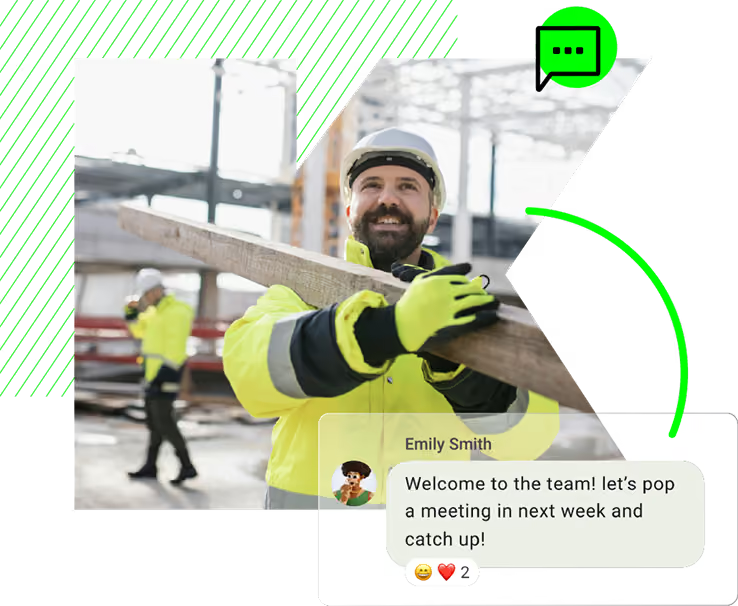
How to improve employee communication with field workers
1. Start with mobile-first access
Field workers should not have to wait until they return to an office, depot or staff room to find an important update.
A mobile-first employee app gives them direct access through the device they are most likely to have available.
Mobile-first does not mean simply shrinking a desktop intranet. The experience should make key actions quick and clear, with straightforward sign-in, readable content, intuitive navigation and easy access to the information people use most.
Oak Engage’s mobile intranet app gives field and desk-based employees one place to access company news, policies, resources, tools and conversations from a smartphone or tablet.
This reduces dependence on shared computers, work email and second-hand updates.
2. Target communication by role, team and location
A field engineer in Newcastle does not need every update intended for head office. A store team should not have to search through nationwide company news to find a change affecting its location.
Targeting content by role, site, department or audience makes communication more useful and reduces information overload.
It also gives Internal Comms and Operations teams more control over who receives local instructions, policy changes, leadership messages and urgent alerts.
Oak Engage’s Smart Delivery capabilities help organisations send the right message to the right people at the right time.
Field workers receive information relevant to their work, while communication teams can reach large and complex workforces without adding to the noise.
3. Make critical communication difficult to miss
Safety alerts, severe weather updates, site closures and urgent process changes cannot sit unread in an inbox.
Use targeted push notifications when an update requires immediate attention, but reserve them for information that genuinely matters. If every message is treated as urgent, employees will quickly stop treating any of them as urgent.
For critical or compliance-related information, communication teams should also be able to see whether the intended audience has received or engaged with the message.
Oak Engage enables teams to distribute urgent updates directly through its employee communication app for field workers, helping organisations move from simply sending messages to knowing whether communication has landed.
Mobile communication should also be supported by channels suited to the working environment. Oak Engage’s digital signage for frontline employees can reinforce urgent and company-wide updates across warehouses, sites, staff areas and other shared workplaces.
4. Create one source of truth
Field teams lose time when the current policy is stored in one system, a form is in another and the latest operational guidance is buried in an email thread.
A modern intranet platform gives employees one trusted place to find approved information, resources and workplace tools.
Search, clear content ownership and integrations with existing workplace systems make it easier for employees to find the latest answer without contacting HR, IT or a line manager.
With Oak Engage, organisations can bring updates, policies, forms, tools and workplace resources into one structured environment.
Employees can quickly access what they need, while central teams retain control over the information being shared.
5. Give field workers a voice
Closing the digital divide is not achieved by broadcasting more information from head office.
Field workers also need a simple way to ask questions, raise issues and contribute ideas based on what they see every day.
Pulse surveys, polls, comments, communities and employee messaging create a direct feedback loop between sites and central teams.
This gives leaders better visibility of emerging problems and makes field employees active participants in the organisation rather than the final point in a communication chain.
Two-way communication also helps organisations understand whether poor engagement is being caused by the message, the channel, the timing or a practical access barrier.
6. Support managers instead of using them as the communication channel
Managers remain essential for creating context, answering questions and reinforcing important messages. But they should not be the only route through which information reaches employees.
Direct digital communication removes repetitive cascade work and reduces the risk of messages changing as they pass through different management layers.
Managers can then focus on explaining what an update means locally and leading their teams.
This can create a clear operational benefit. Burger King UK reported that Oak Engage drastically reduced the time managers spent on administrative tasks, allowing them to spend more time leading restaurant teams and serving customers.
7. Measure reach, not just output
Publishing an update is not proof that it has been seen or understood.
Organisations should measure communication performance across different locations, roles and audience groups.
Useful measures include:
- Message reach
- Content views
- Notification engagement
- Search behaviour
- Comments and reactions
- Survey participation
- Active users
- Repeated questions
- Performance by role, team or location
This data helps communication teams identify disconnected groups and understand where the employee experience needs to improve.
Oak Engage’s intranet analytics and reporting provide clear data on how content performs across roles, locations and audience groups. This turns frontline communication from a manual distribution exercise into a measurable business function.

What should field worker communication software include?
The right platform should solve communication and access problems without creating additional work for employees, managers or IT.
Prioritise:
- Mobile-first access: A simple experience across smartphones and tablets
- Flexible authentication: Secure access that works for employees without regular company email or desktop use
- Audience targeting: Personalisation by role, team, location and other employee attributes
- Push notifications: Immediate delivery for time-sensitive updates
- A central knowledge source: Searchable access to current policies, resources, forms and tools
- Two-way communication: Polls, surveys, comments, messaging and employee voice
- Analytics: Visibility of reach, adoption and engagement by audience
- Integrations: Connections to the systems employees already use
- Security and governance: Enterprise controls that support appropriate mobile and bring-your-own-device access
- Branding and usability: An experience employees recognise, trust and want to use
The strongest solution is not necessarily the platform with the longest feature list.
It is the one field workers can access easily and that Internal Comms, HR, Operations and IT teams can manage confidently at scale.
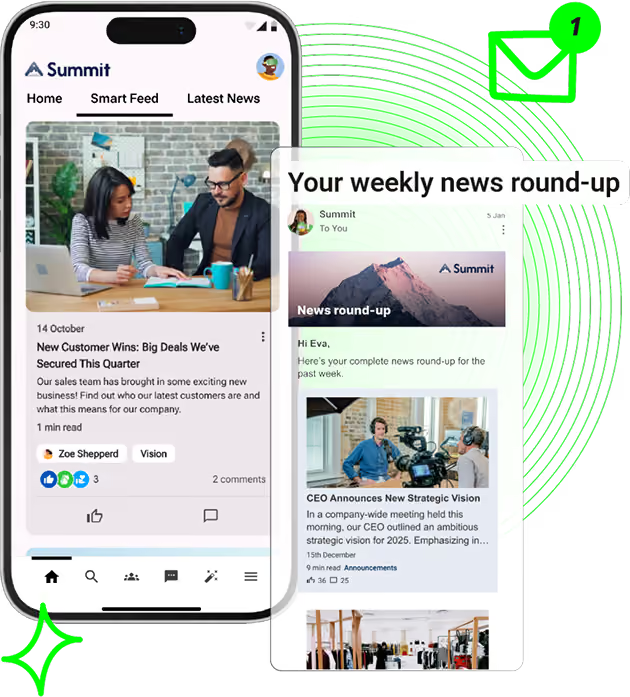
Is Oak Engage suitable for field-based workforces?
Oak Engage is particularly well suited to mid-sized and large organisations that need to connect field-based, frontline and desk-based employees across multiple locations.
It is designed for organisations that need more than basic team messaging or job scheduling. Oak Engage brings employee communication, intranet content, mobile access, search, feedback, recognition and analytics into one platform.
Organisations that only need route planning, GPS tracking, dispatch or job management may require specialist field service management software instead. Oak Engage is the stronger fit when the priority is reaching, informing and connecting the wider workforce.
Proven across large frontline workforces
Burger King UK: 99% mobile app adoption
With 98% of its 6,000 employees working in frontline or deskless roles, Burger King UK needed a platform that worked without relying on company email or desktop access.
Its Oak Engage-powered BK Hub achieved 99% mobile employee app adoption.
The organisation also recorded:
- A 32% reduction in turnover among hourly paid crew at new sites over three months
- A 40% reduction in new starter drop-out over six months
- Less time spent by managers on repetitive administrative work
By giving employees immediate access to relevant information, Oak Engage helped Burger King UK strengthen communication, onboarding and connection across 300 restaurants.
Five Guys: directly connecting 10,000 deskless employees
Five Guys previously relied on noticeboards, store emails and managers cascading information to teams across the UK and Europe.
Its Oak Engage-powered employee app, Chatty Patty, created one secure place for updates, recognition, training materials, rotas and payslips.
The platform achieved 97% adoption and was launched in 48 hours, giving the business a direct way to reach its 10,000 deskless employees.
Instead of waiting for information to work its way through individual restaurants, employees could access updates and resources directly from their phones.
Close the gap between head office and the field
The digital divide persists when field workers are treated as an audience that will eventually receive information rather than a core part of how the organisation communicates.
A mobile-first intranet creates a direct and measurable connection between central teams and the field.
It gives employees faster access to the information they need, helps managers reclaim time and gives leaders greater confidence that important communication has reached the right people.
See how Oak Engage can help you connect field, frontline and desk-based employees through one secure communication platform. Book a personalised demo.
Frequently asked questions
What is the best way to communicate with field workers?
Use a mobile-first employee communication platform that gives field workers direct access to targeted updates, urgent notifications, policies, resources and two-way communication.
It should not depend on regular desktop or company email access and should allow communication teams to measure reach by role and location.
What is the best employee communication platform for field workers?
The best platform depends on the size and structure of the workforce. Organisations should prioritise mobile access, flexible authentication, audience targeting, push notifications, searchable resources, two-way communication and measurable reach.
Oak Engage is a strong option for mid-sized and large organisations that need to connect field, frontline and desk-based employees through one employee communication and intranet platform.
Why is communication with field workers difficult?
Field workers often operate across different sites, shifts and locations without regular access to a desk, company device or email account.
Poor connectivity, limited time, information overload and reliance on managers to relay messages can make communication slower and less consistent.
Can an employee app work without company email addresses?
Yes. The right employee app can provide secure access without requiring every employee to use a company email address.
Authentication options and access policies should be agreed with IT and matched to the organisation’s security requirements.
How does mobile communication bridge the digital divide?
Mobile communication gives field and deskless employees direct access to the same approved company information as office-based teams.
Targeting, push notifications, search and feedback tools make communication easier to access, more relevant and more measurable.
How should organisations measure field worker communication?
Track adoption, active users, message reach, content views, notification engagement, survey participation, search behaviour and performance by location or employee group.
Combine platform analytics with frontline feedback and commercial measures such as repeated queries, process consistency, retention and manager time.
