

Blog
Last updated:
October 15, 2026
25
min read

The best frontline employee engagement platforms in 2026 include Oak Engage, Staffbase, Workvivo, MangoApps, Blink, Flip, Connecteam, YOOBIC, Achievers and Qualtrics EmployeeXM.
But frontline engagement isn't quite the same as traditional employee engagement.
For retail employees, healthcare workers, manufacturing teams, hospitality staff and other deskless employees, staying connected to their organisation can be challenging. Many work across different shifts and locations, rarely use a corporate computer and don't have a company email address.
An employee engagement platform needs to work around those realities.
The strongest solutions make it easier for frontline workers to receive relevant communications, share feedback, recognise colleagues, participate in workplace communities and feel connected to the wider organisation.
For enterprises managing both frontline and desk-based employees, Oak Engage is a strong choice. It combines targeted communication, employee recognition, feedback, communities and workplace information within one mobile-first intranet platform.
Other solutions serve different priorities. Staffbase focuses on enterprise communications, Workvivo on social connection, Blink on mobile employee experiences and Achievers on recognition and rewards.
This guide compares ten frontline employee engagement platforms, explains which organisations they suit and explores the features that matter most for distributed workforces.
Best frontline employee engagement platforms at a glance
The best choice depends on the engagement challenges your organisation needs to address.
If your priority is employee surveys, sentiment analysis or performance management across a broader workforce, our best employee engagement platforms comparison may be more relevant.
What is a frontline employee engagement platform?
A frontline employee engagement platform is software that helps organisations communicate with, involve and recognise employees who work outside traditional office environments.
Unlike conventional engagement software, these platforms need to accommodate employees who may work rotating shifts, move between locations, share devices or have limited access to corporate technology.
Typical capabilities include:
- Mobile employee communication and company updates
- Employee surveys, polls and feedback
- Peer recognition and colleague appreciation
- Workplace communities and social interaction
- Personalised information for different locations and roles
- Employee participation and engagement analytics
- Access to relevant workplace information and resources
For a large retailer, this might mean allowing employees across hundreds of stores to recognise colleagues, participate in company initiatives and share feedback with head office.
For a healthcare organisation, it could mean creating a more accessible communication and engagement environment for employees working across facilities and shifts.
The objective is not simply to give employees another app. It's to create opportunities for connection, participation and recognition that fit their working lives.
How frontline engagement platforms differ from traditional engagement software
Traditional employee engagement software often places surveys, employee sentiment, performance feedback or rewards at the centre of the experience.
These capabilities remain important, but their effectiveness depends on employees being able to access and participate in them.
A sophisticated engagement survey is of limited value if large parts of the workforce never receive it.
Frontline platforms therefore place greater emphasis on accessibility, mobile participation, relevant communication and engagement across different working patterns.
They also need to support connections between frontline employees and the wider organisation.
How we evaluated frontline employee engagement platforms
We assessed the platforms according to their relevance to organisations with substantial frontline, deskless and distributed workforces.
The comparison draws on publicly available product information, vendor documentation, customer case studies and independent recognition where available.
Our evaluation focuses on seven areas:
- Frontline accessibility: Can employees participate through mobile devices, including those without regular desktop or corporate email access?
- Two-way communication: Can employees respond to updates, share ideas and participate in conversations?
- Employee recognition: Can organisations recognise contributions across different locations, departments and shifts?
- Employee voice: Can employers collect feedback through surveys, polls and other participation mechanisms?
- Personalisation: Can employees receive information relevant to their role, location and team?
- Engagement measurement: Can organisations assess participation, recognition, adoption and communication engagement?
- Enterprise suitability: Does the platform support the governance, integration and operational requirements of the organisation?
The platforms are not ranked purely by feature count. Specialist engagement tools and comprehensive employee platforms serve different needs.
Oak Engage produced this comparison and is included among the vendors assessed. Product capabilities and packages may change, so buyers should confirm specific requirements with each provider.
The 10 best frontline employee engagement platforms in 2026
We assessed the platforms according to their relevance to organisations with substantial frontline, deskless and distributed workforces.
The comparison draws on publicly available product information, vendor documentation, customer case studies and independent industry recognition where available.
Our evaluation focuses on seven areas.
1. Frontline accessibility
Can employees access the platform through mobile devices, including those without regular desktop or corporate email access?
2. Two-way communication
Can employees respond to updates, contribute ideas, interact with colleagues and participate in workplace conversations?
3. Employee recognition
Does the platform support appreciation, celebration and recognition across locations, departments and shifts?
4. Employee voice
Can organisations collect feedback from frontline teams through surveys, polls or other participation mechanisms?
5. Personalisation and relevance
Can employees receive information and engagement opportunities that relate to their location, role or department?
6. Engagement measurement
Can organisations understand adoption, communication engagement, recognition activity and participation across different workforce groups?
7. Enterprise suitability
Does the platform support the governance, integrations, accessibility and operational requirements of the organisation?
Platforms are not ranked solely on the number of features they offer.
A specialist recognition platform may be more suitable for one organisation, while another may need an employee experience platform that connects communications, communities, feedback and workplace information.
Oak Engage publishes this comparison and is included among the platforms evaluated.
1. Oak Engage
Best for: Connecting frontline and desk-based employees through one engagement platform.
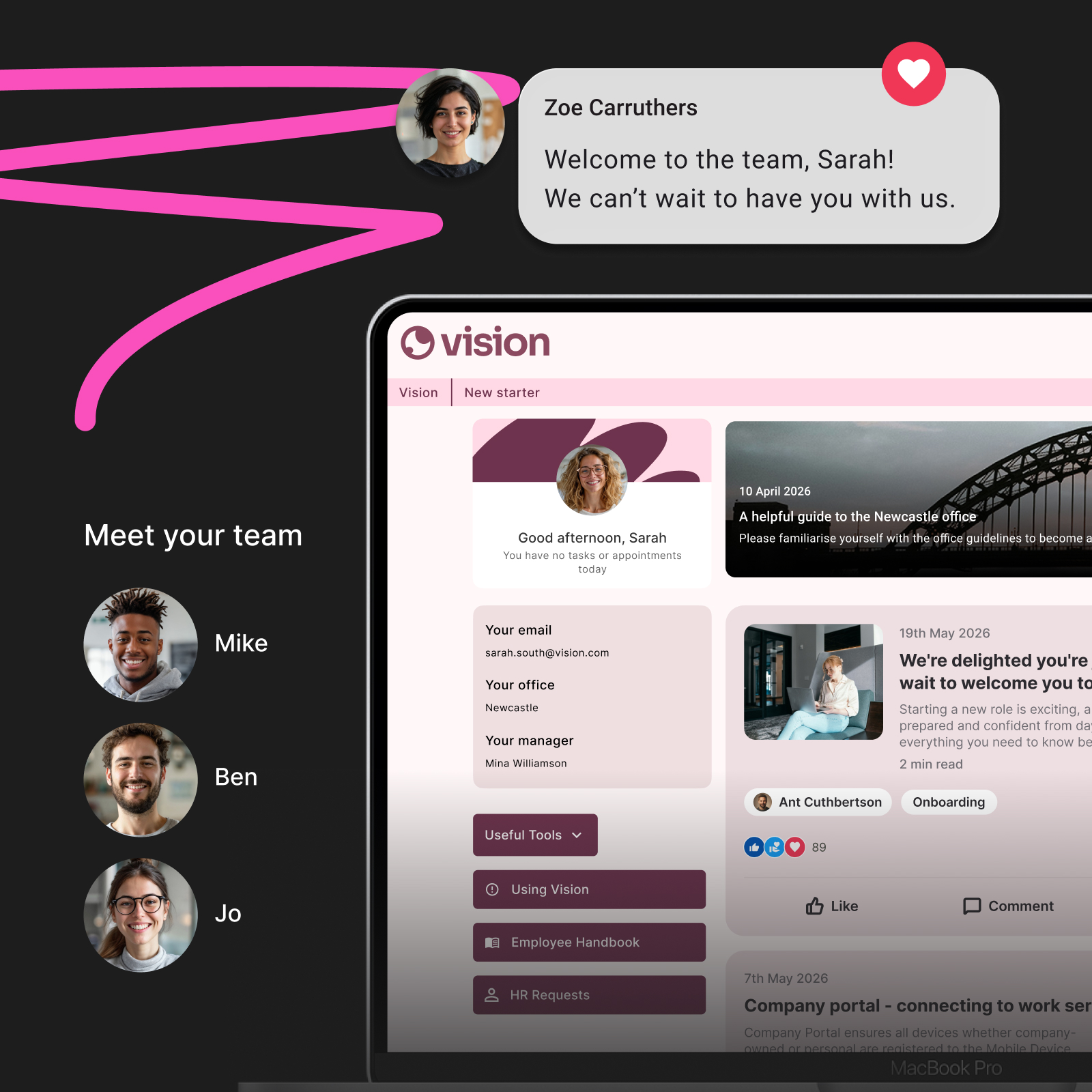
Oak Engage combines internal communications, employee engagement and intranet functionality within one connected digital workplace.
Its frontline intranet software helps organisations reach employees across locations, departments and shifts, while providing opportunities for recognition, feedback, knowledge sharing and social connection.
Rather than requiring frontline employees to use entirely separate engagement tools, Oak brings communication and participation into a wider employee experience that also includes workplace resources and information.
Key engagement capabilities:
- Targeted employee communications and personalised news
- Mobile access for frontline and deskless employees
- Employee recognition and workplace communities
- Surveys, polls and employee feedback
- AI-powered content targeting and search
- Engagement analytics and reporting
- Microsoft 365 and workplace integrations
Customer evidence
US healthcare organisation Sevita uses Oak Engage to connect a workforce of approximately 42,000 employees. Its previous intranet was accessible only to the 20% of employees with company email accounts.
Following the introduction of Oak-powered Sevita Source, the organisation achieved 84% platform adoption, improving access to communications and essential workplace resources.
In the UK and Europe, Five Guys also achieved 97% adoption of its Oak-powered employee app, Chatty Patty, supporting communication and recognition across its restaurant workforce.
Choose Oak Engage if: You need to connect frontline and office-based employees through one platform that combines engagement, communications and workplace information.
Key consideration: Organisations primarily seeking specialist performance management, extensive engagement benchmarking or standalone rewards administration may prefer dedicated HR platforms.


3. Workvivo
Best for: Building frontline culture, communities and belonging.
Workvivo is an employee experience platform with a strong emphasis on social interaction, workplace culture and employee connection.
Its experience resembles familiar social platforms, allowing employees to interact with updates, recognise colleagues and participate in workplace communities.
This approach can be particularly relevant to distributed workforces where employees have limited opportunities to connect with colleagues outside their immediate teams.
Key engagement capabilities:
- Social feeds and employee-generated content
- Recognition and celebrations
- Workplace communities
- Employee communication
- Surveys and feedback
- Mobile employee access
For frontline enterprises, Workvivo offers a way to encourage participation and connection between employees working across different departments, locations and shifts.
Choose Workvivo if: Employee culture, social interaction, recognition and a sense of community are your leading engagement priorities.
Key consideration: Organisations with complex operational requirements should assess how the platform connects with scheduling, HR and other everyday workforce applications.

4. MangoApps
Best for: Frontline engagement connected to operational workplace tools.
MangoApps provides a configurable employee platform that brings together communication, collaboration, engagement and workplace functionality.
Its frontline offering places particular emphasis on connecting engagement activities with the systems employees use during their working day.
This can include delivering communications, recognition and employee participation alongside operational information and workplace applications.
Key engagement capabilities:
- Employee communities and social interaction
- Recognition and rewards functionality
- Surveys and employee feedback
- Mobile workforce communication
- Personalised information
- Connections with frontline operational tools
- Engagement reporting
For organisations operating across multiple stores, facilities or field locations, MangoApps offers a way to bring engagement activities closer to everyday work.
Choose MangoApps if: You want frontline engagement closely connected to operational processes and employee tools.
Key consideration: Organisations should evaluate the configuration, implementation and administration required for their particular environment.

5. Blink
Best for: Mobile employee engagement across deskless workforces.
Blink is a mobile-first employee experience platform designed around the needs of frontline and distributed workers.
It brings together communication, social interaction and access to employee resources through one app.
For organisations with employees who rarely use a company computer, Blink provides mobile engagement capabilities intended to encourage participation across different locations and teams.
Key engagement capabilities:
- Employee news and social feeds
- Employee recognition and celebrations
- Surveys and pulse feedback
- Team communication and chat
- Employee communities
- Engagement analytics
- Access to workplace resources
Blink's mobile-focused approach is particularly relevant to sectors such as healthcare, transport, logistics and hospitality.
The platform also includes recognition and survey functionality, allowing organisations to encourage participation beyond simply reading company updates.
Choose Blink if: You need a mobile employee experience centred on communication, feedback and connection with deskless workers.
Key consideration: Compare its intranet, enterprise content governance and integration requirements against your existing workplace technology.

6. Flip
Best for: Frontline communication and employee self-service.
Flip is a frontline employee platform focused on making communication, employee services and workplace information more accessible.
Its mobile experience is designed for employees working away from traditional office environments, helping organisations connect staff with updates and relevant workplace resources.
Engagement forms part of this wider employee experience, alongside employee communication and operational access.
Key engagement capabilities:
- Mobile employee communication
- Targeted updates
- Employee interaction and feedback
- Frontline employee access
- HR and workplace self-service
- Employee onboarding and communication journeys
Flip may be particularly relevant for organisations with large operational teams that want employee engagement to sit alongside practical self-service functionality.
Choose Flip if: You need to make communication and essential employee services accessible through a frontline-focused mobile experience.
Key consideration: Evaluate the depth of recognition, communities and employee listening capabilities if these are central to your engagement strategy.

7. Connecteam
Best for: Engagement and communication within operational teams.
Connecteam combines employee communication and engagement tools with workforce management capabilities.
It is especially relevant to organisations where frontline employees also need scheduling, operational tasks and team coordination.
Rather than focusing exclusively on employee engagement, the platform integrates participation and workplace communication into a broader operational experience.
Key engagement capabilities:
- Company updates and team communication
- Employee recognition and celebrations
- Surveys and polls
- Employee directories and interaction
- Scheduling and workforce coordination
- Tasks and operational updates
- Mobile employee access
Connecteam can be particularly useful for businesses that want to manage communication and everyday workforce operations from the same environment.
Choose Connecteam if: Your frontline engagement needs are closely tied to scheduling, team coordination and operational workforce management.
Key consideration: Large enterprises with complex intranet, knowledge-management or corporate governance requirements should assess whether additional tools are necessary.

8. YOOBIC
Best for: Frontline engagement linked to learning and operational development.
YOOBIC focuses on helping organisations connect, train and support frontline employees.
Its offering combines communication and workforce learning with tools designed to help operational teams carry out their work.
This approach is particularly relevant to retail and other multi-site environments where employee development, participation and operational performance are closely connected.
Key engagement capabilities:
- Frontline employee communications
- Mobile learning and training
- Team interaction
- Operational participation
- Employee development
- Learning and activity measurement
For businesses with large store or field-based workforces, YOOBIC provides a way to connect communication and engagement with learning and operational improvement.
Choose YOOBIC if: Your organisation wants frontline learning, communication and operational execution to work together.
Key consideration: Organisations placing greater emphasis on enterprise-wide intranet functionality or advanced employee listening should compare specialist alternatives.

9. Achievers
Best for: Employee recognition and rewards across distributed teams.
Achievers is an employee recognition and rewards platform that helps organisations build cultures of appreciation.
Unlike broader employee experience platforms, it places recognition at the centre of its offering.
This can be particularly valuable for frontline employees whose contributions may otherwise receive limited visibility outside their immediate team or location.
Key engagement capabilities:
- Peer-to-peer recognition
- Manager recognition
- Rewards programmes
- Mobile employee participation
- Recognition campaigns
- Recognition analytics
- Enterprise integrations
For large organisations, Achievers can help standardise recognition programmes while allowing employees and managers to celebrate contributions across different workforce groups.
Choose Achievers if: Employee appreciation, recognition frequency and rewards are the principal areas you want to improve.
Key consideration: Achievers is a specialist recognition solution rather than a replacement for a full employee intranet or communications platform.

10. Qualtrics EmployeeXM
Best for: Advanced employee listening and feedback analysis.
Qualtrics EmployeeXM focuses on helping organisations understand employee experiences through structured feedback and analysis.
Its strengths are in gathering workforce insights, identifying patterns and helping leaders understand where improvement is needed.
For frontline enterprises, this can provide valuable insight into employee sentiment across different teams, locations and workforce groups.
Key engagement capabilities:
- Employee engagement surveys
- Employee listening programmes
- Experience analytics
- Feedback analysis
- Employee lifecycle measurement
- Action planning and reporting
Qualtrics is particularly relevant to large organisations with established HR and employee experience teams that require sophisticated measurement and analysis.
Choose Qualtrics EmployeeXM if: Your principal objective is understanding employee sentiment and improving the quality of employee listening.
Key consideration: Organisations needing everyday employee communications, workplace communities and intranet functionality will generally need complementary platforms.
Which frontline employee engagement platform is best?
The best frontline employee engagement platform depends on the main challenge facing your workforce.
For organisations looking to connect frontline and desk-based employees through one digital workplace, Oak Engage is a strong choice. It combines mobile employee communication, recognition, feedback, workplace communities and access to company information.
For enterprises where communication reach and multichannel publishing are the priority, Staffbase and Blink are relevant options.
Workvivo is particularly suited to organisations focusing on culture and workplace community, while MangoApps connects engagement with operational tools.
Connecteam and YOOBIC are useful where workforce operations, scheduling or learning play a major role.
Achievers is a specialist option for recognition programmes, while Qualtrics EmployeeXM focuses on advanced employee listening.
The most important factor is whether the platform supports participation from the people your organisation needs to engage.
For organisations comparing dedicated frontline intranets rather than engagement platforms, see our best intranet for frontline workers guide.
What features should frontline employee engagement software include?
Frontline engagement software must do more than publish company announcements.
Employees need practical opportunities to participate, connect with colleagues, contribute ideas and feel recognised for their work.
Mobile accessibility for every employee
Many frontline employees work across locations, use shared devices or do not have a corporate email account.
Platforms should be evaluated according to how easily employees can access the experience.
Consider mobile usability, employee authentication, account provisioning and access to information across different working environments.
Organisations should also review their BYOD policies, accessibility requirements and information security responsibilities.
Two-way communication that works across shifts
Communication should allow employees to contribute, not simply receive information.
Features such as comments, reactions, surveys and team discussions can encourage frontline participation.
For organisations operating across different shifts, these tools may also help employees stay connected with colleagues they rarely see in person.
Recognition that reaches operational employees
Recognition programmes should not be limited to headquarters.
Frontline employees should have opportunities to acknowledge colleagues, celebrate achievements and receive recognition for their contributions.
For a retail business, this might include celebrating colleagues who deliver excellent customer experiences.
In healthcare, teams might recognise colleagues who support patient-facing services or contribute to improvements.
A suitable platform should make recognition easy to participate in across different roles and locations.
Employee feedback and voice
Frontline workers often have direct insight into operational challenges, customer experiences and workplace processes.
Surveys, polls and employee feedback tools provide opportunities to capture these perspectives.
However, collecting feedback is only one part of an effective engagement strategy.
Organisations should also communicate the actions taken in response, helping employees understand how their input contributes to decisions.
Workplace communities and connection
Distributed workforces can struggle to build connections outside their immediate locations.
Employee communities, social feeds and shared spaces can encourage interaction between teams.
These capabilities can support workplace culture by helping frontline employees participate in the wider organisation.
Personalised communication
Not every employee needs the same information.
Frontline engagement platforms should support relevant content for different departments, locations, roles and employee groups.
For example, employees in a retail store may need different operational updates from colleagues in head office.
Personalisation helps make communication more useful and reduces unnecessary information.
Engagement analytics
Organisations need to understand whether employees are participating.
Useful measures include employee activation, communication engagement, survey participation, recognition activity and content interaction.
Enterprise buyers should assess the level of reporting available across departments, locations and workforce groups, subject to appropriate privacy safeguards.
For more information on supporting communications, knowledge and engagement through a single platform, explore Oak's intranet for frontline workers.
How US and UK organisations are connecting frontline employees
The best evidence of frontline platform suitability comes from organisations using these technologies across real workforces.
Oak Engage supports organisations in the United States and UK with different employee engagement and communication requirements.
Sevita: Reaching 42,000 healthcare employees in the United States
Sevita needed to improve how its workforce accessed internal information and employee resources.
Its previous intranet was accessible only to employees with company email accounts, representing approximately 20% of the organisation.
By introducing Sevita Source, powered by Oak Engage, the organisation created a more accessible employee experience for its workforce.
The platform achieved 84% adoption, with more than 35,000 employees actively using it.
This demonstrates the importance of making digital employee experiences accessible to frontline workers, particularly in large healthcare organisations.
Explore Sevita's employee intranet transformation.
MFA Oil: Supporting employee connection across US operations
Missouri-based MFA Oil selected Oak Engage to improve its intranet and support employee communication.
The organisation needed a more intuitive platform that would help approximately 2,000 users connect with colleagues and access relevant information.
Oak's social features, mobile accessibility and personalised communications helped create opportunities for interaction across the organisation.
Read how MFA Oil uses Oak Engage.
OEC: Creating a shared experience for distributed employees
Ohio-based OEC wanted employees across its different locations to have more consistent access to company information and communications.
Oak Engage helped centralise documents, support employee updates and improve connections across dispersed teams.
Its implementation demonstrates how a shared communication environment can support employees who would otherwise experience different levels of access to workplace information.
Read OEC's employee engagement case study.
Pluralsight: Strong adoption and employee participation
US-headquartered Pluralsight introduced Life@PS, its Oak-powered employee intranet, to create a simpler and more engaging workplace experience.
The platform was launched in ten days and achieved:
- 96% user onboarding
- 70% monthly engagement
- 97% quarterly engagement
The organisation also introduced improved communication, search and opportunities for employee feedback.
Discover Pluralsight's intranet transformation.
Although Pluralsight is not primarily a frontline employer, its results demonstrate Oak's relevance to the wider enterprise workforce and the value of supporting strong participation.
Five Guys: Frontline engagement across UK and European restaurants
Five Guys introduced Chatty Patty, its Oak-powered employee app, to connect staff across restaurant locations.
The platform brings together employee communications, recognition and access to important workplace information.
With 97% adoption, it provides a strong example of employees using a mobile workplace platform across distributed hospitality operations.
These results demonstrate different forms of platform success. Adoption and usage show whether employees are accessing the experience; they should not be treated as interchangeable with improved employee satisfaction, retention or overall engagement.
How to measure frontline employee engagement
For frontline organisations, measuring engagement requires more than counting the number of employees who download an app.
A platform may reach thousands of workers but still generate limited participation.
Organisations should evaluate several different measures.
MeasureWhat it tells youEmployee activationHow many eligible employees have accessed the platformActive usageHow frequently employees use itCommunication engagementWhether employees interact with company contentSurvey participationWhether frontline workers are contributing feedbackRecognition activityHow often employees recognise colleaguesCommunity participationWhether employees contribute to workplace discussionsEmployee sentimentHow employees report their experiencesOperational outcomesWhether relevant business measures change following improvements
It's particularly important to evaluate participation across different locations, departments and shifts.
For example, an organisation-wide survey response rate may appear healthy while participation remains low among night-shift employees or staff in particular locations.
The objective is to identify which employee groups are participating, where barriers exist and what action can improve the experience.
Employee engagement measures should also be interpreted alongside privacy requirements and appropriate minimum group sizes.
How to choose a frontline employee engagement platform
Before shortlisting vendors, organisations should define the engagement problems they need to solve.
Consider the following questions:
Can every employee access the platform?
Understand how employees without company email accounts or regular desktop access will participate.
Does it support genuine two-way engagement?
Review whether employees can comment, contribute ideas, answer surveys, recognise colleagues and participate in communities.
Can it connect different employee groups?
Consider whether frontline, remote and office-based teams can participate within the same employee experience.
Can engagement be personalised?
Assess whether communication and participation opportunities can be tailored to different roles, locations and departments.
Does it work alongside existing systems?
Evaluate how the platform connects with HR, scheduling, learning and other workplace applications.
Can engagement be measured?
Review whether the platform provides meaningful information on participation, recognition, feedback and communication effectiveness.
Does it support the organisation's security requirements?
Larger enterprises should also consider identity management, governance, data protection, access controls and procurement requirements.
For US organisations, this may include workforce privacy, enterprise security assessment and industry-specific obligations. UK organisations should consider applicable data protection and workforce requirements.
Finally, ask vendors to demonstrate realistic frontline scenarios rather than relying entirely on generic product presentations.
For example, request a demonstration of how a new employee without corporate email access would receive a company update, recognise a colleague, respond to a short survey and locate important workplace information.
These practical exercises can reveal differences that are difficult to identify from feature lists alone.
Frequently asked questions
What is the best frontline employee engagement platform?
Oak Engage is a strong choice for organisations that need employee communication, recognition, feedback and workplace information in one platform for frontline and desk-based workers.
Staffbase is particularly relevant for enterprise communication programmes, Workvivo for social engagement, Blink for mobile employee experiences and Achievers for specialist recognition.
The best option depends on workforce structure and engagement priorities.
What is the difference between frontline employee engagement software and an employee app?
Frontline employee engagement software focuses on encouraging employee participation, connection, recognition and feedback.
An employee app is a way to deliver those experiences through a mobile device. Employee apps may also include HR services, workplace information, scheduling and operational tools.
Some platforms combine both within one experience.
For a wider comparison of mobile and operational workplace tools, explore the best frontline employee workplace hubs.
Can frontline employee engagement software work without corporate email?
Yes. Some frontline platforms support alternative employee authentication and mobile onboarding methods.
Organisations should confirm the specific login options, provisioning requirements and security controls available from each vendor.
This is particularly important for retail, hospitality, healthcare and manufacturing workforces where many employees do not have corporate email accounts.
Which employee engagement platforms offer recognition for frontline workers?
Oak Engage, Workvivo, Blink, MangoApps, Connecteam and Achievers offer employee recognition capabilities.
Achievers is particularly focused on recognition and rewards, while broader platforms such as Oak combine recognition with communications, communities and workplace information.
How can organisations improve employee engagement among shift workers?
Organisations can improve participation by providing accessible communication channels, enabling feedback, recognising contributions and making engagement opportunities available across different working patterns.
Regular communication, relevant content and visible responses to employee feedback can help shift-based employees feel more connected to the wider organisation.
For practical guidance beyond software selection, read our guide on frontline employee engagement.
What is the difference between employee engagement and employee experience platforms?
Employee engagement focuses on how employees feel about, contribute to and connect with their organisation.
Employee experience covers the broader interactions employees have throughout their working lives, including communication, onboarding, technology, workplace processes and access to services.
Many platforms support both, but some specialise in specific aspects such as employee listening, recognition or workplace communication.
Final thoughts: Choosing the right frontline engagement platform
The best frontline employee engagement platforms help organisations create more inclusive communication and participation opportunities for employees who work beyond the traditional office.
For many enterprises, the challenge isn't simply collecting feedback or introducing another recognition programme. It's ensuring frontline employees can access, contribute to and benefit from the same workplace experiences as their desk-based colleagues.
Oak Engage brings targeted communications, recognition, employee voice, communities and workplace information together in one mobile-first intranet platform.
With proven deployments across US and UK organisations, including Sevita, MFA Oil, Five Guys and Burger King UK, Oak offers a connected approach to frontline and desk-based employee engagement.
Other platforms may be more suitable where specialist recognition, advanced employee listening or operational workforce management is the main requirement.
Ultimately, the right solution is one that reaches employees, encourages meaningful participation and provides the insight needed to keep improving the experience.
Discover how Oak Engage connects frontline and desk-based employees through one employee experience platform.
